
The Important Places in Pokhara
INTERNATIONAL MOUNTAIN MUSEUM (IMM)

The museum, situated 1.5 km south of Pokhara Airport at Rato Pairo, has on display historical documents, records, and chronicles on mountaineering. It has three main exhibition halls: Hall of the Great Himalaya, Hall of Fame, and the Hall of World Mountains. There is also a library, a prayer room, and an audio-visual room. The museum, managed by the Nepal Mountaineering Association, was established with the theme “Man, Mountain and Mountain activities around the world”.
World Peace Pagoda Stupa

ANNAPURNA REGIONAL MUSEUM: Also known as the Natural History Museum, it is located at the Prithvi Narayan Campus, east of the Old Bazaar. Run by the Annapurna Conservation Area Project (ACAP), the museum showcases an exceptional collection of butterflies, insects, birds, and models of wildlife found in the area.
POKHARA MUSEUM: Located between the bus stop and Mahendra Pul, the museum showcases an ethnic mosaic of the diverse cultures that thrive in western Nepal. The lifestyles and history of the Gurungs, Thakalis, and Tharus are attractively represented by models, photographs, and artifacts. Of much interest and also a major attraction are the more recently discovered remains of an 8,000-year-old settlement in Mustang. GURKHA MEMORIAL MUSEUM: Situated at Pardi, Pokhara, the museum displays a collection of uniforms, medals (including the Victoria Cross), pictures of the Gurkha infantry regiments, Gurkha engineers, signals and transport regiments, and the Gurkha contingent of the Singapore Police Force.
Boating

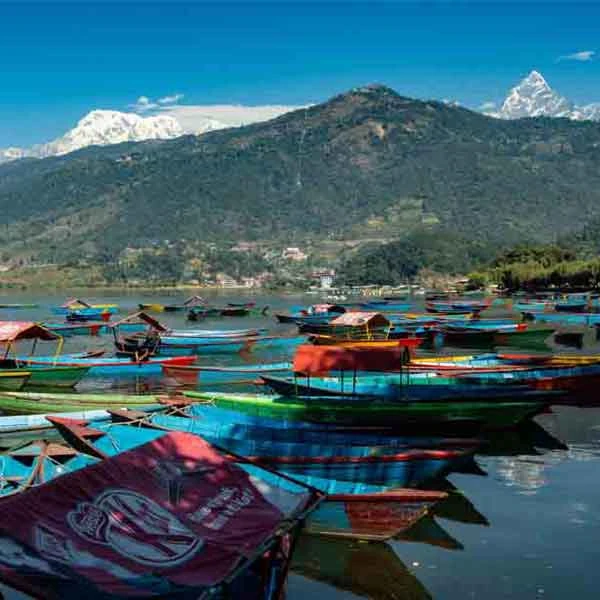
Pokhara’s Phewa Lake naturally draws visitors towards it. Easily the best means of recreation, boating is a favorite pastime that one can enjoy any time of day. The other two lakes, Begnas and Rupa, are located 15 km out of Pokhara. Less visited but no less beautiful, both these lakes are excellent for boating and fishing.
Davi’s fall and Gupteshar cave
Locally known as the Patale Chhango (fall of the Netherworld), Davi’s fall is a ferocious waterfall located about 2 km southwest of Lakeside on the Siddhartha Highway. The source of the waterfall is Phewa Lake, and the fall itself is named after a Swiss lady who was swept away by the fall in 1961. The fall cuts through the rocks to create complex caves and tunnels on its path. Gupteshwar Mahadev cave, on the other side of the fall, is one such cave carved by Devi’s fall. The sacred shrine dedicated to Shiva is popular among the residents and is seldom missed by tourists to Davi’s fall.
Bird watching in Pokhara
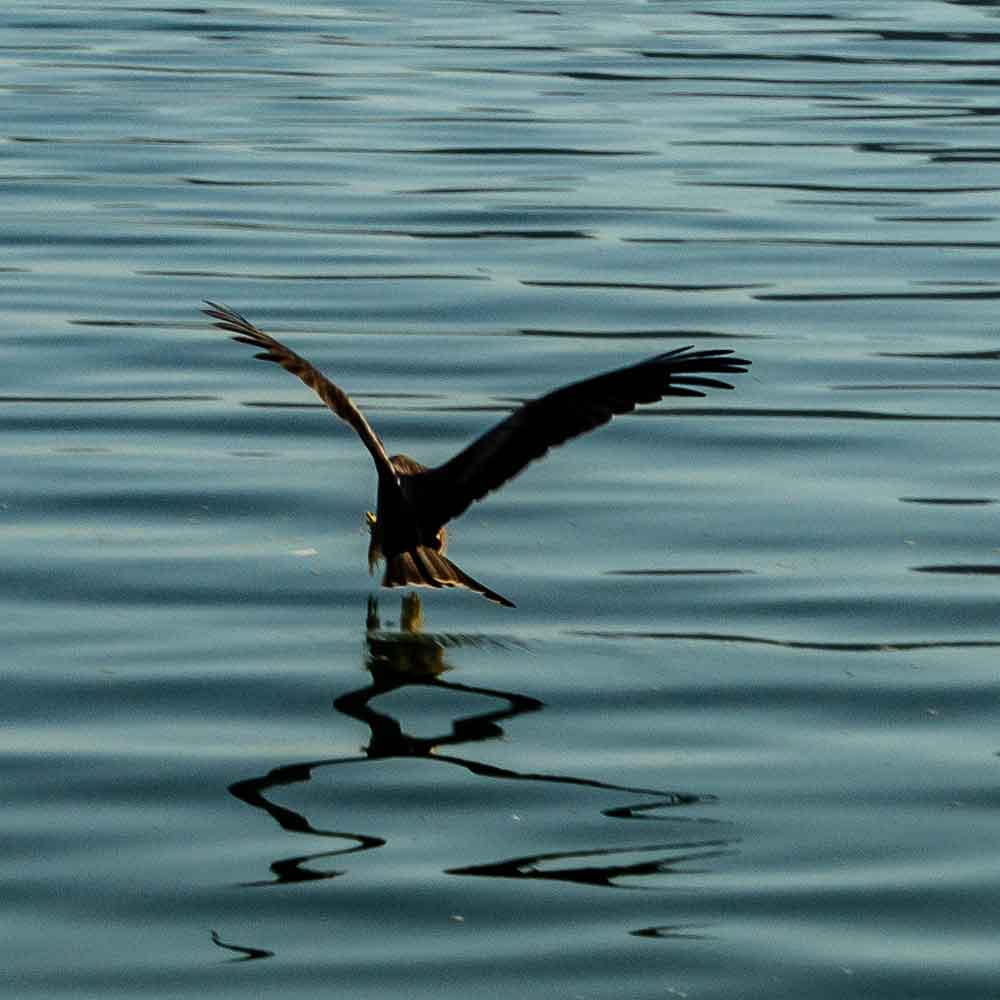
With the whole valley dotted with lakes, Pokhara is a great place for bird watching, including migratory as well as resident birds. Varieties of birds, ranging from wetland, woodland, and birds of prey, are seen in Pokhara. Pamay, Begnas, and Rupa are famous for wetland birds, while Raniban and Jhihjirk-Astam areas are good for woodland birds. Similarly, Ttunga- Bachhebuduwa areas are famous for birds of prey, and the Amala area is unique for pheasants. Well-trained bird-watching guides will be available to accompany visitors on bird-watching tours.
Annapurna Cable Car and Sarangkot Viewpoint
The Annapurna Cable Car to the Sarangkot Viewpoint is one of the best ways to experience Pokhara. It pairs a scenic, effortless ride with one of the most famous Himalayan vantage points in Pokhara. The cable car connects Sedi Bagar (near Lakeside, Pokhara) directly to the Sarangkot Viewpoint. Before the cable car opened, getting to Sarangkot for sunrise meant waking up incredibly early for a bumpy 45-minute drive or a multi-hour uphill hike and walking 45 minutes to the viewpoint, which were extremely tough activities early in the morning. But it is made easier with the cable car, even though it has a good road connection and vehicle facilities.
The Cable car takes about 10 minutes from Sedi Bagar to the top. The cable car operators offer a complimentary morning shuttle bus from various streets along the Lakeside area, starting around 4:20 AM, to get you to the bottom station in time for the sun to break. Typically, it opens early at 5:00 AM to accommodate sunrise visitors and runs until 6:00 PM. (Note: During the peak monsoon season from July to mid-September, hours shift to a 9:00 AM start)
Sarangkot

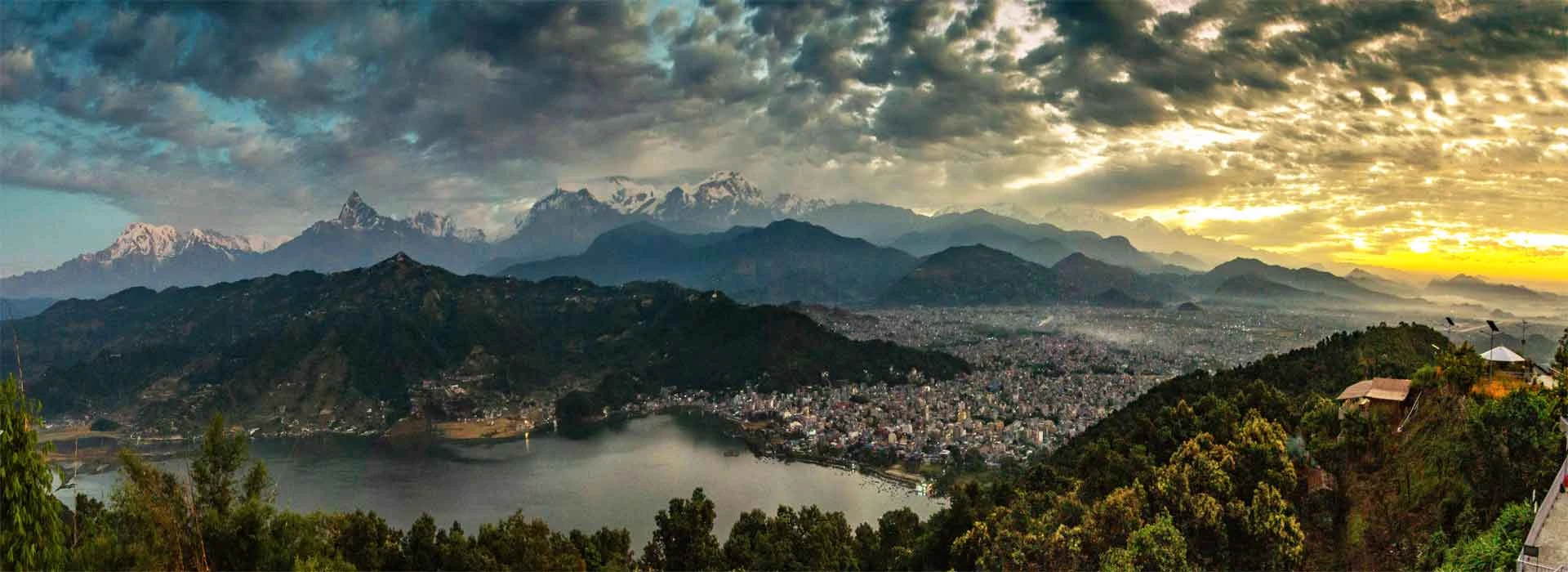
Sarangkot Viewpoint tower is just a short, scenic 6 to 10-minute walk away from the roadside at an altitude of around 1,600 meters. Sarangkot delivers a legendary 360-degree panorama views of landscapes, mountains, Rivers, Pokhara City, Fewa Lake, and the miracles of the beautiful sunrise in the supreme nature.
The Mountains: If the weather is clear, you will look directly at the massive walls of Mt.Dhaulagiri 8,161 meters (I), II, III, IV, Mt. Annapurna South 7,219 meters, Mt. Annapurna (I) 8,091 Meters, Mt. Annapurna II, III, IV, Holy Mt. Fishtain, Lamjung Himal, Mt. Gorkha Himal, and Mt. Manaslu 8,267 Meters.
Golden Hour: Watching the sunrise turn the pure white snow caps into bright pink, orange, and eventually blinding gold is a rite of passage for anyone visiting Pokhara.
Temple: Near the top station, you can explore the Sarangkot Dham, which features a massive 51-foot-tall statue of Lord Pancha Mukhi Ganesh and the Kailaseshwor Shiva Temple.
Notice: Check the weather forecast the night before. Autumn (September to November) and spring (March to May) offer the crispest, clearest skies. Dress in layers—even if the lakeside feels warm, the hilltop is quite chilly before the sun comes up


