Everest Sherpa Villages Trekking (14 days)Everest Sherpa Villages Trekking (14 days)

Sherpa Villages Trek in Everest

  • Duration14 Days
  • DestinationEverest Region
  • Difficulty Moderate
  • Max Altitude Approximately 4,000 m
  • Activity Trekking and Cultural Exploration
  • Group Size Max 20
  • Accommodation Hotels and comfortable teahouse lodges
  • Meals Breakfast, lunch and dinner during trek
  • Transportation Domestic flights and private vehicles
  • Starts KTM
  • Ends KTM
  • Best Season March–May and September–November
Overview
Trip Highlights
  • Explore the traditional Sherpa villages and cultural heartland of the Khumbu region.

  • Experience the vibrant mountain atmosphere of Namche Bazaar, the gateway to Everest.

  • Discover the historic Thame Valley and its ancient Buddhist monastery.

  • Visit Khumjung and Khunde villages, famous for their Sherpa heritage and Hillary School.

  • Explore Phortse, a traditional mountain village with beautiful terraced fields and alpine landscapes.

  • Visit Pangboche Monastery, one of the oldest and most important Buddhist monasteries in the Khumbu region.

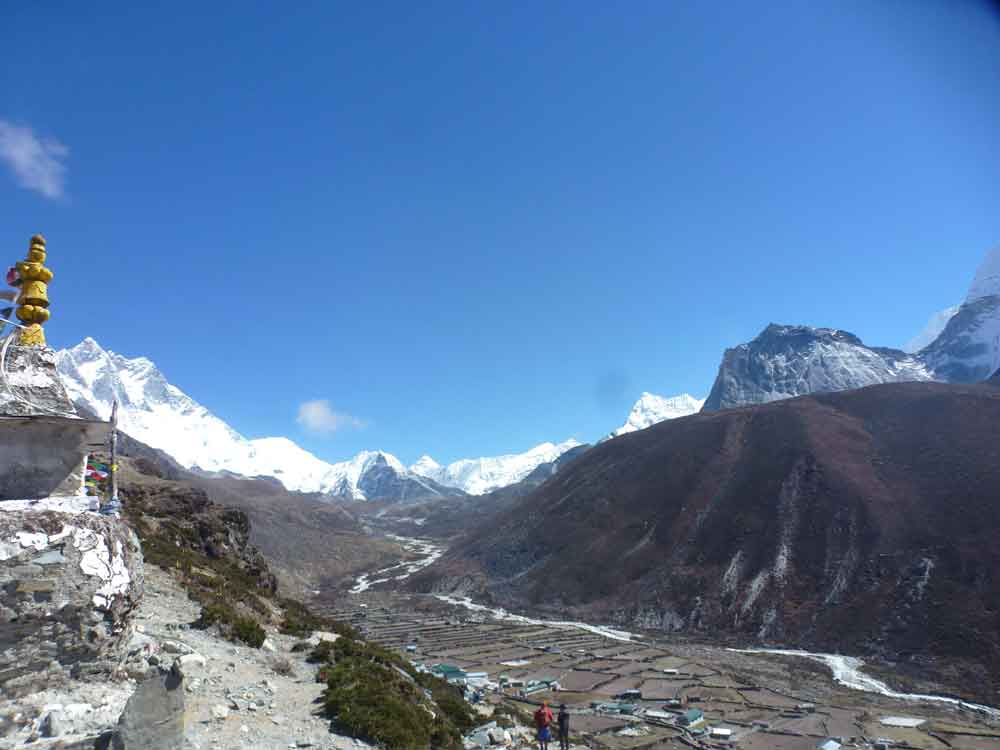
  • Enjoy spectacular views of Mount Everest, Lhotse, Ama Dablam, Thamserku, and Kongde.

  • Walk through rhododendron forests, yak pastures, suspension bridges, and traditional mountain settlements.

  • Experience authentic Sherpa hospitality, Buddhist traditions, and local Himalayan lifestyles.

  • Enjoy comfortable teahouse accommodation, warm dining rooms, and traditional mountain hospitality.

  • Travel with experienced local trekking guides and supportive porters.

Discover the Traditional Sherpa Villages of the Everest Region.

praying

The Everest Sherpa Villages Trek is a rewarding 14-day Himalayan journey that combines breathtaking mountain scenery, traditional Sherpa settlements, Buddhist heritage, and authentic local experiences in the heart of the Khumbu region of Nepal. Unlike the classic Everest Base Camp Trek, this journey focuses on exploring the cultural and historical heartland of the Sherpa people while enjoying spectacular views of Mount Everest and its surrounding Himalayan peaks.

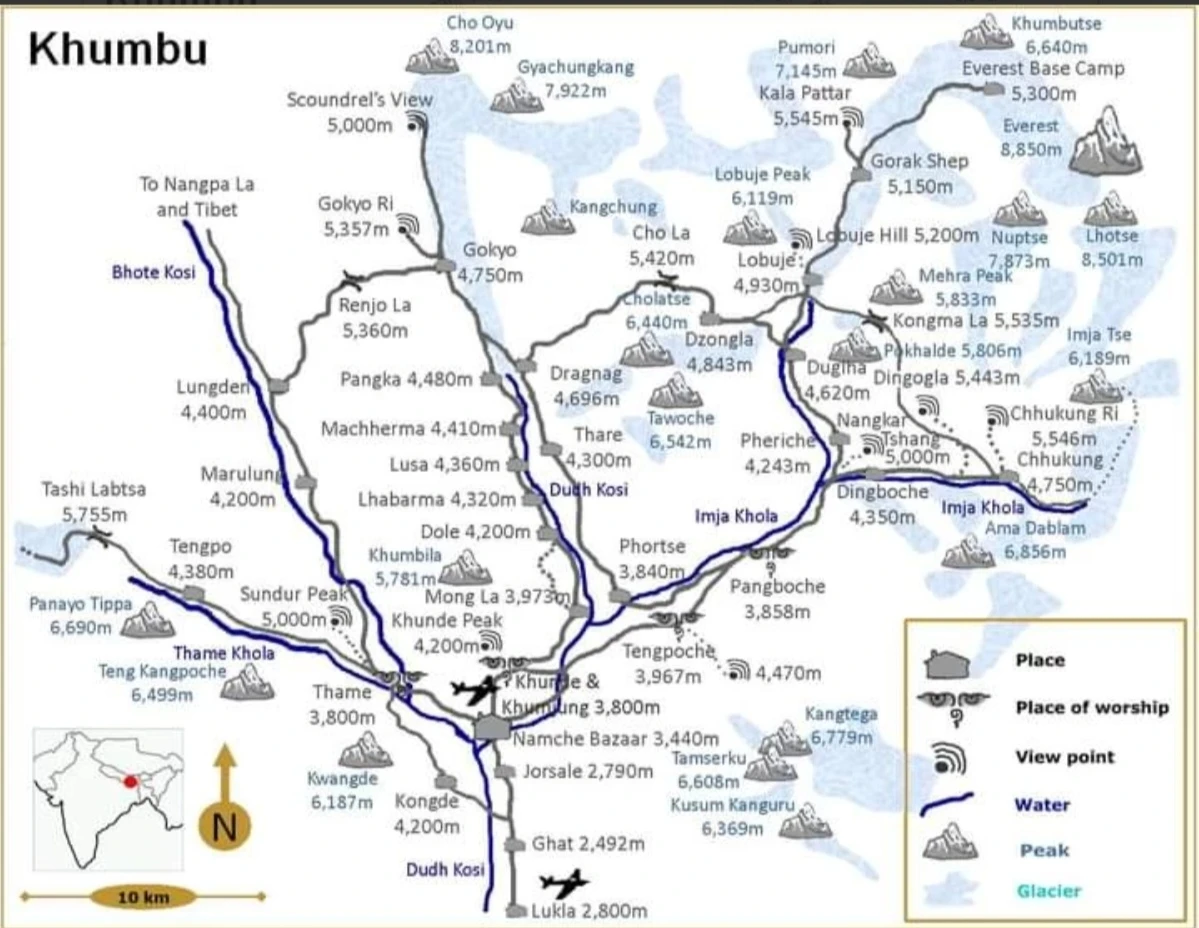
Beginning with a scenic flight to Lukla, the trail follows the legendary Everest trekking route towards Namche Bazaar, the vibrant gateway to the Khumbu region. From here, the journey takes a beautiful clockwise route through the traditional villages of Thame, Khumjung, Khunde, Phortse, and Pangboche, each offering a distinctive insight into Sherpa culture, mountain traditions, and everyday Himalayan life.

Explore the historic Thame Valley, renowned for its mountaineering heritage and ancient Buddhist monastery. Visit Khumjung, one of the largest traditional Sherpa settlements in the region, and discover its historic monastery, Hillary School, and nearby Khunde village. Continue through the picturesque settlement of Phortse, surrounded by terraced fields and magnificent mountain landscapes, before reaching Pangboche, home to one of the oldest Buddhist monasteries in the Khumbu region.

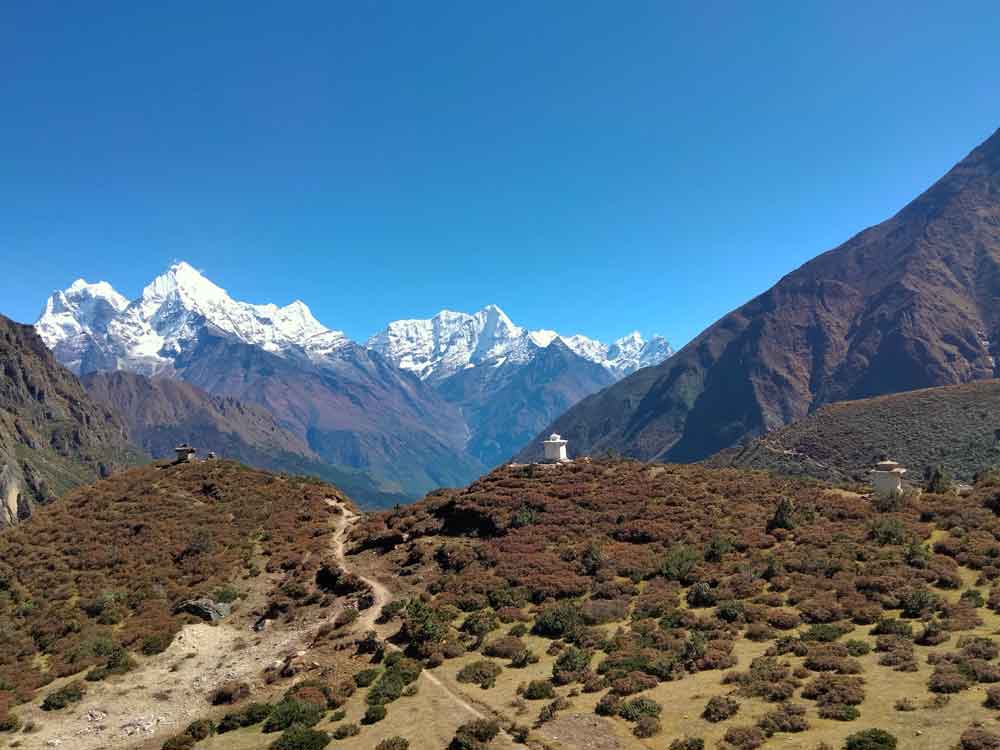
Throughout the trek, you will encounter colorful prayer flags, ancient monasteries, mani walls, chortens, traditional stone houses, yak pastures, and welcoming mountain communities. The route also offers magnificent views of Mount Everest, Lhotse, Ama Dablam, Thamserku, Kongde, and numerous other Himalayan peaks.

The Everest Sherpa Villages Trek is an excellent choice for travelers seeking a combination of Himalayan adventure, cultural discovery, traditional village exploration, and comfortable teahouse accommodation. With a carefully planned itinerary, experienced local guides, and sufficient time to explore the surrounding landscapes, Touren Nepal Treks offers a memorable opportunity to discover the authentic Sherpa heritage of the Everest region.

Why Choose the Everest Sherpa Villages Trek?

The Everest Sherpa Villages Trek offers a different perspective on the Everest region. Rather than concentrating only on reaching Everest Base Camp, this journey allows you to spend more time discovering the traditional villages, cultural landmarks, and mountain communities that make the Khumbu region so special.

The carefully planned clockwise route connects several historically significant Sherpa settlements around Namche Bazaar, providing opportunities to experience local traditions, Buddhist spirituality, mountain agriculture, and the region's remarkable mountaineering heritage.

At Touren Nepal Treks, we emphasize responsible tourism, professional trekking services, and meaningful local experiences. Our experienced guides have extensive knowledge of the Khumbu region, its mountain trails, local communities, and cultural traditions. We aim to provide a comfortable, supportive, and memorable trekking experience while respecting local culture and protecting the Himalayan environment.

Who Is This Trek Suitable For?

This trek is ideal for travelers interested in Sherpa culture, traditional Himalayan villages, Buddhist monasteries, mountain scenery, and authentic trekking experiences. It is particularly rewarding for cultural explorers, nature lovers, and photographers, families with suitable fitness levels, and trekkers who prefer exploring the Everest region without the longer and higher-altitude journey to Everest Base Camp.

Previous trekking experience is helpful but not essential for reasonably fit travelers. However, participants should be prepared for several hours of walking each day, steep uphill and downhill sections, and the effects of altitude.

Itinerary

Trip briefing in the evening with a welcome dinner by the same time, we will collect the necessary documents for trekking permits.

Start driving at 2:00 AM (middle of the night) in the morning from Kathmandu to Manthali Ramechhap for a flight to Lukla. It takes about 3.5 hours to drive to the airport, then take a short flight to Lukla with a domestic twin-engine flight. Meet your trekking crews and walk away to the lodge for short breaks and a drink. Follow the classic Everest route via Chaurikharka village, Chhoplung, Thado Koshi, and Ghat to Phakding village.  The trail mostly goes close to the Dudhkoshi River bank, Mount Kusumkangaru, Kongde, and Gumila are visible throughout the day. - 3 hours

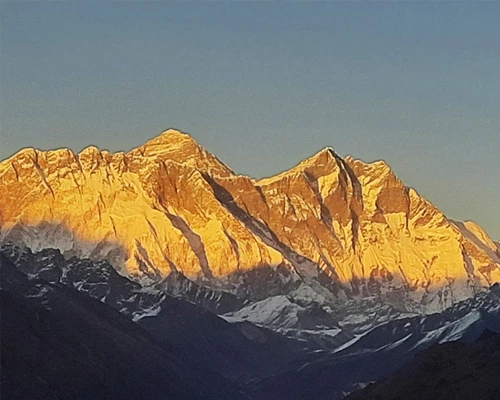
namcheWe commence our trek to Namche Bazaar through the Dudh Koshi gorge.  There are so many suspension bridges over the Dudh Koshi River. A long zigzag trail leads us through Banker, Monjo, to Jorsalle, the check post of Sagarmatha National Park. Thamserku, Kusumgaru, and Kwongde Mountain are visible, and the Khumbila peak is standing over the Namche Bazaar. We follow a short walk along the riverbed of this V-shaped valley, where the Dudh Koshi River comes from the right and the Bhote Koshi River comes from the left. The conjoint point is called Dovan with a very high suspension bridge. Now we begin a steep ascent to Namche Bazar. We make a quick stop just over the shoulder. From there, you will have an excellent view of Everest (8848m) and Lhotse (8516m). Then it takes approximately 45 minutes of uphill walking to arrive at Namche Bazaar, overnight at a nice hotel – 5 hours
It is considered an ideal day for altitude acclimatization in this place. After the peaks climb higher around the museum, Mt. Everest, Lhotse, Tawache, Nuptse, Amadablam, Thamserku, Kusumkangaru, Kwongde Peak, and Thame Peak are awaiting your warm greeting. It would be the best morning ever in your travel time, then follow the steep climb up to the world’s highest airstrip, Syangboche airstrip. Get to the luxury Everest View Hotel for some drinks and snacks, which has a magnificent mountain view. And descend to Namche bazaar-6 hours.

thame

Begin your trek after breakfast. The trail follows the legendary or historical alley of the Bhotekoshi River valley of the Sherpa ethnic group that migrated from Tibet over 800 years ago. The trail passes through the alpine forest, Thamo village, and Samden typical Sherpa village. Cross the Bhotekoshi River over the suspension bridge and after half an hour of ascent walking reach to ancient historic Thame village. This is known as the village of legendary climbers Tenzing Norgay and Guianese record holders such as Appa Sherpa, Angrita Sherpa, Angkami Sherpa, Pasangkami Sherpa, etc Overnight at a nice hotel. - 6 hours

khumjung

Start your trekking returning towards the Namche trail until Thamo village and follow the pastures trail via a wide pastureland over the Namche bazaar.  You will meet yaks, and different Himalayan wildlife, pass the highest airstrip and col with beautiful views, and get down to the hidden Khumjung village for overnight.- 6 hours.

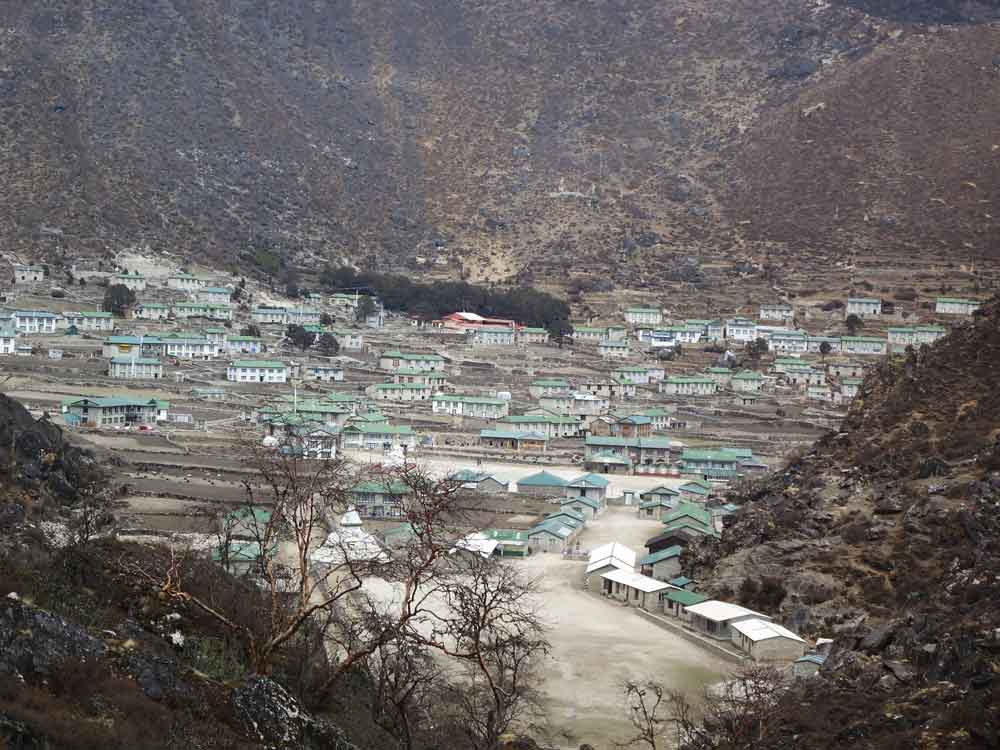
Make an excursion around Hillary School, Khunde health center, and old Khumjung Monastery, which has preserved the Yeti’s skull. Then proceed on your trek towards the oldest village, Phortse, passing Mongla Danda at 3900m. Descending to the River takes about 45 minutes through Himalayan Fir and rhododendron forest, and starts incline uphill climbing through an enjoyable alpine forest to the Phortse village. Overnight at Comfort Lodge.- 6 hours

everest-view

Make a quick village excursion and follow the classic pastoral trail to Pangboche village. You will arrive by noon at Pangboche and make a day excursion around the oldest monastery and village. Overnight at the lodge- 4 hours

pangboche

Trekking starts returning down via the Everest classic trail. Take a break and visit the famous and biggest Tyangboche monastery. Descend to Fungitanga via a zigzag trail through beautiful forest and ascend to Lowsasa village. Follow the easy wide trail through the mountain cliff to Namche Bazaar and overnight at the nice hotel. - 5.5 hours

Returning down via the classic route may be crowded. Pass the village you were before and overnight at a good lodge. Farewell dinner of successful trekking completion and thank with TIPPING to your trekking crews

Route Map
Sherpa Villages Trek in Everest map
Cost Details

Note:

We offer every trip at an essential cost. We provide special discounts for larger groups, Travel Companies, Partner agents, student groups, and nonprofit Organizations.

We offer two kinds of packages, such as full package tours and service tours. Full package tours are inclusive of necessary transportation, staff wages, Staff insurance, permit fees, food, and all accommodations. On the service tours: clients have to make private payments for the food, transportation, and accommodation prices.

What's included
  • Airport pick up and drop with private vehicle
  • Hotel Room on B/B Planning basis in Kathmandu (Before & after trekking)
  • Kathmandu - Ramechhap- Kathmandu drive with private vehicle before and after trekking
  • Domestic plane ticket for both ways ( Ramechhap- Lukla- Ramechhap)
  • Plane ticket or transportation charge for your guide.
  • Trekking permit related to National park fees, TIMPS, and Local permits.
  • Local accommodation and three times meals (Breakfast, lunch, Dinner) during the trek including hot drinks.
  • Necessary Guide and Porters for your support on the Trekking
  • Guide's and porter's salary including their trekking insurance, equipment, food, and accommodation.
  • Private vehicle for 1-day sightseeing in Kathmandu
  • Service charges and farewell dinner
What's not included
  • Nepal entry visa
  • Your Travel insurance
  • Your International airfare
  • Lunch and dinner during your stay in Kathmandu
  • Entrance fees at UNESKO's cultural world heritage site in Kathmandu
  • Tips for your trekking staff.
  • Your health insurance and expenses.
  • Helicopter price in case you need to be evacuated.
  • Your travel or trekking insurance
  • Drinks: bottled drinks like Coke, Fanta, mineral water, canned juice, mars, bars & cereals
Useful Info

Notice for domestic flights to and from Lukla

Note: Because of a heavy traffic jam at the International airport in Kathmandu and the necessity of several domestic flights to Lukla, flight operation was shifted to the nearest airport.

The Tribhuwan International Airport and the domestic Airport are partially the same in Kathmandu. Thus, it used to be heavy air traffic during international flights. The domestic flight schedule will often be interrupted by International flights.

The domestic flight to Lukla mostly departs early in the morning with small aircraft. The legendary Everest trek begins from Lukla, so most trekkers to the Everest region usually fly in and out from Lukla. Often, the higher volume of trekkers want to visit the Everest region. So, there should be several scheduled flights every day. Thus, Nepal Aviation had decided to operate smooth flights from the nearest airport to Kathmandu during the main trekking and peak season. The nearest airport is in the countryside called Manthali Ramechhap, which needs approximately 4 hours of off-road driving.

The flights are effective from the beginning of October to the End of November in autumn and from March to mid-May in spring.

We recommend our clients move a day earlier from Kathmandu to nearby Manthali for the flight to Lukla. That will provide the perfect views of the countryside, also that will not be a rushed and uncomfortable drive.

Most trekkers get driven in the middle of the night from Kathmandu to Manthali for the next day’s morning flight. There would be some discomfort, such as less sleep that night, if you do not arrive on time at the airport, the flight can be missed. You never know what's happening or going on the road in the countryside.

Road & vehicle facilities

The road connection is being extended close to Lukla. It is under construction, so the road is adventurous, bumpy, and Seasonal. The road from Kathmandu to Sallery is at least good for driving and takes about 12 hours, then at least 9 hours more to Surke. We must change the 4x4 vehicle from Salleri to Everest doorways or Everest doorways to Salleri or local vehicles. If the road is not damaged by rain, flood, or other problems, then you can easily get in and out to Surke, which is an hour away from Lukla Airport. Otherwise, passengers should walk a bit further away until the Jeep is available. If the flight is cancelled or you have enough time and want to experience the lower Everest region, then overland driving is another exciting option.

Walking Trails: The trail often goes through the dense rhododendron forest, ancient typical cultures villages, waterfalls, staircases, wilderness, ridges, several viewpoints, crosses several suspension bridges, wild bees, natural hot springs, zig-zags up and down, traditional Chautaras, and passes several river streams and pastures.

Walking hours per day: The itinerary is always eligible; every day, your trek starts after breakfast. Take your time and enjoy your walk with the best views. Approximate walking hours will be 4-8 hours per day.

Landscape & temperature at Sherpa villages: There are amazing landscapes on this trek; you will pass several ancient Sherpa villages, which are completely decorated with Tibetan culture and tradition. Several passes with chortens, prayer flags, the Maane wall, the world’s highest mountains, Rivers, waterfalls, amazing suspension bridges, terraced compounding farming fields, viewpoints, Gompas, and alpine contours.

The temperature will be favorable for this trek. During the day, there will be the Sun shining and the evening will be warm in the dining room. One should not be worried about being too cold.

Accommodations and Food at Himalayan Sherpa villages: Everywhere we can find very neat and clean local lodges and hotels with the best food. Select the food according to our choices on the Menu. The clean and comfortable hotel accommodations are available from the beginning to the end. They provide very nice hot showers. Comfortable rooms, either single or double, with attached bathrooms, are available everywhere on this trek.

Things to See in Himalayan Sherpa villages: Tibetan Sherpa Culture traditions, mindblowing mountains, Yaks and Naks, Blue Sheep, Tahr, Dhanphe pheasant, Musk Deer, Famous Gompa with Yeti's skull,  ancient Sherpa villages, Museum, ancient salt way.

Maximum altitude: 4500 Meters during hiking and 3900 Meters pass, then most of the time it is at a lower altitude.

Drinking water: Everywhere you can get fresh running water, but we recommend using some purifier tablets or filtered water for drinking, or you can buy mineral water or filtered water.

Lower chances of altitude Sickness: You should not be worried about altitude sickness on this trek. However, the Mountain has its private discipline; you cannot turn the character of the mountain into your character. Follow the theory of going higher and sleeping at a lower altitude. Go slower, drink enough water, take enough acclimatization, and supply enough energy. No one should be worried about serious altitude sickness on this trek.

FAQS
  • 1. What is the Everest Sherpa Villages Trek?

    The Everest Sherpa Villages Trek is a 14-day cultural and scenic trekking adventure through the traditional Sherpa settlements of Nepal's Khumbu region. It explores Namche Bazaar, Thame, Khumjung, Khunde, Phortse, and Pangboche while offering spectacular Himalayan mountain views and opportunities to experience Sherpa culture and Buddhist traditions.

    2. How difficult is the Everest Sherpa Villages Trek?

    The trek is considered moderately challenging. Although it does not require crossing Technical Mountain passes or reaching Everest Base Camp, trekkers should be prepared for 4–7 hours of walking per day, steep ascents and descents, and high-altitude conditions. Reasonable fitness and previous hiking experience are beneficial.

    3. What is the highest altitude on the Everest Sherpa Villages Trek?

    The trek reaches approximately 4,000 metres above sea level, depending on the final route and viewpoints visited. The altitude requires gradual acclimatization and appropriate trekking preparation.

    4. Which Sherpa villages do we visit during this trek?

    The main settlements include Namche Bazaar, Thame, Khumjung, Khunde, Phortse, and Pangboche. Each village offers distinctive cultural attractions, traditional architecture, Buddhist heritage, and mountain scenery.

    5. What is the best time for the Everest Sherpa Villages Trek?

    Spring (March to May) and autumn (September to November) are the best seasons. These periods generally offer favorable trekking conditions, pleasant daytime temperatures, and excellent mountain views.

    6. Do I need previous trekking experience?

    Previous trekking experience is helpful but not compulsory. Travelers with good general fitness who can comfortably walk several hours daily can enjoy this journey with proper preparation and a suitable pace.

    7. Is a guide necessary for the Everest Sherpa Villages Trek?

    We recommend trekking with a licensed, experienced local guide. A knowledgeable guide provides navigation, cultural information, safety support, and assistance with local arrangements.

    8. What accommodation and meals are available?

    You will stay in comfortable local teahouses and mountain lodges during the trek. Breakfast, lunch, and dinner are included in the full-package arrangement, with a selection of traditional Nepali and international meals.

    9. What permits are required for this trek?

    Trekkers generally need a Sagarmatha National Park entry permit and the applicable Khumbu Pasang Lhamu Rural Municipality entry permit. Our team assists with the necessary arrangements.

    10. Can I combine this trek with an Everest Base Camp trek?

    Yes. The Everest Sherpa Villages Trek can be extended or combined with other Everest-region trekking routes, depending on your available time, fitness, and trekking interests.

Similar Packages