Trekking via Gokyo Lake and Everest Base Camp-16 DaysTrekking via Gokyo Lake and Everest Base Camp-16 Days

Gokyo Valley, Cho La Pass and Everest Base Camp Trek

1 review
  • Duration18 Days
  • DestinationNepal
  • Difficulty Challenging
  • Max Altitude 5555 Meters
  • Activity Trekking
  • Group Size 10
  • Accommodation Hotel & Lodges
  • Meals Breakfast, Lunch & Dinner
  • Transportation Vehicle & Flight
  • Starts KTM
  • Ends Lukla
  • Best Season March-May, Sep.- Dec.
Overview
Trip Highlights
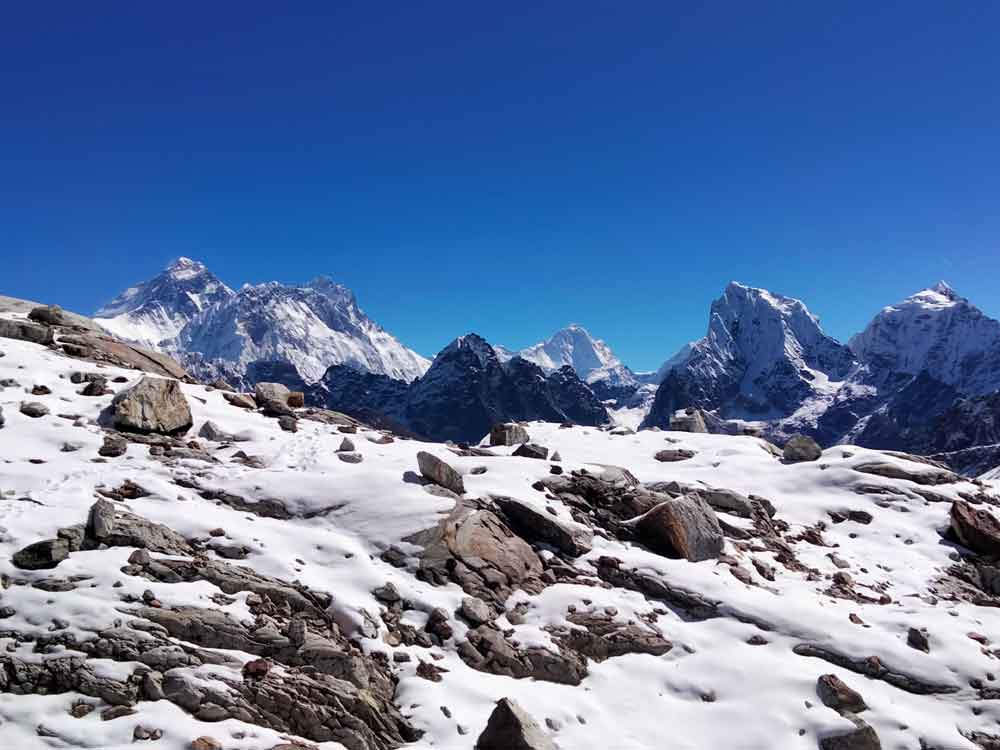
  • The Ultimate Viewpoints: Summit Kala Patthar (5,545m) and Gokyo Ri (5,380m) for unparalleled, non-stop panoramas of four 8,000m giants: Mt. Everest, Lhotse, Makalu, and Cho Oyu.
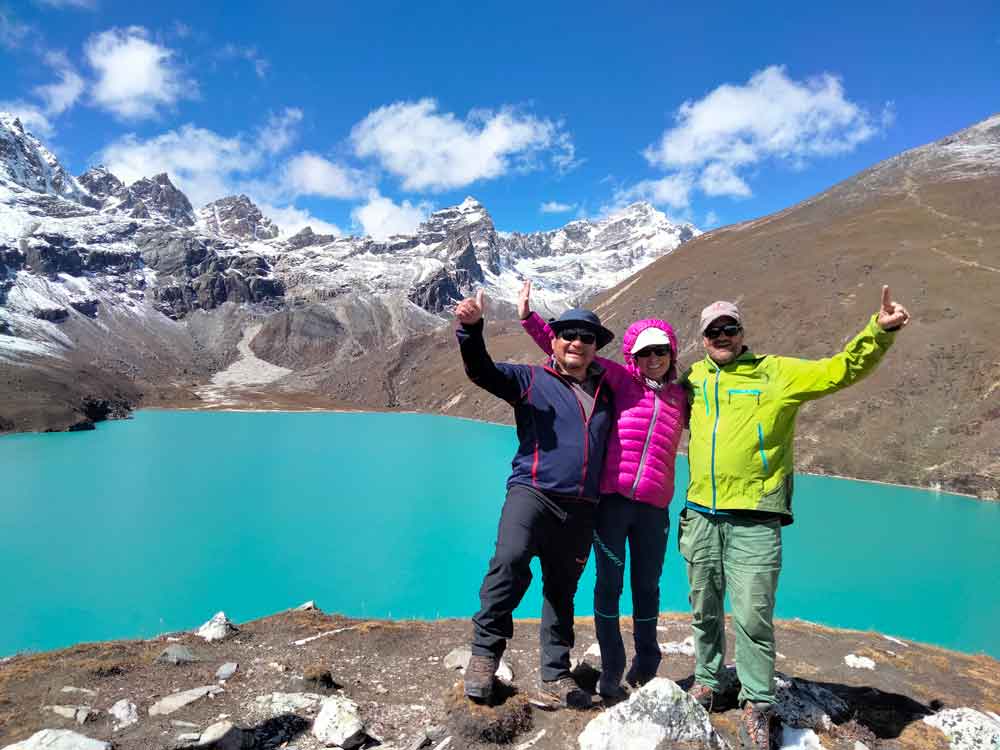
  • The Sacred Turquoise Lakes: Walk the peaceful shores of the world-famous, holy Gokyo Lakes.
  • The Epic Challenge: Experience the thrilling, snow-kissed scramble over the high-altitude Cho La Pass (5,420m).
  • Glacial Wonders: Traverse the massive Ngozumba Glacier—the longest glacier in the Himalayas.
  • Sherpa Culture: Wander through vibrant, legendary mountain hubs like Namche Bazaar and visit ancient Buddhist monasteries.
  • Picturesque Sherpa villages, mane walls, Himalayan wildlife, and following legend’s footprint
  • Trekking trail: Mostly gradual ups and downs, in some parts rocky and narrow passes, Chortens, nice viewpoints, waterfalls and river streams, giant glaciers, Lakes, Pastures, panoramic and enjoyable contour path, stupas with colorful prayer flags, rocky and thrilling ascent at Gokyo Ri and Chola Pass, busy at EBC side, and easy down for the return track.

Gokyo Valley, Cho La Pass and Everest Base Camp Trek: Cho-oyu
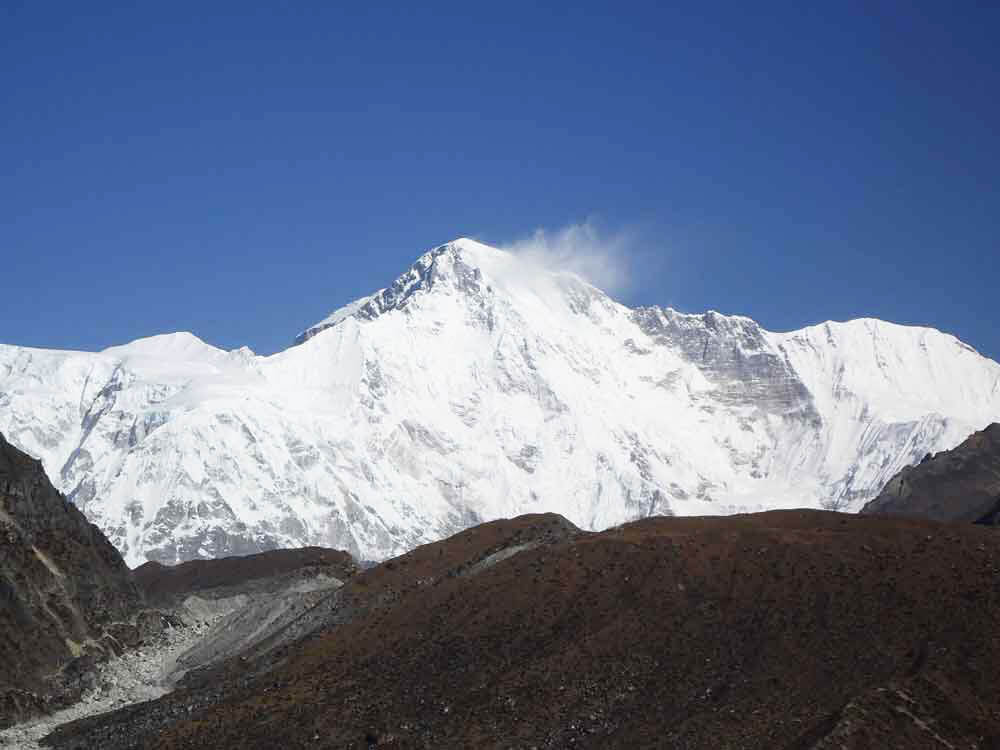
The Gokyo Valley, Cho La Pass and Everest Base Camp Trek is one of the most spectacular and rewarding trekking adventures in Nepal's Everest region. This challenging 18-day Himalayan journey combines the breathtaking turquoise Gokyo Lakes, the panoramic viewpoint of Gokyo Ri (5,360m), the adventurous crossing of Cho La Pass (5,420m), and the legendary Everest Base Camp (5,364m).

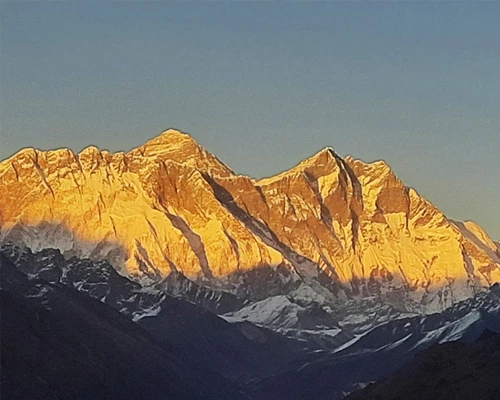
The trek takes you through the magnificent landscapes of Sagarmatha National Park, traditional Sherpa villages, ancient Buddhist monasteries, dramatic glaciers, and beautiful alpine valleys. Along the way, you will experience unforgettable mountain panoramas, including Mount Everest, Lhotse, Nuptse, Makalu and Cho Oyu. The adventure also includes an ascent of Kala Patthar (5,545m), one of the finest viewpoints for observing Mount Everest and the surrounding Himalayan giants.

Gokyo Valley and Its Sacred Lakes

Gokyo Valley is one of the most beautiful and spiritually significant destinations in Nepal's Khumbu region. Surrounded by towering Himalayan peaks, enormous glaciers and pristine alpine landscapes, this remarkable valley is famous for its turquoise glacial lakes, traditional Sherpa settlements and breathtaking mountain viewpoints.

The Gokyo Lakes, historically associated with the name Dudh Pokhari (Milky Lake), are among the most remarkable natural attractions in the Everest region. The Dudh Koshi River originates from the glacial lakes and water systems of the Gokyo region, receiving water from glaciers and mountain streams. The name Dudh Koshi, meaning "Milky River", reflects the milky appearance of its glacial waters, particularly where glacial sediment gives the river its distinctive colour.

There are several beautiful lakes scattered throughout Gokyo Valley. Trekkers generally visit the first three main lakes along the popular trekking route, while the fourth and fifth lakes lie farther north towards the upper reaches of the valley. Reaching these remote lakes requires an additional excursion from Gokyo village, rewarding adventurous trekkers with magnificent views of the surrounding mountains and the immense Ngozumpa Glacier.

Gokyo Ri: One of the Best Panoramic Viewpoints in the Everest Region

Gokyo Ri (5,360m) is one of the finest panoramic viewpoints in the Khumbu region. The rewarding ascent offers spectacular views of some of the world's highest mountains, including Mount Everest (8,848.86m), Lhotse (8,516m), Makalu (8,485m), Cho Oyu (8,188m), Lhotse Shar (8,383m) and numerous other Himalayan giants.

The breathtaking panorama also includes Mount Pumori (7,161m), Changtse (7,543m), Lingtren (6,749m), Ama Dablam (6,812m), Baruntse (7,129m), Thamserku (6,623m), Kangtega (6,782m), Cholatse and Taboche. From the summit, trekkers can admire the extraordinary combination of turquoise Gokyo Lakes, rugged mountain ridges and the vast Ngozumpa Glacier.

Explore the Magnificent Ngozumpa Glacier

The Gokyo Valley Trek offers an exceptional opportunity to witness the magnificent Ngozumpa Glacier, the longest glacier in the Himalayas. Stretching approximately 36 kilometres through the Everest region, this enormous glacier descends from the high Himalayan mountains and creates a dramatic landscape of ice, rock and glacial deposits. Standing beside this immense glacier, trekkers can experience the extraordinary scale of the Himalayan ice formations, surrounded by towering peaks and pristine alpine scenery. The sacred Gokyo Lakes, rugged glacial terrain, and spectacular mountain panoramas make this valley one of the most memorable destinations in the Everest region.

gokyo

Cross the adventurous Cho La Pass (5,420m)

After exploring the beautiful Gokyo Lakes and surrounding viewpoints, the adventure continues towards Thangnak, a small settlement beneath the towering Himalayan Mountains. The next day brings one of the journey's most exciting challenges: crossing Cho La Pass (5,420m).

Cho La Pass is a spectacular high-altitude mountain pass connecting the Gokyo Valley with the Everest Base Camp trekking route. The crossing involves rocky trails, steep ascents, glacial terrain and potentially snow-covered sections, depending on the season and weather conditions.

Although challenging, crossing Cho La Pass is an unforgettable Himalayan experience. The pass rewards trekkers with breathtaking views of surrounding snow-covered peaks, glaciers and dramatic mountain landscapes. Descending towards Dzongla, you enter another beautiful section of the Everest region, continuing your journey towards Everest Base Camp and Kala Patthar.

This combination of sacred glacial lakes, panoramic mountain viewpoints, enormous glaciers and an adventurous high mountain pass makes the Gokyo Valley, Cho La Pass and Everest Base Camp Trek an extraordinary Himalayan adventure.

Legendary Everest Base Camp:

Reaching Everest Base Camp (5,364m) is one of the most extraordinary experiences of a lifetime. As you approach the legendary base camp, you will be captivated by breathtaking Himalayan landscapes, towering snow-covered peaks, glacial rivers, icy lakes and the magnificent Khumbu Glacier. Along the trail, memorials and monuments honour courageous mountaineers who lost their lives pursuing their dreams of conquering the world's highest mountains.

The settlements of Lobuche and Gorak Shep are often bustling with trekkers, mountaineers, guides and porters from around the world. Despite their remote high-altitude locations, these mountain communities offer warm Sherpa hospitality and a welcoming atmosphere.

The trek to Everest Base Camp follows the legendary footsteps of world-renowned mountaineers, bringing you closer to the heart of the Himalayas. Standing at the base of Mount Everest is a dream come true for adventure enthusiasts and a truly unforgettable milestone in any trekking journey.

Another major highlight is the ascent of Kala Patthar (5,545m), one of the finest viewpoints for witnessing Mount Everest, the towering Himalayan giants and the spectacular Khumbu Glacier. Spending a night at Gorak Shep (5,164m), the last overnight settlement before Everest Base Camp, adds another remarkable experience to this high-altitude adventure.

After completing the Everest Base Camp and Kala Patthar experience, the return journey descends through picturesque Sherpa villages, including Pheriche and Pangboche. You will also visit the famous Tengboche Monastery, an important Buddhist spiritual centre in the Everest region, before continuing through Namche Bazaar and the beautiful Dudh Koshi Valley to Lukla. From Lukla, a scenic flight brings you back to Kathmandu, concluding an unforgettable Himalayan adventure.

An overview of what is required for the Gokyo Lakes, Chola Pass to Everest Base Camp Trek

1.🏃‍ Core Physical Demands:

  • Sustained Endurance: ability to walk 5 to 8 hours daily across 16 consecutive days.
  • Varying Terrain Adaptability: Comfort with navigating steep stone staircases, narrow gravel paths, and shifting glacial moraines.
  • High Altitude Stamina: Lung efficiency to handle thin air where oxygen levels drop below 60% of sea-level capacity.
  • Load Management: Stamina to carry a 5 to 8 kg daypack containing your water, layers, and camera gear all day.

2. Recommended 4-to-8 Week Training Plan:

To ensure your body is ready for the back-to-back demands of the trail, focus on these training pillars starting at least 1 to 2 months before departure.

  • Cardiovascular Conditioning: Run, cycle, or swim 3-4 times a week for 45–60 minutes to improve your aerobic capacity.
  • Leg & Core Strength: Incorporate squats, lunges, planks, and step-ups to build joint stability and prevent knee strain on long descents.
  • Stair Climbing: Train on a Stairmaster or the local stadium stairs to replicate relentless uphill climbs.
  • Simulated Full-Gear Hikes: Spend weekends on longer 4-to-6 hour hikes wearing your actual trekking boots and loaded daypack

3. Mental Preparation & Pacing: Touren Nepal Treks emphasizes that mental determination is just as important as muscle power. Altitude does not respect gym numbers; it rewards patience. The secret to completing this circuit successfully is maintaining a slow, steady, and disciplined pace ("Bistari, bistari"), staying deeply hydrated, and trusting your guide to manage your acclimatization safely.

Itinerary

Arrival at Kathmandu International Airport, greeting with flower garland and transfer to Hotel and evening trip briefing with Welcome dinner.

The flight to Lukla during the high trekking season is impossible from Kathmandu. So we must take a private vehicle and drive at least 4 hours away from Kathmandu. If you have enough time then you can drive in the Noon and stop for overnight nearby Manthali otherwise drive in the middle of the night to catch a morning flight from Manthali to Lukla. The flight takes 25 minutes to Lukla where your supporting crews are waiting for you, they will come to collect you at the airport counter and take you to the lodge for breakfast. At the same time, your guide will organize an introduction plan and then start slowly trekking via Chaurikharkha, Kyangzoma, Ghat to Phakding village (2600m) for overnight.

bridge

We commence our trek to Namche Bazaar through the Dudh Koshi River bank. Today we will cross many suspension bridges over the Dudh Koshi River. The zigzag trail leads us through Banker, Monjo to Jorsalle. Jorsalle is the check post of Sagarmatha National Park and trekking permits. Thamserku, Kusumgaru, and Kwongde Mountain are visible all day long today. The Khumbila Peak is just standing over the Namche Bazaar. We follow the uphill trail from the riverbed of this V-shaped valley where the river forks Dudh Koshi and Bhote Koshi are meeting each other. Now we begin ascending to Namche Bazar. We make a quick stoppage just over the shoulder of steep up after one and half hours of walking from there you will have the 1st excellent view of Everest (8848m) and Lhotse (8516m.)Then it takes approximately 45 minutes to arrive at Namche Bazaar. Bellow the Namche Bazaar there is also a check post for checking your permits.

It is considered an ideal day for altitude acclimatization in this place, after breakfast just get higher around the museum. There are very nice viewpoints including the statue of Tenzing Norgay Sherpa and rounding mountains view such as Mt. Everest, Lhotse, Tawache, Nuptse, Amadablam, Thamserku, Kusumkangaru, Kwonge Peak, and Thame Peak. It would be the best morning ever in your travel time then follow the steep climb up to the world’s highest airstrip airport “Syangboche”. Turn right across the Everest View hotel to Khumjung village for a day excursion, visit the monastery which is still preserving a yeti’s head then get back down to Namche by aside the Khumjung school or if you want to go to Khunde village you can continue climbing and take a direct way to Namche bazaar from Khunde.

It is an easy flat trail until Sanasa through birch, pines, and fir trees with fine views of mountains. From Sanasa it climbs for one and a half hours up to Mongla Danda then descends to Phortse Tanga. A well-known and typical ancient Sherpa village phortse is nicely visible along the way. There is a thick alpine forest of fir, rhododendron, birch, alpine bamboo, and pines between Phortse Tanga to Dole. The trail is scenic and mostly gradual uphill through the alpine forest.

kyangzuma

Scale up your walk slowly to the ridge from there you will see a giant mountain wall standing in the forehead is Mt.Cho Oyu 8201m. The trail is not steady up however it is gently ascending through Luza village. Today you will see a lot of yak pasture fields. In the former time, people from Khumjung, Kunde, and Phortse used to bring their animals into this valley thus still the land ownership is highly belonged to those people from the same village. Finally, we will arrive by clearing one hill lap to another into a fish-shaped valley that is called Machhermo

hiking

It is strongly recommended to have a rest day at Machhermo. You should start hiking up to the higher peaks for day excursions for altitude adaptation and descend down to the hotel for overnight

We have a short walk today. On the way, a little settlement called Fanga village appears. There was a big avalanche of devastation in 1996. The trail crosses the rocky, narrow hill near the glacier and turns towards the Lake. We will arrive at Gokyo by Noon. After lunch, we climb up the glacier edge for exploration. There are many beautiful lakes in Gokyo Valley, and behind the lakes, there is a big glacier, which spreads from the bottom of Mt. Cho-Oyu. After walking slowly around the rocky corner, you will reach the third lake, where you will stay overnight.

Lake

You should start very early in the morning to climb up Gokyo Peak at 5380 Meters. It is known as the best viewpoint in the Khumbu region. You can see the panoramic view of Mt. Everest 8,848m, Lhotse 8,516m, Lhotse Shar 8,383m, Makalu 8,485m and Cho Oyu 8,201m and several other mountains such as Mt. Pumori (7161m), Ngozumba, Gyazungkhang, Tawatse, Cholatse, Mt. Changste (7550m), Mt. Lingterin (6679m), Mt. Amadablam (6856m), Bharuntse, Thamserku (6723m), Kantega( 6685m), etc. And a huge Ngozumba glacier and a fine view of some Lakes. You arrive at the hotel by lunchtime, and then it is your own decision whether to take a rest or go hiking to the edge of the glaciers. Overnight at the same hotel

Gokyo- Peak

You have only 3 hours of walking along the biggest Ngozumba glacier for today. It is an amazing walk over the strange glaciers. Every year, the trail moves around the moraine, including the temporary glacier lake. Do not miss the way; otherwise, there is a big chance of getting lost in the enormous glacier. You should follow the standing stone made by locals every year. You reach Thangnak by Noon and can have the benefit of cleaning dirty clothes and a hot shower. Thangnak is a much warmer area than Gokyo Valley.

The trek climbs up to barren pastures and moraines, and glaciers. Sometimes, it is covered with snow, and the ascent is challenging and dangerous, but there is a steel chain fixed for support. After a few hours of climbing, you will reach the top of Cho La Pass 5,420, where you will be rewarded with breathtaking views. As you go downhill, you must walk over the icefall for some time, then the sloppy downhill terrain to Dzongla for the night.

chola

You will head toward Lobuche after leaving Dzongla, following the moraine as it descends toward Chola Lake. The trail commences from Dzongla and gently meanders across a tiny glacial lake, following the charming peaks of Cholatse and Taboche as well as the tiny Chola glacier. As you proceed in the direction of Ama Dablam, you will follow the Khumbu Glacier. Beyond the trail, there is a main path connecting Phiriche and Dingboche. At the edge of the glaciers, there are several memorials to climbers who lost their lives in the expedition. Comparatively, the ascent to Lobuche will be more pleasurable than the previous day. You will arrive by Noon and can make a short hike up to the ridge to see the mysterious Khumbu Glacier.

lobuche

This is another special day for stepping into the world's tallest, Mt. Everest Base Camp. Every famous expeditionary across the globe at least steps once in their lifetime in this place. You will ascend Gorakshep, leave your belongings, and take enough drinking water. And warm clothes for the EBC excursion. You will feel the joys of the biggest climbing and achievements of your travel and trekking values. You will enjoy and feel comfortable here because of the previous site's physical exertion, endurance, and relentless hiking practices. Take a chance to touch Khumbu Ice Fall and see the breathtaking views of Khumbu Glacier and the campsite of the Expeditions. After that, return to Gorakshep for the overnight.

ebc

The most fascinating view of Mount Everest and other nearby peaks is ascending Kalapatthar early in the morning. Take a flashlight and some water and start climbing from Gorakshep to Kala Patthar. The climbing may be challenging and cold, but it offers the most beautiful views. The vistas you will be taking in will completely differ from anything you have ever seen. The majestic mountains Pumori, Nuptse, Gyantse, Lingtren, Lhotse, Amadablam, Thamserku, Kusumkangaru, Tauche, Cholatse, Gyachungkhang, and the longest Khumbu Glacier are fully visible. Return to the hotel for breakfast and descend to Pheriche for overnight.

kalapathar

The Pheriche to Namche Bazaar segment is filled with amazing natural landscapes. You will descend via Pangboche and Tyangboche, where you will find lots of Mani walls, Buddhist prayer flags, Stupas, Chortens, and the famous Tyangboche Monastery. It is an easy and comfortable trail that descends through a beautiful alpine forest. There, you can see some pheasants, musk deer, mountain goats, Monal pheasant, Tahr, etc. Pangboche village and the trail in between are known as the most sacred in the ethology of the Kirat civilization. You can find some sacred symbols of their deities, like snake figures, cloth-weaving pole trees, and water spots. Cross the Fungitanga River, climb up to Lowsasa, and join the trail you dropped on the way up till you reach Namche Bazaar overnight.

After breakfast, you will traverse the Hillary Suspension Bridge, descend a challenging path, and pass through several surrounding settlements. You must go very slowly, with considerable control, while maintaining balance on the difficult staircases and the slippery rocky terrain. The roar of the Dudh Koshi River bids a fond farewell after you travel through several picturesque villages that depict the way of life in the mountains. When you arrive in Lukla, you will check into a hotel to relax and prepare. Your time in the Khumbu region will likely come to an end this evening. It's time to celebrate since you were successful despite all the obstacles.

The flight will be in the morning from Lukla to Ramechhap then drive to Kathmandu and free noon time or shopping day. Overnight at hotel on B/B planning.

Route Map
Gokyo Valley, Cho La Pass and Everest Base Camp Trek map
Cost Details

Note:

We offer some essential discount while there are groups, Travel Companies, partner agents, student groups, and nonprofit Organizations.

We offer two kinds of prices:  (1) Full package tours price. (2) Service tours price

(1) Full package tours: Inclusive of necessary transportation,  food and drinks during the treks, staff wages, Staff insurance, permit fees and all accommodations.

(2) Service tours price: Staff wages, staff Insurance, permits, sevice charges, necessary transportation and accomodation are managed by the company. The cleints have to pay by themself for their food, drinks and local entrance ( if necessary) 

What's included
  • Airport pick up and drop with private vehicle
  • Deluxe Hotel Room on B/B Planning basis in Kathmandu (Before & after trekking)
  • Kathmandu - Ramechhap- Kathmandu drive with private vehicle before and after trekking
  • Domestic plane ticket for both ways ( Ramechhap- Lukla- Ramechhap)
  • Plane ticket or transportation charge for your guide.
  • Trekking permit related to National park fees, TIMPS, and Local permits.
  • Local accommodation and three times meals (Breakfast, lunch, Dinner) during the trek including hot drinks.
  • Necessary Guide and Porters for your support on the Trekking
  • Guide's and porter's salary including their trekking insurance, equipment, food, and accommodation.
  • Private vehicle for 1-day sightseeing in Kathmandu
  • Service charges and farewell dinner
What's not included
  • Nepal entry visa
  • Your Travel insurance
  • Your International airfare
  • Lunch and dinner during your stay in Kathmandu
  • Entrance fees at UNESKO's cultural world heritage site in Kathmandu
  • Tips for your trekking staff.
  • Your health insurance and expenses.
  • Helicopter price in case you need to be evacuated.
  • Your travel or trekking insurance
  • Drinks: bottled drinks like Coke, Fanta, mineral water, canned juice, mars, bars & cereals
Useful Info

Domestic flights to and from Lukla

THE RAMECHHAP FLIGHT MANDATE: Due to airspace congestion in Kathmandu, the Civil Aviation Authority mandates that during peak seasons (March 15–May 15 & Sept 25–Nov 30), all scheduled passenger flights to Lukla operate out of Manthali  Airport in Ramechhap.  The Route: Drive 4–5 hours on the BP Highway from Kathmandu (starting around 1:30 AM), then take a 15-minute flight to Lukla.

We recommend our clients move a day earlier from Kathmandu to nearby Manthali for the flight to Lukla. That will provide the perfect views of the countryside, and it will not make the rush and uncomfortable drive. Most trekkers get driven in the middle of the night from Kathmandu to Manthali for the next day’s morning flight. There would be some discomfort, such as less sleep that night; if you do not arrive on time at the airport, the flight can be missed. You never know what is happening and going on the road in the countryside.

Altitude Sickness (AMS) Guide

The trek reaches higher elevations, meaning your body must adapt to thinner air. Touren Nepal Treks designs the itinerary with built-in acclimatization days in Namche Bazaar (3,440m) and Machhermo (4,470m) to help you adapt naturally.

Common symptoms to watch for:

  • Mild: Headaches, dizziness, difficulty sleeping, fatigue, and loss of appetite.
  • Severe (HACE/HAPE): Persistent vomiting, extreme breathlessness while resting, wet coughing, confusion, and loss of physical balance.

Rules for Prevention on the trail:

  • Hydration First: Drink 4 to 5 liters of clean water or fluid every day to assist oxygen transport.
  • The "Bistari" (slower) Pace: Walk slowly and consistently; never rush to match anyone else's speed.
  • Ascend Smart: Follow the golden mountaineering rule—climb higher, sleep at lower.
  • Strict Avoidance: Do not consume alcohol, sleep medication, or cigarettes during the ascent phase.
  • Medication: Discuss using Acetazolamide (Diamox) with your doctor before leaving home to help accelerate acclimatization.

🚁 Emergency Medical Evacuations:

If severe altitude sickness (HACE/HAPE) or a debilitating physical injury occurs, walking down is often impossible. In these critical situations, an emergency helicopter evacuation is needed.

⚡ EMERGENCY EVACUATION PROTOCOL

1. Diagnosis — Guide identifies severe symptoms (HACE/HAPE) or trauma.

2. Dispatch — Guide uses satellite text/mobile to call Kathmandu HQ.

3. Air Lift — Helicopter arrives within 1-3 hours (weather permitting).

4. Hospital — Patient flown straight to an international clinic in Kathmandu.

Crucial Insurance Requirements

  • Check the Altitude Cap: Standard travel insurance plans cap out at 3,000m or 4,000m. You must purchase a specialized mountaineering policy that explicitly covers trekking up to 6,000 meters.
  • Helicopter Evacuation Clause: Ensure your policy includes emergency Heli-rescue with "search and rescue" coverage. A single helicopter charter in the Khumbu can cost anywhere from $2,500 to $6,000 USD out-of-pocket if uninsured.
  • Keep Your Documents Handy: Keep your physical insurance card, policy number, and emergency contact hotline easily accessible in your daypack at all times. Your trekking guide will need these details immediately to authorize a flight with the helicopter charter companies in Kathmandu.

Clothing Equipment:

  • Lightweight walking boots, a pair of track shoes, and slippers to wear in the evening or when the boots are wet.
  • Warm jacket (Fibre fill or down should be adequate.)
  • A Rainproof jacket with a hood or poncho.
  • Warm clothes or fleece jackets.
  • Thin and thick trousers.
  • Warm trousers are useful higher up in the mountains in the morning and at night. (Windproof/ waterproof trousers are necessary during treks going above 3000 m)
  • Thermal underwear (These are excellent for sleeping at night)
  • A pair of loose-fitting long shorts and 1 lightweight long-sleeved shirt are particularly suitable for avoiding sunburn.
  • A woolen or warm hat to wear in the morning and at night. A sun hat, and ensure it has a wide brim to cover the face and neck.
  • A pair of gloves (warm and normal ones)
  • 2 pairs of thin and 2 pairs of thick warm socks.
  • Underwear, buff, and hankies as you need.

Accessories: Duffle bag or kit bag to carry your gear while trekking, sleeping bag. Small rucksack to carry personal requirements for the day, e.g. toilet paper, towel, soap, etc. Water bottle. Snow glasses and sunglasses, 2-4 large plastic bags to separate clean clothes from dirty ones. Headlamp with spare batteries, sun cream, personal medicine, lip guard, toothbrush, towel, Reading materials, game items (optional), notebook, rubber band, pen and pencil, a diary, a pocket knife, trekking map, passport, and copies.

Teahouse Meals & Safe Drinking Water

Maintaining your caloric intake and hydration is the foundation of a successful high-altitude trek. Your full package covers three hot meals a day, alongside hot drinks.

What You Will Eat

Most teahouses offer a surprisingly diverse menu blending local Himalayan staples with adapted Western dishes:

  • The Ultimate Trail Fuel:Dal Bhat (lentil soup, rice, vegetable curry, and pickles). It is packed with complex carbohydrates, completely fresh, and comes with free refills!
  • Breakfast Staples: Porridge (oats or tsampa), eggs cooked to your preference, pancakes, Tibetan bread, and muesli.
  • Western Options: Vegetable fried rice, noodles, pasta, potatoes (boiled or fried), and momos (dumplings).
  • Important Food Safety Tip:Meat past Namche Bazaar. All meat must be carried up the mountain by porters or yaks without refrigeration. Stick to a vegetarian diet at higher altitudes to prevent foodborne illness.

Staying Hydrated Safely

Never drink untreated tap or river water in Nepal, as your digestive system cannot handle the local bacteria. You have three safe choices:

  • Boiled Water: You can purchase flasks of boiled water from the teahouses each night to fill your bottles.
  • Purification Tablets/Drops: Bring Aqua tabs or Liquid Chlorine (Piyush). Fill your bottles for free from local taps and treat the water. Wait 30 minutes before drinking.
  • UV/Filtration Bottles: High-tech options like a Gray purifier or a Sawyer Squeeze filter work exceptionally well on the trail.
  • Note: While bottled mineral water is available, it gets exponentially expensive the higher you climb, and the plastic waste creates a major ecological issue for the Khumbu region.

Accommodation

We provide accommodation according to your demand and accessibility, either normal standards or comfortable luxury hotels in the City. We provide very neat, clean, and comfortable hotels, lodges, friendly homestays, or locally what is available options for the most suitable.

Teahouse Electricity & Internet

The Khumbu region is remote, and power is a premium resource. Staying connected and powered up requires a daily cash budget.

Device Power & Charging

  • Charging is Never Free: Most lodges rely on solar panels or localized generators. Expect to pay $2 to $6 USD per device for a full charge.
  • The Cost Multiplier: Prices rise alongside your elevation. While charging a phone might be cheap in Namche Bazaar, charging a large power bank at Gorak Shep can cost significantly more.
  • Pro-Tip: Bring a high-capacity power bank (20,000mAh+). Pay to charge the power bank fully when prices are lower, then use it to charge your phone and camera batteries for free at night. Keep your batteries stored inside clothes; extreme cold drains lithium-ion capacity rapidly.

Internet & Mobile Network Coverage

  • Local Wi-Fi: Many lodges offer local Wi-Fi networks (such as Air網路/Everest Link cards). Data packets cost roughly $2 to $5 USD per device or per day, but speeds are notoriously slow, heavily throttled, and vulnerable to weather disruptions.
  • Local SIM Cards: For a more reliable option, buy a local Ncell or Nepal Telecom (NTC) SIM card in Kathmandu for about $1 USD.
  • Signal Strength: Ncell provides functional 4G data speeds from Lukla up to Namche Bazaar. Past Namche, the signal degrades to 3G/2G and becomes completely intermittent. At the highest stops—like Dzongla, Gorak Shep, and Everest Base Camp—cellular data is highly unreliable or non-existent.

For Contact:

FAQS
  • General Trip Information

    How long is the entire journey?
    Ans: The complete trip lasts 18 days, starting from Kathmandu and ending with a return flight from Lukla. It includes approximately 14 to 15 days of actual active trekking.

    What is the difficulty rating of this trek?
    Ans: The package is officially rated as Challenging. It crosses the demanding Cho La Pass and involves multiple days walking above 4,000 meters.

    What is the maximum altitude reached?
    Ans: The highest point on the trek is the summit of Kala Patthar at 5,555 meters (18,225 feet).

    When are the best seasons to book?
    Ans: The prime trekking windows are in the spring (March to May) and autumn (September to December).

    Logistics, Transport, & Flights

    How do I get to the gateway of the Everest region (Lukla)?
    Ans: Due to heavy air traffic jams in Kathmandu, domestic flights to Lukla operate out of the countryside airport in Manthali, Ramechhap during the peak seasons (October–November and March–May). The company provides a private vehicle for the 4-hour drive from Kathmandu to Manthali to catch your flight.

    What happens on the first day of trekking?
    Ans: After your 25-minute flight from Manthali to Lukla, you will meet your supporting crew, have breakfast, and begin a slow 3-hour trek to Phakding village (2,600m).

    How many hours will I walk each day?
    Ans: Daily walking times range from short 3-to-4-hour days during altitude transitions up to 8-to-10 hours on strenuous pass-crossing or peak-climbing days.

    Health, Safety, & Acclimatization

    How does the itinerary handle altitude acclimatization?
    Ans: The itinerary schedules two dedicated acclimatization rest days to protect against acute mountain sickness (AMS). The first is at Namche Bazaar (3,440m) and the second is at Machhermo (4,470m).

    What safety measures are in place for the Cho La Pass?
    Ans: The climb over Cho La Pass (5,420m) features steep, rocky moraines and sections of ice or snow. A steel chain is permanently fixed onto the trickiest portions of the trail to provide physical hand support for safety.

    Cost & Inclusions

    What is the price per person?
    Ans: The full package and Service price. Food and hot drinks will not be included if you choose our Service price; the rest of the items are included

    What is included in the full package price?

    • All airport transfers and city sightseeing in a private vehicle.
    • Deluxe hotel rooms in Kathmandu (before and after the trek).
    • Round-trip land transport to Manthali and domestic plane tickets to Lukla.
    • All local teahouse accommodation and 3 daily meals (including hot drinks) while on the trail.
    • Trekking guides and porters (including salaries, insurance, food, and gear).
    • All essential permits (Sagarmatha National Park fee, TIMS, and local government permits).

    What extra costs should I budget for?
    You will need to pay out-of-pocket for your Nepal entry visa, international airfare, mandatory personal travel/health insurance, UNESCO heritage site entry fees in Kathmandu, lunch/dinner in Kathmandu, tips for the staff, and trail luxuries (such as commercial bottled water, soda, alcohol, and candy bars)

TestimonialsWhat our Traveler say
Similar Packages