Langtang - Gosaikund Holy Lake TrekkingLangtang - Gosaikund Holy Lake Trekking

Langtang Valley - Gosaikund Holy Lake Trek - 14 Days

  • Duration14 Days
  • DestinationNepal
  • Difficulty Easy to Moderate
  • Max Altitude 5,030m Tserku Ri
  • Activity Trekking
  • Accommodation Comfortable Hotel in Kathmandu and local lodges on trek
  • Meals Full package during trek
  • Transportation Private vehicle
  • Best Season Sep- Nov, March – May
Overview
Trip Highlights

Comfortable and rewarding trekking through the pristine glacial landscapes and spiritually significant sites of the Langtang region.

No domestic flights required; the trek is conveniently accessible by road from Kathmandu.

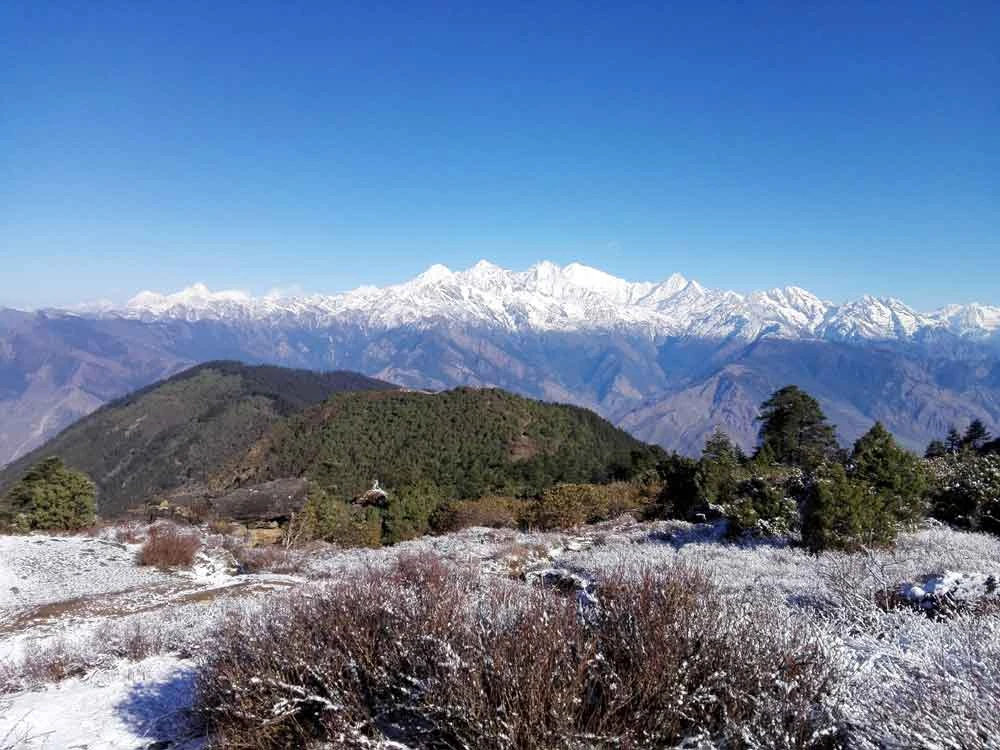
Spectacular Himalayan geography, featuring panoramic mountain vistas, dramatic valleys, glaciers, and high-altitude landscapes.

Glacially sculpted landscapes with striking contours, pristine valleys, and magical mountain views at every turn.

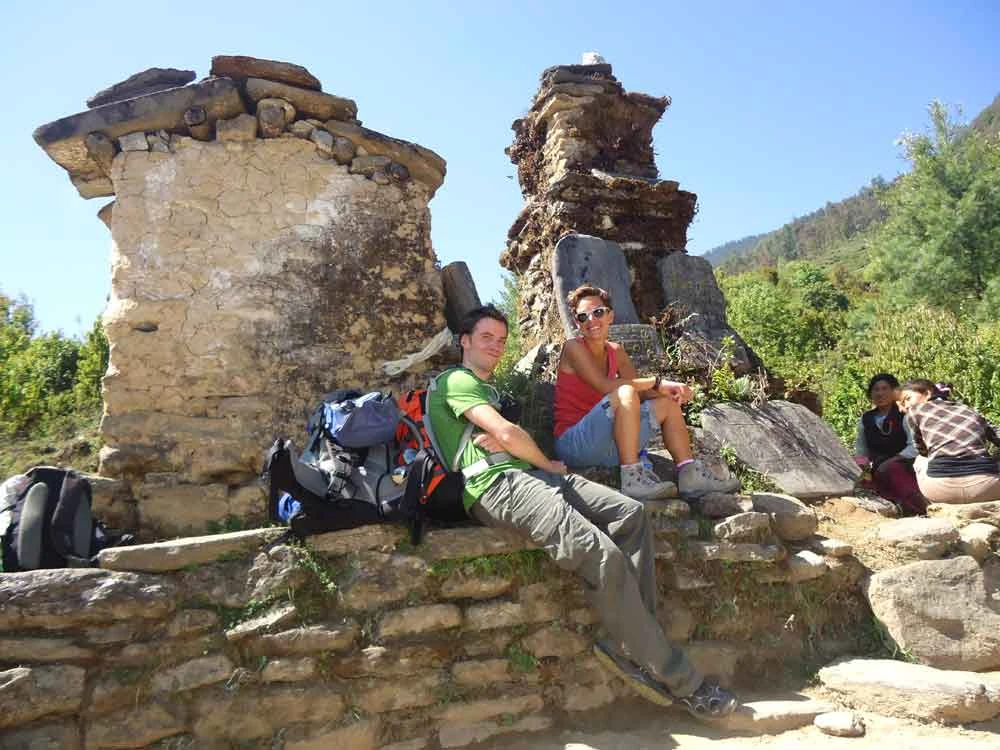
Rich Buddhist heritage and culture, with historic monasteries, stupas, chortens, and sacred shrines along the trekking route.

Exceptional opportunities for flora, fauna, and geological research within the protected environment of Langtang National Park.

Habitat of the endangered red panda, offering a rare opportunity to explore one of Nepal’s most remarkable wildlife habitats.

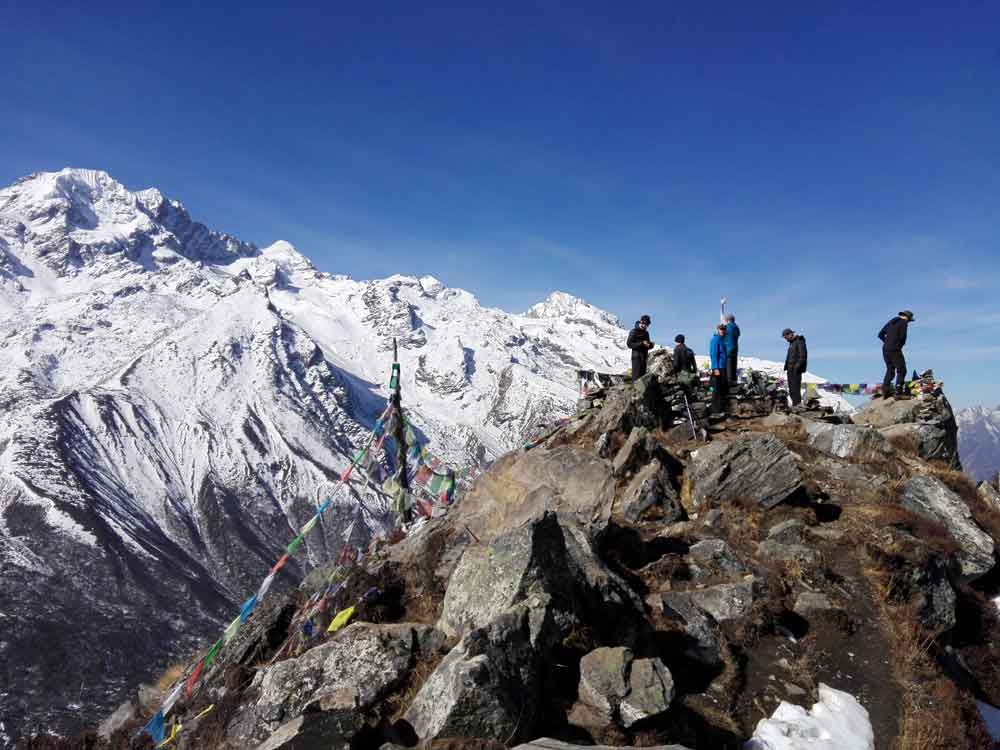
Massive Himalayan panoramas from Tserko Ri (5,030 m), one of the region’s premier viewpoints.

Breathtaking high-altitude vistas from Lauribina La, including expansive views toward the Tibetan Plateau and surrounding Himalayan ranges.

Kyanjin Gompa, a beautiful and culturally significant monastery in the heart of Langtang Valley, providing an excellent base for acclimatization and further exploration, including hikes to Kyanjin Ri and Tserko Ri.

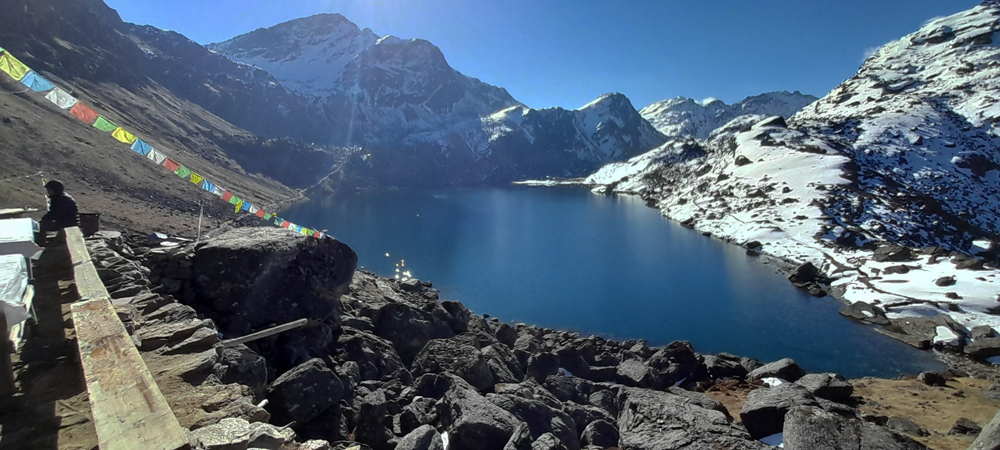
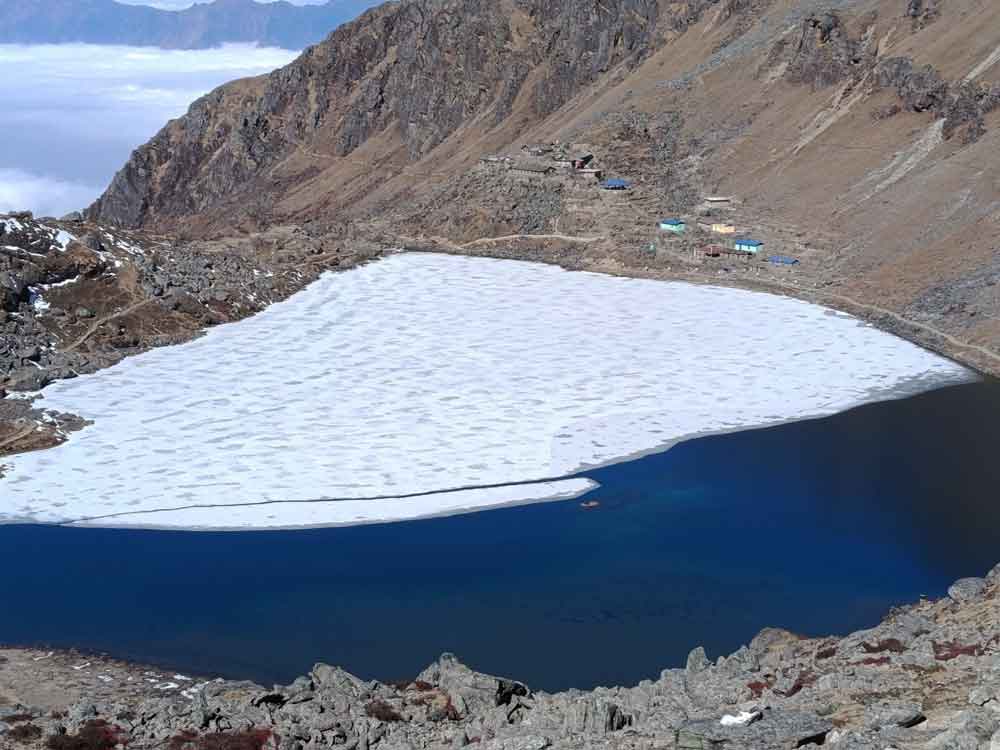
Gosaikunda Lake, a sacred alpine lake at approximately 4,310 m, surrounded by a spectacular cluster of smaller high-altitude lakes and revered for its religious and cultural significance.

Langtang Valley–Gosaikund Holy Lake Trek
langtang

The Langtang Valley–Gosaikund Holy Lake Trek is one of Nepal’s most rewarding trekking experiences, combining spectacular Himalayan scenery, diverse landscapes, rich Tamang and Buddhist culture, and the spiritual significance of the sacred Gosaikund Lake.

The journey begins through dense rhododendron and alpine forests, following the river upstream through picturesque landscapes. As the trail gradually rises above the tree line, the scenery transforms into a dramatic alpine environment of glacial moraines, rugged mountains, and high-altitude valleys, eventually reaching the rebuilt village of Langtang.

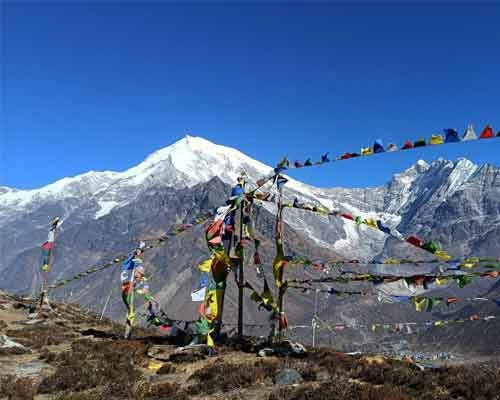
Continuing deeper into the valley, trekkers encounter expansive yak pasturelands and the historic Kyanjin Gompa, a culturally significant monastery and renowned center of traditional yak-cheese production. The surrounding Himalayan panorama is spectacular, with magnificent views of Langtang Lirung and other snow-capped peaks. An acclimatization hike to Tserku Ri provides an unforgettable high-altitude perspective across the Langtang Himalayas.

The trail then retraces its route through terraced fields and along the river before ascending toward the picturesque Thulo Syabru, a traditional Tamang village. From here, the trek continues through beautiful alpine forests and peaceful mountain landscapes toward the sacred Gosaikund Lake.

The ascent toward Lauribina La is particularly rewarding. The trail climbs steadily along a serene mountain ridge, revealing increasingly spectacular views of Mount Manaslu (8,163 m), the Annapurna range, Ganesh Himal, Paldor Peak, and the Tibetan Plateau to the north. The combination of pristine forests, dramatic ridgelines, and expansive Himalayan panoramas makes this section both peaceful and exhilarating.

Eventually, the trail leads to Gosaikund, one of Nepal’s most revered high-altitude pilgrimage sites. The sacred lake is part of a larger complex of alpine lakes, each associated with different religious traditions and legends. During the full moon festival in August, thousands of Hindu and Buddhist pilgrims travel to Gosaikund to perform rituals and bathe in its sacred waters.

According to Hindu mythology, Gosaikund was created by Lord Shiva. Legend holds that after Shiva swallowed poison to save the universe, he struck the ground with his trident, releasing a spring of water to quench his thirst. The spring that feeds Gosaikund is therefore considered sacred, and the lake continues to hold profound spiritual importance for pilgrims and visitors alike.

With its combination of Himalayan wilderness, glacial landscapes, ancient culture, wildlife, breathtaking mountain views, and sacred traditions, the Langtang Valley–Gosaikund Holy Lake Trek offers a truly unforgettable journey through one of Nepal’s most fascinating mountain regions.
ruggedtrail

Main Features of Langtang and Gosaikunda Holy Lake Trekking

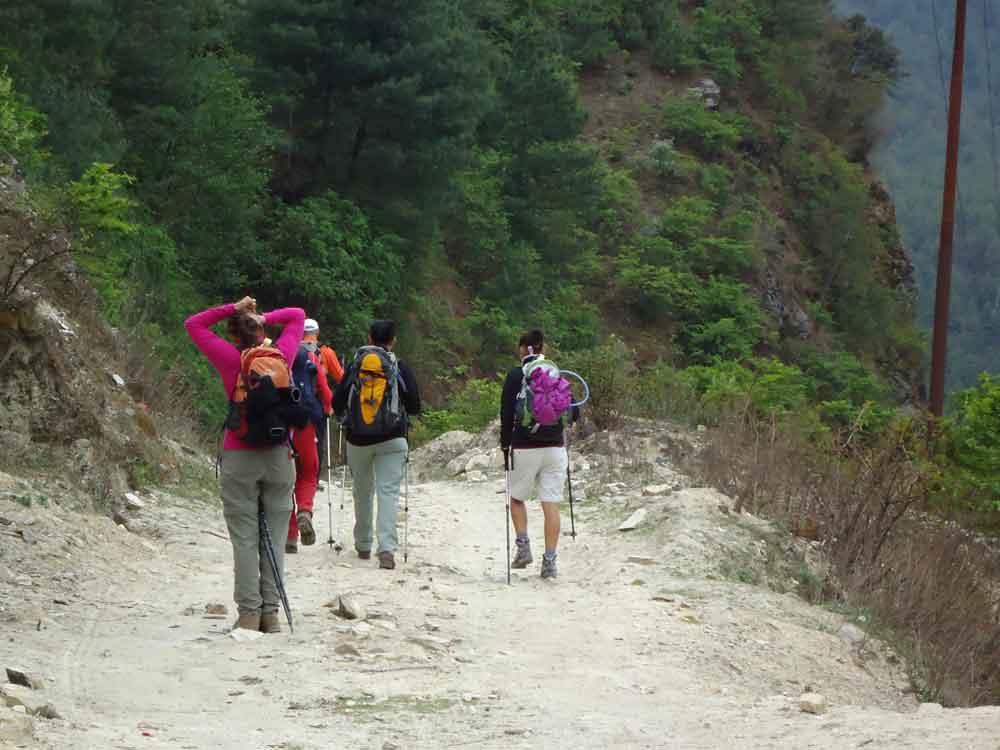
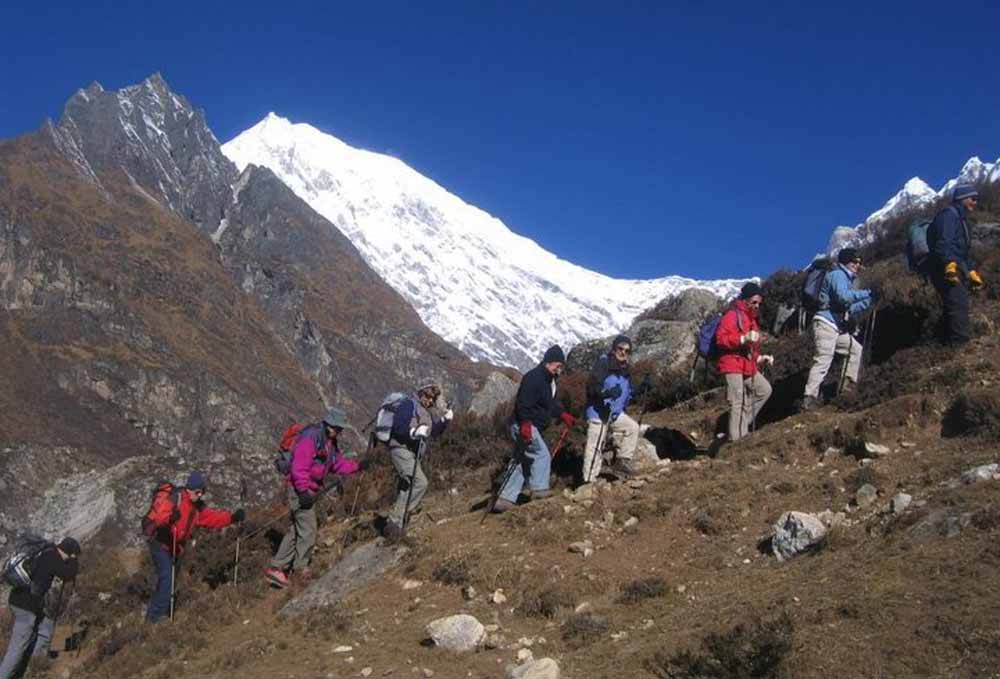
  • Trail condition: The Langtang Gosaikunda trek is generally considered moderate to hard. The trek involves steep climbing, particularly after Pairo Thaplo, Thulo Shyabru, Shing Gomba, and during the ascent to Gosaikunda. This is a bit of challenging hiking and an experience of the thin air at the higher elevations. Take your own space, take a break whenever you find the best viewpoint, and enjoy 360-degree panoramic views.
  • Landscapes: The trail takes you through lush rhododendron and bamboo forests, charming Tamang and Sherpa villages, wide river valleys, and eventually up to alpine pastures along the mighty holistic path and glacial ridges.
  • Himalayan Views: You'll be treated to spectacular panoramic views of several peaks such as Langtang Lirung, the Tibetan border Line Mountains, and the Holy Mt. Ganesh Himal, Mt. Manaslu, Dhakpache, Yala Peak, and Annapurna.
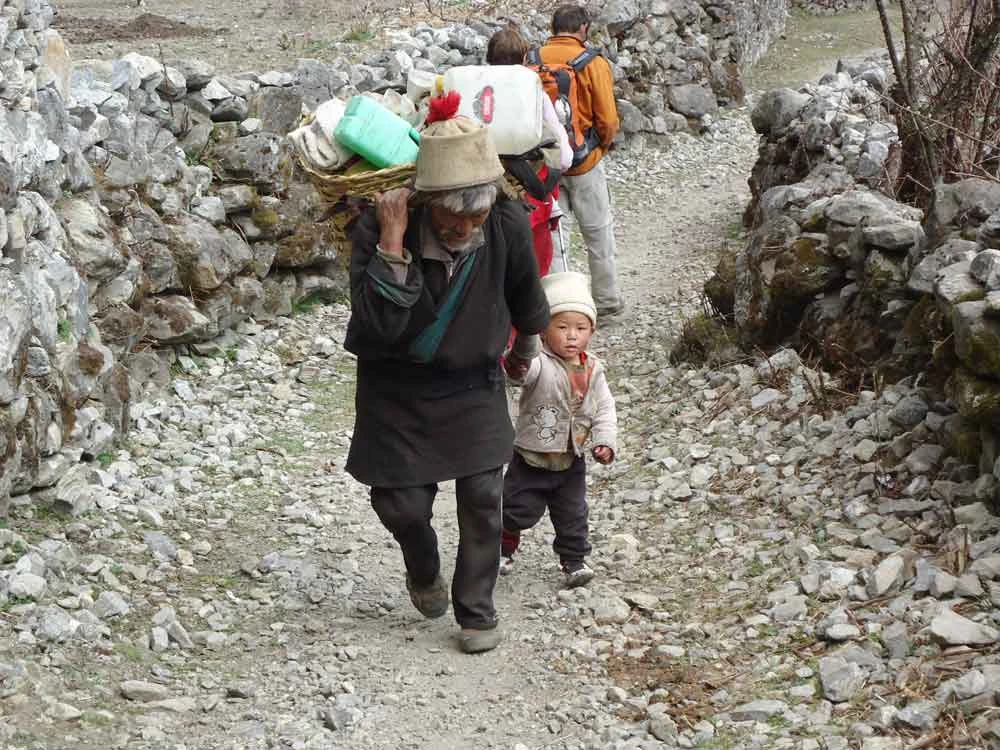
  • Cultural Immersion: Interact with local Tamang and Sherpa communities, experience their unique culture, and visit traditional villages and monasteries.
  • Wildlife: The trek passes through the National Park, offering chances to spot several species of wildlife, including the endangered red panda.

Spiritual Significance of Gosaikunda Lake
Gosaikund

"Gosaikunda Lake holds immense religious importance for both Hindus and Buddhists"

  • Hindu Mythology: According to Hindu mythology, Lord Shiva created the lake by piercing the ground with his trident (trishul) to quench his thirst after consuming poison during the "Samudra Manthan" (churning of the cosmic ocean). It's believed that taking a holy dip in the lake, especially during the annual Janai Purnima festival (full moon in August), cleanses one of sins.
  • Buddhist Beliefs: Tibetan Buddhists believe that the area is considered a meeting point between the divine and earthly worlds, ideal for spiritual practice and meditation. They believe that dipping in the sacred lake can help achieve enlightenment.

The best seasons for the Langtang Gosaikunda Lake Trekking

  • The spring (March to May): Mild temperatures, clear skies, and rhododendron blossoms with panoramic mountain views.
  • The autumn (September to November): This is the most popular season due to stable weather, dry trails, and excellent visibility of the mountains.
  • The monsoon season: Especially focused on pilgrimage expectants.
  • The winter season: It is possible to trek; however, it will be more challenging due to the snowfall and cold temperatures at Gosaikund Lake.
Itinerary

Driving starts just after your breakfast. While driving: you will see many different landscapes, Nepalese cultures, traditions, and experience the real Himalayan lifestyle closely.

deurali

After morning breakfast follow the Langtang river bank with a spectacular view of the Jungle, river, and local culture. Lunch in Bamboo on the way you also see the wild bee hive on the other side of the River.

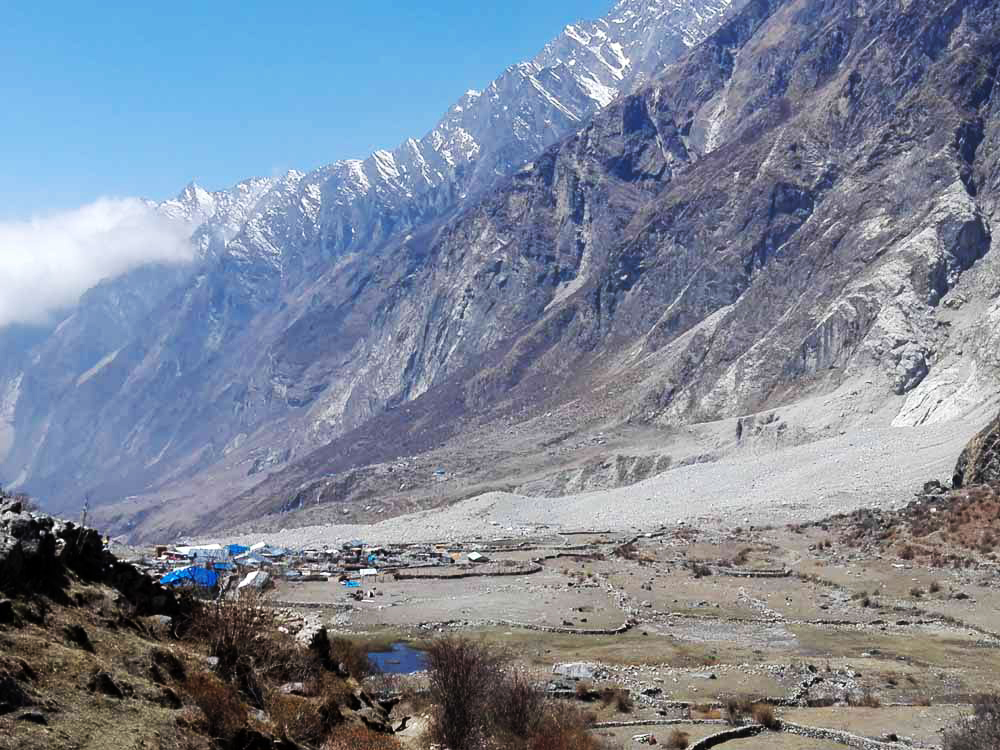
Following the gradual way up from the pine forest, oak, rhododendron, and many other flora, the Langtang mountain seems to spy on you all day through. The trail continuously heads gently upwards from Ghoda Tabela, Thangsyap to the Langtang village. The village was badly collapsed by the avalanche that fell from Mt. Langtang during the devastating earthquake in 2015. So many locals including trekkers, have lost their lives by that time in Langtang village. The big piles of rocks and ice are boulding up the moraine where the main village was situated. Nowadays the new Langtang village is settled on the upper side of the legendary village.

langtang

Having a panoramic view of Mt. Langtang and other natural diversities makes your day more interesting and exciting. After a nice breakfast, the way starts easy uphill to Kyangjing Gomba by following the Langtang Valley. You arrive in Kyanjing by lunch and take a noon-time excursion around the cheese factory or Glacier Moraine.

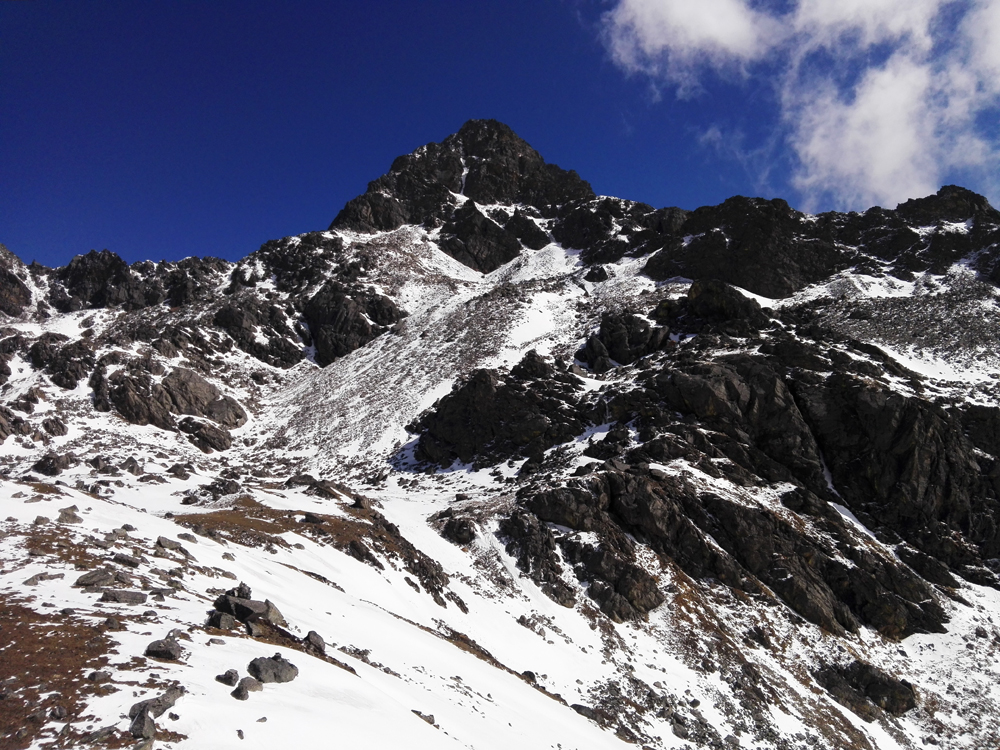
A little earlier breakfast is better for today. Take your packed lunch and enough water for your final and important excursion to Tserku ri 5030mtrm. Climbing up will be challenging however the views from the top will be lifetime unforgettable.

dhakpatse

Return down along the same way that we came through.

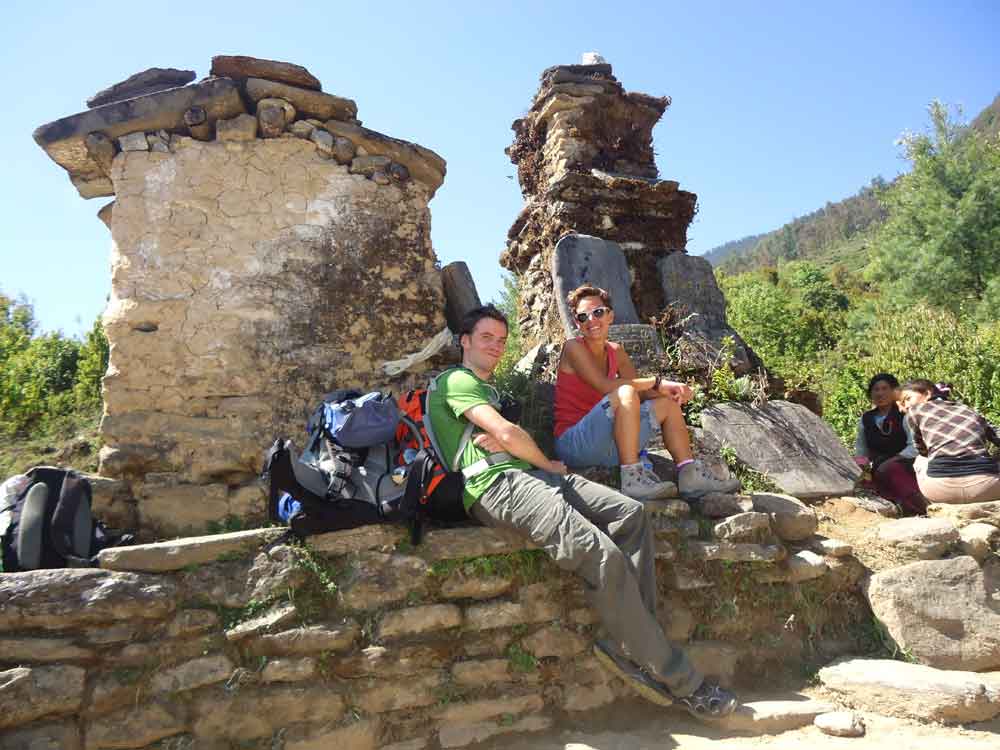
Passing an easy trail through the beautiful Oak forest, beach, rhododendron, paper plant, bamboo, etc. Then the uphill starts for 2 hours to Tamang Ethnic village

Thuloshyabru

Often trail goes steep up to Phoprang Danda, But the view of Langtang, Ganesh Himal, and Manaslu range make your climbing very comfortable. Making a tea break at Phoprang Danda with its massive surrounding views will be beneficial. Turn to the left easy way through the deep forest to Cholangpati without reaching Sing Gomba. This trail is quite interesting and primitive, it is not difficult however very few people know about it. You can stop at Cholangpati overnight at a local tea house.

Lauribinala

The trail goes gradually upwards but is quite enjoyable passing through the alpine forest, the serene contour ridge Lauribina-La to holy Gosaikund Lake. You arrive by noon time and take an excursion around the viewpoint and Lakeside or he far more upper side of the Lake. Overnight at the local lodge.

lake

Make an excursion up to the viewpoint for a panoramic Sunrise. Descend to the lodge for breakfast and start walking down to Sing Gomba. Follow the same trail you came until beyond Cholangpati then continuously descend through oak, fir, and rhododendron forest to a beautiful little hamlet. That little settlement is called Sing Gomba, It has a beautiful Gumba with a white TARA statue also this village is very popular for the Himalay yak Cheese factory. Overnight at a nice hotel

Today we walk often along the pilgrimage trail, which mostly descends through the alpine forest. It is not steep down however one should walk down carefully because the trail is gregarious. We descend to Dunche Khola through the beautiful forest, passing a Mineral water factory, and reach Dhunhce Bazaar. Dhunche is the headquarters of Rasuwa District. Overnight at the lodge

Driving by private vehicle from Dhunche via, kalikasthan, Bedrawati, Trisuli Bazaar to Kathmandu. Overnight at a hotel in Kathmandu. 

Cost Details
What's included
  • International airport pickup with private vehicle
  • 2 nights deluxe room in Kathmandu on BB planning (3 stars hotel in Thamel) before the trek
  • Private comfort transportation to Shyabrubesi ( Public transport is very boring) 
  • Local kneed and clean accommodation during trekking
  • 3 times meals (breakfast, Lunch, and Dinner) during the trek
  • Professional guides and porters including their wages
  • Staff trekking insurance
  • Transportation charge for your trekking crews
  • All necessary permits for the Langtang trek 
  • 2 nights deluxe room in Kathmandu on BB planning ( 3 stars hotel in Thamel) after the trek
  • Farewell dinner
  • Airport drop with private vehicle


What's not included
  • Your International airfare
  • Your Personal travel insurance and Nepal entry visa fee
  • Extra night accommodation, lunch, and dinner in Kathmandu
  • Entrance fees, guides wages, and transportation for sightseeing in Kathmandu
  • Tips for your trekking staff
  • Your personal health insurance and expenses
  • Helicopter price in case you need to be evacuated
  • Drinks like alcohol, Coke, Fanta, mineral water, can juice, mars, bars, (all kinds of bottled drinks and packet cereals)
  • Warm water or tea in your drinking bottle
Useful Info

Personal equipment list

 Good walking boots, a pair of slippers to wear in the camp in the evening or when the boots are wet, a Warm jacket (Fiber fill or down should be adequate). A Rainproof jacket with a hood or poncho, Woolen shirts and thick sweaters or fleece jackets, Thin and thick trousers, and Trousers for higher up in the mountains in the morning and at night. Windproof/ waterproof trousers are necessary during treks going above 3000 m. Thermal underwear (These are excellent for sleeping at night), 2 pairs of loose-fitting long shorts/ skirts. 1 lightweight long-sleeved shirt is particularly suitable for avoiding sunburn. A woolen or warm hat to wear in the morning and at night. Sunhat and ensure it has a wide brim to cover the face and neck, a pair of gloves, and good sun/snow glasses (warm and normal ones), 2 pairs of thin and 2 pairs of thick warm socks, Underwear, buff, and hankies as you need. Necessary personal items if you are a woman.

Accessories

Duffle bag or kit bag to carry gear while trekking, sleeping bag, Small rucksack to carry personal requirements for the day, e.g., toilet paper, camera, film, towel, soap, etc. Water bottle. Snow glasses and sunglasses, 2-4 large plastic bags to separate clean clothes from dirty ones. Headlamp with spare batteries, Sun cream, personal medicine, lip guard, toothbrush, towel, Reading materials, camera, game items (optional), notebook, rubber band, pen and pencil, a diary, a pocket knife, trekking map, passport, and copies.

Drinking Water

Travelers should be very aware of drinking water in Nepal. They are not completely adapted to digest direct normal spring water due to bacteria. So, we recommend you drink mineral water or boiled water. Also, you can use some purifier tablets, such as chlorine tablets, for purifying water on the trek. We strongly recommend mineral water in the city area and purified or boiled water for the trek.

Travel Insurance

We advise you to have proper and valuable insurance for trekking in the Himalayas

Medical

You should carry all the necessary medicine for safety because there are no proper Medical centers in the Himalayas.

Accommodation

Expect basic teahouse and homestay accommodations with simple amenities

Similar Packages