Narphu - Thorongla Pass Trek - 17 DaysNarphu - Thorongla Pass Trek - 17 Days

Nar-Phu valley to Annapurna Circuit Trek: 17 Days

  • Duration17 Days
  • DestinationNepal
  • Difficulty Strenuous
  • Max Altitude 5416 m
  • Activity Trekking & Excursion
  • Group Size Min - 2 pax
  • Accommodation Comfortable Hotel & Lodge
  • Meals Full Board on the Trek
  • Transportation Private Vehicle & Flights
  • Starts KTM- Jagat jeep drive & Trek
  • Ends Jomsom
  • Best Season Sep-Nov and March-May
Overview
Trip Highlights

The Nar-Phu Valley offers an unparalleled opportunity to explore a truly untouched part of the Himalayas, immerse yourself in a vibrant culture, and embark on an unforgettable adventure.

Route: The trek typically starts from Koto (accessible by drive from Kathmandu via Besisahar and Jagat) and leads through villages: Meta, Phu, Nar Phedi, and Nar. A major highlight is crossing the Kang La Pass, offering panoramic views of the Annapurna range. Entering the Manang Valley and following the Annapurna Circuit trails to the Mustang region.

Exploring the lost (newly opened) Nar- Phu valley, visiting the famous holistic sites like the oldest Monastery and Milarepa cave at Manang Valley and the famous temple at Muktinath after crossing the last challenging Thorong La pass.

Terrain: Remote location, Smooth, gradual walking up through subtropical dense Rhododendron, Pine forest to the arid and demanding terrain landscape.

Pristine Wilderness: The valley boasts a rugged landscape of snow-covered peaks, barren cliffs, deep canyons, river gorges, glacial lakes, and high-altitude pastures. It offers a sense of true wilderness and solitude.

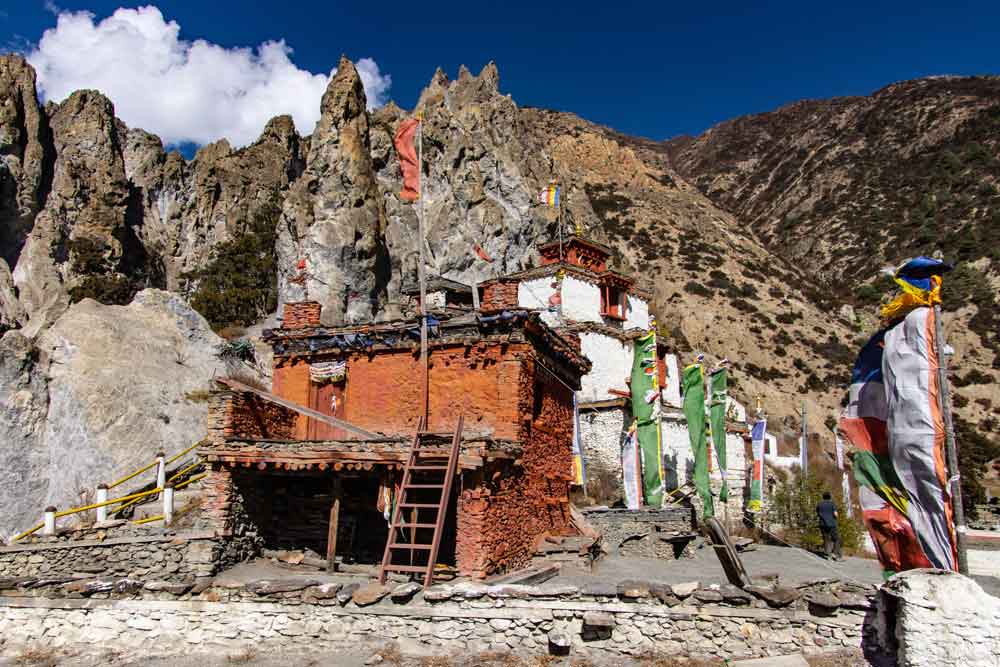
Ancient Buddhist Culture and Tradition: Nar- Phu valley is a highly Tibetan-influenced cultural region. The remote villages of Nar and Phu are home to a community that has maintained its ancient traditions, untouched by modernity. Visit ancient Buddhist Monasteries, monuments, and traditional stone-walled villages, including Manangis' culture and traditions. You can experience a blend of Tibetan Buddhism and Bon culture, explore ancient monasteries (like the Tashi Lakhang Monastery), and witness traditional lifestyles of farming and yak herding.

Miraculous and Challenging Trip: The trek is considered moderately to challenging due to its high altitude. However, the breathtaking views, unique cultural insights, and sense of adventure make it an incredible trekking reward.

Two thrilling high passes: Reaching up to 5,320 meters at Kang La Pass and entering to the Manang Valley and following the Annapurna Classic route to the famous Thorong La 5,420-meter pass.


Nar Phu Valley to Annapurna: The Miraculous Trek

narphu

Nar Phu to Annapurna Circuit trek is an ideal newly opened trekking trail in the Annapurna region. This trek is preferred by those who want to discover the Annapurna circuit as well as explore an untouched valley. A rough and wild trek takes you to the exotic Nar Phu valley that lies in the remote corner of the Annapurna region. This remote Tibetan inhabitant’s trek has been open to trekking since 2003. The People who are living around this area are called Gurung, but they are originally a Tibetan ethnic group. Their ancestors came across the Himalayas thousands of years ago and settled in this hidden place from decade to decade. While their ancestors were involved in nomadic, Trans Himalayan trading and herding animals. Still, people from this region have a similar culture, tradition, and language to Tibetans. They are known as the Manangis ethnic group from the rural Himalayas of Nepal.

Nar-Phu Valley is above the tree line on the upper limits of cultivation, in the very north of the Manang district. This village or valley was restricted for a long time, so the people from this area couldn’t have an interaction with people from another world; thus, their life was completely chained to animal husbandry, seasonal agriculture, and Trans-Himalayan trade for livelihood.

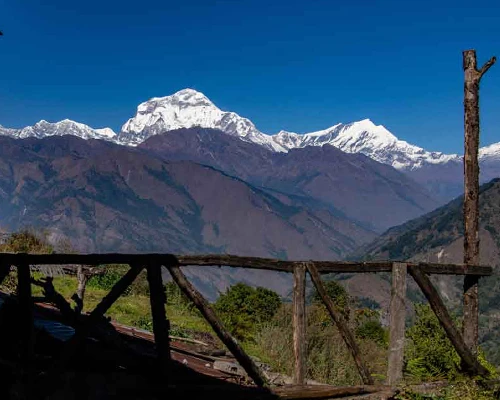
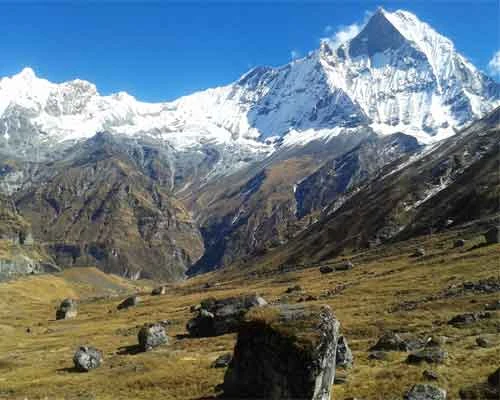
The Nepal government’s recent decision to open Nar and Phu has evoked little enthusiasm among the villagers and their livelihood. It is a suitable place for people who are looking for virgin land for their travel, culture, tradition, and research along the undiscovered valley. Besides that, it's a hidden paradise; this trek also offers fantastic views of the Annapurna massif, Lamjung Himal, Machhapuchhre Himal, Manaslu Himal, Dhawalagiri range, and Tilicho Peak.

Best time to trek into the Nar-Phu Valley  

Spring (March to May) and autumn (September to November) are considered the best seasons for trekking in Nar-Phu Valley. These months offer stable weather, clear skies, and comfortable temperatures, providing excellent visibility of the mountains and lush landscapes.

Winter (December to February) is not recommended due to the cold, with a risk of heavy snowfall, potentially closing high passes. Phu village is largely abandoned by residents during this time.

Monsoon (June to August) is often rainy, the trail is slippery, and the humidity increases in lower areas. However, the Nar-Phu is in a rain-shadow region, and it can still be trekked, though with more challenges.

Itinerary

We will meet you at the Airport and greet you with flower garlands, transfer to your hotel. You have free time to explore the city and change the money for the trek.

Trekking permit preparation, sightseeing around the UNESCO’s cultural world heritage site.

bees

Kathmandu to Besishahar driving a private vehicle, then drive to Jagat by local Jeep. Take a morning overland drive along the Prithvi highway to Dumre and leave the road to Pokhara by turning right valley towards the Marsyangdi River until you arrive at Besishahar. Prithvi Highway is one of the most important roads connecting Kathmandu with the western parts of Nepal, including India, that is why you may stop several times along the highway until “Muglin,” a little town. The road from Muglin to Pokhara is also under widening construction, so you may have a bumpy drive till Dumre. Anyway, this drive is so enjoyable because of the different natural diversities, cultures, people, and villages along the famous Trisuli River bank.

You must change the vehicle at Besisahar. The road is already extended till Manang from Besisahar, so that better to take a jeep ride until Jagat, while the trekking trail is already destroyed by the road; otherwise, trekkers must walk along the dusty, rough road. Starting trekking from Jagat has two benefits one is for altitude reserve and the other for walking along old scenery trekking.

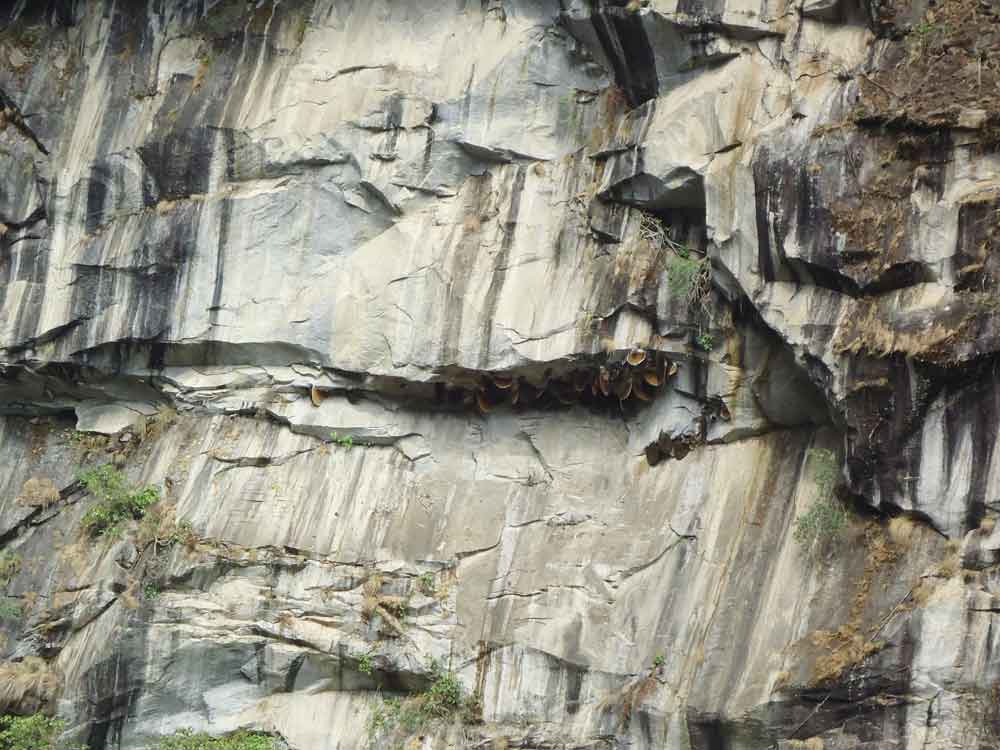
Start your trek after breakfast, the beginning of the trek must follow along the road until Chamche village. The sky touching looks like hills standing on both sides of the River, Wild bees, and beautiful waterfalls are the major attractions of the day. Avoid the road at Chamche, cross another side of the River over a suspension bridge, and walk via the classic trekking trail to Taal. Taal is a very beautiful 1st settlement of Manang District and has been destroyed many times by natural disasters. There is a very interesting old trekking trail from Taal to Dharapani but it is closed during the rainy season due to landslides and rock-falling problems. If it is closed, cross the suspension bridge beyond Taal and walk along the street to Dharapani and overnight at the local tea house.


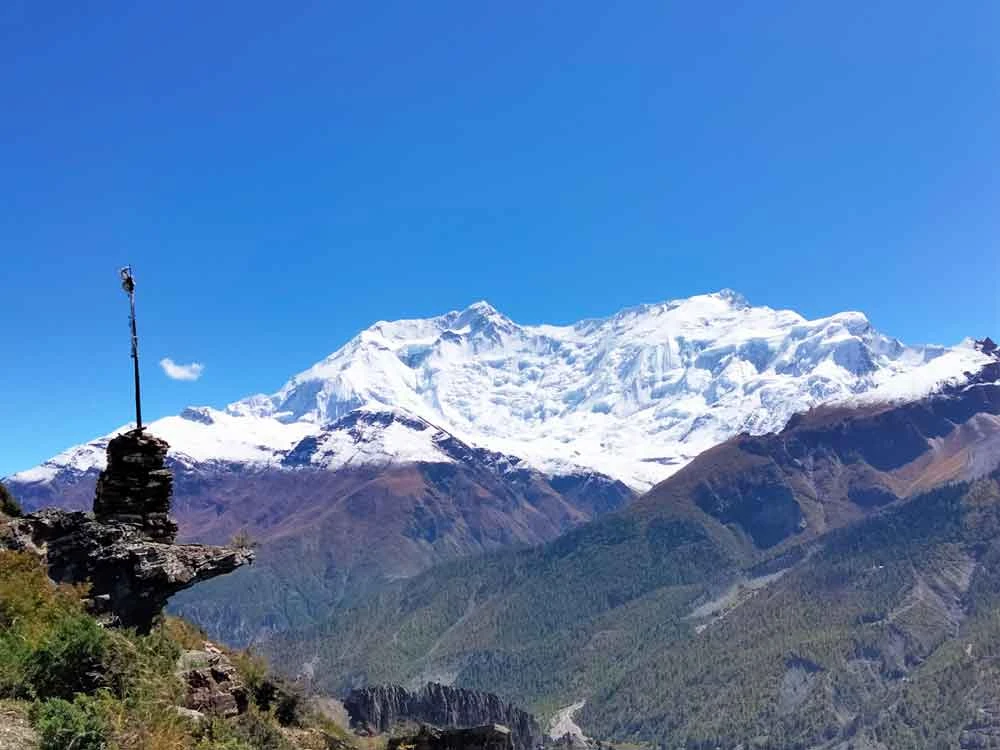
kotoThe valley extends westward through the heavy bushes of fir and pine forests. After half an hour of walking, we reach Bagarchap (2160m). The village was once swept away by a flooded avalanche. After 25 minutes of walking, you get in touch with Danaque village, then walk steeply up to Timang village (2100m) through the forest. From Timang, you will have excellent views of Mt. Manaslu, Lamjung Himal, Annapurna II (7937m), and Annapurna III (7555m). Make a small break in this typical Tibetan architectural village. Their typical homes are very beautiful, with stacking firewood on the roofs in preparation for the long, hard winters. The village marks the transition between the lower wet valleys and the higher dry arid areas of the Manang Valley. The path is gradually flat to Thanchok (Buckwheat, potatoes, and barley land), then Koto overnight.

We enter the restricted area with our permits and continue our trek along Naar Khola. Trekking through dense forests of juniper and pine, we cross a suspension bridge and reach Dharmasala. We come across a beautiful waterfall on our way to Meta. Overnight at a local lodge.


phuCrossing a few suspension bridges over different water streams, we pass the small villages of Jhunam, Chyakhu, and Kyang. We trek along Phu Khola on rocky trails till we reach Phu. We may encounter blue sheep grazing in the field. Visit Tashi Lakhang Monastery, which is known as the last monastery built by Karmapa Rinpoche. Overnight at a lodge in Phu.

Today we will rest at Phu village for exploration. Phu is a beautiful village inhabited by mixed ethnic groups like Gurung, Ghale, and Tibetans. We will get a chance to know about their culture, tradition, and lifestyle.  Also, we will visit the monastery in the evening.

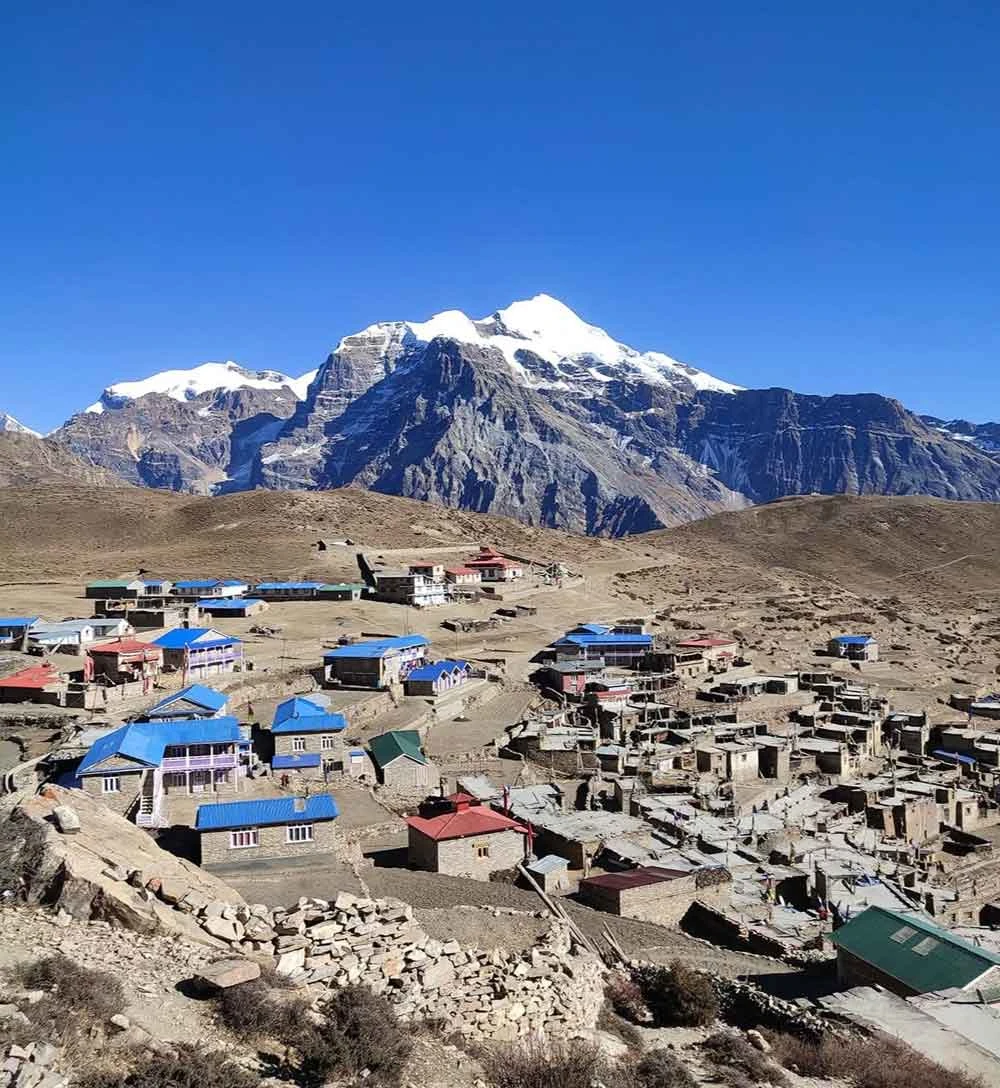
Trekking downhill and crossing many small streams over suspension bridges, we pass lush Himalayan forests to reach Mahendra Pul. We trek through the gorge of the Labse River before descending downhill to Nar. We will pass many Buddhist stupas and monasteries on our way to Nar. Overnight at the local lodge.

naar

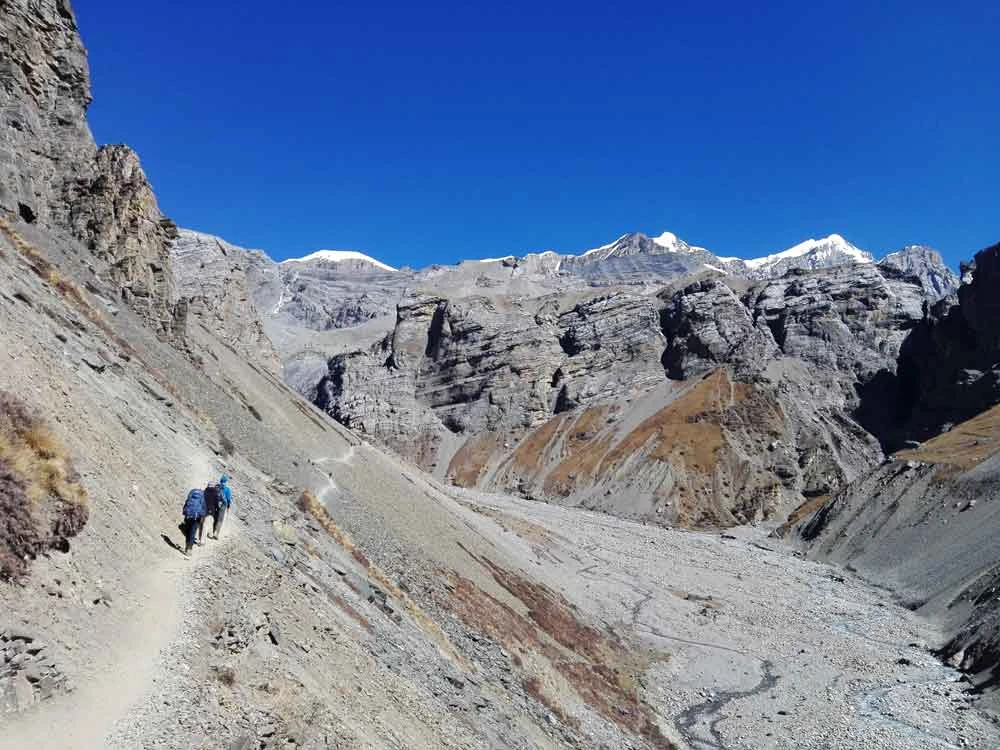
We start early morning for the Spectacular Kang La pass trekking uphill to Jhombu Kharka aka Kang-La, which hosts an outstanding view of the Annapurna range, Dhaulagiri range, and the other Himalayas. On our way to Kang-La, we may come across some yak herder’s camps. After relishing the beautiful panorama of the Himalayas, we trek downhill to Ngawal. Overnight at a local lodge

kangla

Today, we will walk through the flat valley along the bank of the Marshyandi River. On the way, we will pass the pine forest, the farming terrace, and the beautiful village of Braga. On the route, we can visit Braga monasteries, the view of the Annapurna range, and Tilicho peak. Overnight in Manang 

monastery

The trail moves through alpine pastures to scrubby forests of juniper and ascends to Tenki to Yak Kharka.


Yak Kharka to Phedi continues climbing along the bank of the Jorsang Khola. Sometimes it is possible to see a group of blue mountain sheep. 

thoronglapass

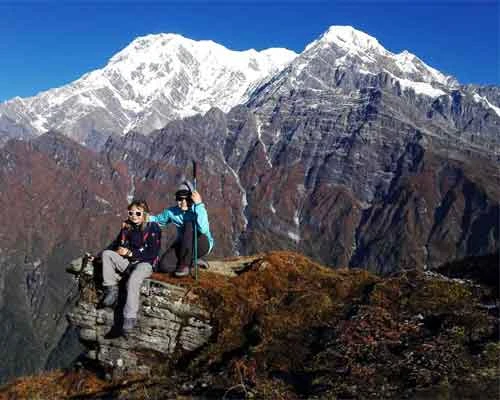
From Phedi, it is a steep ascend to high camp, then continues on moraines and follows rocky ridges as it ascends to the pass. The views from the trail and the pass called Thorong la (5416m.) are outstanding. You can see the long great barrier ridged of Gangapurna, Annapurna, and Thorong Peak, Khatung Kang Peak. From the top, the trail descends steeply down to Muktinath (3800 m), the most important pilgrimage site. It is also a village of Tibetan ethnic and holy Buddhists.

Visit the holistic temple site before breakfast and descend via Jharkot village. If you are fit enough, then hike via LUBRA valley to Jomsom. That at least avoids disturbance of the vehicle. We don’t recommend walking along the frequently traveled road to Jomsom. The evening will be a farewell dinner for the successful completion of the trek. Thanking you with some satisfied TIP to your trekking crews.

jharkot

 Take a morning a flight to Pokhara, and free time in Pokhara or explore around Pokhara.

Cost Details

We offer some essential discounts while there are big groups, family teams, travel Companies, partner agents, student groups, and nonprofit Organizations.

- Full package price for the group or more than 2 people: U.S. $ 2200.00 per person

- Service Price per person: U.S. $ 1600.00 

Note:  Permit for single people is not allowed. The included and excluded items on this site are based on a full package trip plan. You will get separate lists of included and excluded items on the Service trip price topic.

What's included
  • Pick up and drop transportation at the International airport.
  • 3 night’s hotel accommodation in Kathmandu on twin sharing basis on B/B plan.
  • Sightseeing in the UNESCO"S cultural world heritage site in Kathmandu with professional tour guide.
  • Entrance fees for the world heritage sites
  • KTM - Besi Shahar-  Koto  4x4 Jeep service and pokhara to KTM luxury tourist bus.
  • Jomsom - Pokhara domestic flight tickets
  • 3 meals a day during the trip (Breakfast, Lunch & Dinner) as mention in itinerary.
  • Accommodation on the trek in twin sharing basis in guesthouses with attach bathroom.
  • Annapurna conservation area permit and TIMS card.
  • Narphu Valley restricted area permit fee.
  • Professional  skillful guide and necessary staff
  • Salary, Food, Drinks, Accommodation, Transportation and Insurance for the Guide , portersand driver.
  • Medical supplies (first aid kit will be available).
  • All government and local taxes.
What's not included
  • International airfare to/ from Nepal.
  • Your travel insurance
  • Your Personal Medical expenses
  • Lunch and dinner in Kathmandu and Pokhara.
  • Helicopter charge in case of fast evacuation is needed.
  • Beverages, alcoholic drinks, mineral water, boiled water during the tour.
  • Your personal expenses
  • Entrace fees at the monasteries in Nahr Phu and Manang region.
  • Horse charges incase you rent for hiking
  • Personal equipments.
  • Tips and gratitude to your staff
  • Room charge and in case you return before our trip plan 
Useful Info

Some Important Trip Features

Duration: A typical Nar-Phu Valley trek takes around 10 to 17 days, depending on the itinerary and acclimatization plan. Our itinerary assumes a minimum of 4 hours to 10 hours of walking per day during the trek. But make it flexible according to your physical condition and abilities.

Difficulty: This is a challenging trek that requires good physical fitness and prior experience in mountain walking. Acclimatization is crucial to prevent altitude sickness.

As a restricted area, trekkers need two essential permits:

1) Nar Phu Valley Restricted Area (Special Permit)

2) ACAP (Annapurna Conservation Area Project) Permit.

Nar Phu Valley Restricted Area (Special Permit): It costs 100$ per person for a week and for additional 15$ per day per person (September to November). And it costs 75$ per person for a week and for additional 15$ per day per person (December to August).

ACAP (Annapurna Conservation Area Project) Permit: It costs 30$ per person and will be valid during your Trek

How about TIMS for the Nar Phu Valley Trek?

TIMS is not necessary for the Nar Phu Valley Trek when you have a Restricted Special Trekking Permit of Nar Phu Valley.

Mandatory Guide: Due to its restricted status and challenging terrain, solo trekking is prohibited. You must join an authorized trekking agency in Nepal and trek with a licensed guide and in a group of two or more.

Can Solo Trekker get a Permit for Nar Phu Valley?

Naar Phu valley trekking permit will not be issued for a solo trekker. There should be at least 2 people in a group.

Altitude sickness:

Altitude sickness (acute mountain sickness) is difficulty sleeping, dizziness, headache, fatigue, loss of appetite, rapid pulse, nausea, vomiting, etc. It affects mountain climbers, hikers, and skiers because of lower air pressure and lower oxygen levels. It occurs as a result of failure to adapt at a higher altitude. It happens most often in the brain or the lungs after the fluid begins to leak from the blood vessels.

When the fluid collects in the brain, you initially get headaches, loss of appetite, nausea, tiredness, a desire to lie down and feel powerless, physical unwillingness to move, and a decrease of consciousness, and the problem with balance coordination is called high–altitude cerebral edema (HACE). If the fluid is collected in the lungs, you become breathless and dry, and it causes a regular irritative cough, sometimes coughing up blood too, discoloration of the skin, and chest tightness is called high altitude pulmonary edema (HAPE).

Prevention:

To prevent acute mountain sickness, we have to follow fundamental gravity habits such as patience, consistency, and discipline in the mountains. The mountains have their own rule and regulations. We cannot turn them into our nature except by following and respecting them. Cloth properly according to the altitude, avoid rapid altitude gain, drink enough water or fluid, take enough acclimatization time to adjust the body at a higher altitude, avoid alcoholic items, control smoking, eat regular meals, and get higher & sleep at lower altitudes. Avoid high altitudes if you have heart and lung disease. If the symptoms occur, then stop climbing mountains and descend to a lower altitude. In case the person is seriously sick or cannot bring him/her to a lower altitude by walking and carrying, then she/he should be rescued by a quick Helicopter evacuation.

Clothing Equipment:

Lightweight walking boots, a pair of track shoes, and slippers to wear in the evening or when the boots are wet.

Warm jacket (Fibers fill or down should be adequate.)

Warm clothes or fleece jackets.

Thin and thick trousers.

Warm trousers are useful higher up in the mountains in the morning and at night. 

Thermal underwear (These are excellent for sleeping at night)

A pair of loose-fitting long shorts and 1 lightweight long-sleeved shirt are particularly suitable.

A woolen or warm hat to wear in the morning and at night. Sunhat and ensure it has a wide brim to cover the face and neck.

A pair of gloves (warm and normal ones)

2 pairs of thin and 2 pairs of thick warm socks.

Underwear, buff, and hankies as you need.

Accessories: Duffle bag or kit bag to carry your gear and a Small rucksack to carry personal equipment for the day, e.g., toilet paper, towel, soap, etc. Water bottle. Snow glasses and sunglasses, 2-4 large plastic bags to separate clean clothes from dirty ones. Headlamp with spare batteries, sun cream, personal medicine, lip guard, toothbrush, towel, Reading materials, game items (optional), notebook, rubber band, pen and pencil, a diary, a pocket knife, trekking map, passport, and copies.

Drinking Water: Travelers should be very aware of drinking water in Nepal. They are not completely adapted to digest direct normal spring water due to bacteria. So, we recommend you drink mineral water or boiled water. Also, you can use some purifier tablets, such as chlorine tablets, for purifying water on the trek. We strongly recommend mineral water in the city area and purified or boiled water for the trek.

Accommodation: We provide accommodation according to your demand and accessibility, either normal standards or comfortable luxury hotels in the City. We provide very neat, clean, and comfortable hotels, lodges, friendly homestays, or, locally, what is available for the most suitable on tour. The hotel and lodges around Naar Phu are normal with Tibetan-designed or artistic, with a warm dining room. Sometimes the hot shower room is separate or the outside.

Similar Packages