Everest Base Camp Trek Cost & Itinerary

The Everest Base Camp Trek in Nepal is one of the world's most iconic Himalayan adventures, taking you to the foot of Mount Everest (8,848.86 m), the highest mountain on Earth. This 16-day trekking adventure follows the legendary trail through Lukla, Namche Bazaar, Tengboche, Dingboche, and Gorak Shep before reaching Everest Base Camp (5,364 m) and the spectacular viewpoint of Kala Patthar (5,545 m). The Everest Base Camp Trek does not involve technical climbing, it is a challenging high-altitude trek that demands good physical fitness, endurance, and proper acclimatization. The journey rewards trekkers with extraordinary mountain scenery, authentic Sherpa culture, and an unforgettable experience in the heart of the world's highest mountain range.
Whether you are a first-time Himalayan trekker or an experienced adventure enthusiast, reaching the legendary Everest Base Camp is a lifetime dream. Standing beneath the world's highest mountain, Mount Everest (8,848.86 m), is an achievement that attracts trekkers, mountaineering enthusiasts, and adventure travelers from around the globe.
After spending the night at Gorak Shep (approximately 5,164 m), you will embark on a day hike along a rugged, rocky trail towards Everest Base Camp (approximately 5,364 m). The route takes you across the dramatic glacial landscape of the Khumbu region, offering close-up views of massive Himalayan peaks, the Khumbu Glacier, and the impressive Khumbu Icefall. At Base Camp, you can explore the legendary mountaineering campsite, take memorable photographs, and experience the extraordinary atmosphere of this high-altitude wilderness. After spending some time at the base camp, you will retrace your steps to Gorak Shep for an overnight stay.
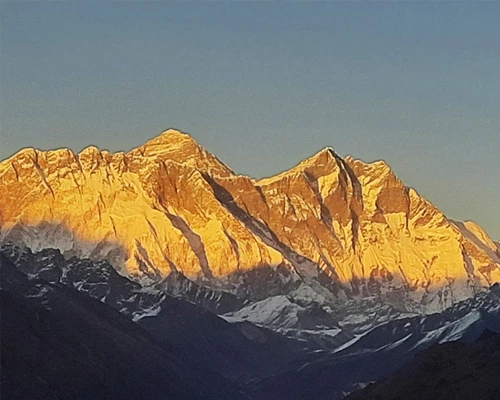
The following morning, an early excursion to Kala Patthar (5,545 m) offers another unforgettable highlight of the adventure. Starting before breakfast, this spectacular uphill hike takes you to one of the finest viewpoints in the Everest region. From the summit, you can enjoy breathtaking panoramic views of Mount Everest, Lhotse, Nuptse, Pumori, Khumbutse, Ama Dablam, Gyachung Kang, Baruntse, Thamserku, Kangtega, and the magnificent Khumbu Glacier. Kala Patthar is particularly famous for its impressive views of Mount Everest and the surrounding Himalayan giants.
Beyond the spectacular mountains, the Everest Base Camp Trek offers a rich cultural and natural experience. The trail passes through traditional Sherpa settlements, picturesque highland villages, and vibrant mountain communities. Along the way, you will cross several impressive suspension bridges, visit ancient monasteries (Gompas), stupas, and chortens, and explore the lively mountain town of Namche Bazaar. You will also encounter local people, traditional Sherpa lifestyles, yaks, yak-cattle crossbreeds (jopkyo), and mule caravans transporting supplies along the mountain trails. The memorials and monuments at Thukla Pass provide a meaningful opportunity to remember the mountaineers and climbers who lost their lives in the Himalayas.
Everest Base Camp Trek Route and Transportation
The Everest Base Camp and Kala Patthar Trek generally begins with a drive from Kathmandu to Ramechhap, followed by a short mountain flight to Lukla, depending on the flight schedule and operating conditions. Alternatively, travelers can choose an overland journey by jeep from Kathmandu towards Salleri or Bupsa, followed by trekking to Lukla.
From Lukla, the classic trekking route follows the heartland of the Sherpa community, passing through Phakding, Monjo, Namche Bazaar, Tengboche, Pangboche, Dingboche, and Gorak Shep before reaching Everest Base Camp and Kala Patthar. The return journey follows the same main trail towards Lukla, from where you can take a morning flight back to Kathmandu or arrange an overland jeep transfer.
This remarkable Himalayan journey combines dramatic mountain landscapes, high-altitude adventure, rich Sherpa heritage, and the personal achievement of reaching the foot of Mount Everest. It is truly a once-in-a-lifetime trekking experience in Nepal.
Why Choose the Everest Base Camp Trek?
"Make your dream of reaching Everest Base Camp a reality with TOUREN NEPAL TREKS!"
The Everest Base Camp Trek is an extraordinary Himalayan adventure that combines breathtaking mountain scenery, authentic Sherpa culture, and the excitement of exploring some of the world's most magnificent peaks. This 16-day journey is much more than an ordinary trekking holiday; it is a remarkable personal achievement filled with unforgettable experiences and lifelong memories.
Step into the heart of the Himalayas and follow in the footsteps of legendary mountaineers. Journey through Spectacular Mountain landscapes, traditional Sherpa villages, and dramatic glacial valleys before finally standing at the foot of Mount Everest, the world's highest mountain. Feel the pride and satisfaction of reaching the legendary Everest Base Camp, where your own footsteps become part of an unforgettable Himalayan adventure. Celebrate your determination, endurance, and achievement as you accomplish one of the world's most iconic trekking journeys.
Necessary permits for the Everest Base Camp trek:
Sagarmatha National Park Entry Permit: Required to enter the national park, which is a UNESCO World Heritage Site.
Khumbu Pasang Lhamu Rural Municipality Entrance Permit: This is a local permit that has replaced the old TIMS card for this region.
These permits can be obtained in Kathmandu or at checkpoints along the trail.
Best Time to Trek to Everest Base Camp
The most popular times for the EBC trek are during the two main trekking seasons:
Spring (March to May): The weather is generally warm and stable, and the rhododendron forests are in bloom. This season also coincides with the Everest climbing season, so you can see the base camp bustling with expedition teams.
Autumn (Late September to November): This is widely considered the best time to trek. The monsoon has cleared the skies, offering pristine, clear views of the mountains. The weather is stable, and the temperatures are comfortable for trekking.
It is possible to Everest Base Camp in winter (December to February) and summer (June to August), but they come with more challenges. Winter is extremely cold, and the trails can be snow-covered, while the summer monsoon brings rain, cloudy skies, and slippery trails.
Key Fitness Preparation for the Everest Base Camp Trek:
Proper physical preparation is essential for a successful and enjoyable Everest Base Camp (EBC) Trek. We recommend a training program focused on cardiovascular endurance, muscular strength, and regular hiking practice to help you prepare for the physical demands of this high-altitude adventure.
The main objective is to build sufficient stamina to walk approximately 5–9 hours a day over varied mountain terrain, including gradual ascents, steep uphill sections, and challenging downhill trails while carrying a comfortable daypack.
You do not need to be a professional athlete or an experienced mountaineer to complete the trek. However, developing good physical fitness and walking endurance before departure will make the journey more manageable and enjoyable. Here are some methods to build up Physical stamina:
Aerobic endurance: Build a base with cardio (running, cycling, swimming, stair climbing) 3–5 times per week at conversational pace.
Hiking practice: Hikes with a 5–8 kg pack, ideally back-to-back days to mimic trek conditions. Train in your actual boots.
Strength training (whenever you get time): Squats, lunges, step-ups, calf raises, planks to protect knees and power climbs.
Downhill training: Practice descents to prepare joints; trekking poles recommended.
Mental preparation: Make a mindset that the most worthwhile thing is not easy to get. Expect fatigue, altitude challenges, and repetitive long days