Mera Trek and Peak ClimbingMera Trek and Peak Climbing

Mera Peak Climbing

  • Duration17 Days
  • DestinationNepal
  • Difficulty Challenging
  • Max Altitude 6476m
  • Activity Trek & Climbing
  • Group Size 1-10
  • Accommodation Hotel-Lodge & camping
  • Meals 3 Times a Day
  • Transportation jeep & Flight
  • Starts Solu
  • Ends Lukla
  • Best Season September-November, March- May
Overview
Trip Highlights
  • Summit Mera Peak (6,476m), one of Nepal's highest trekking peaks.
  • Explore the remote and beautiful Hinku Valley.
  • Experience traditional Sherpa villages and Himalayan landscapes.
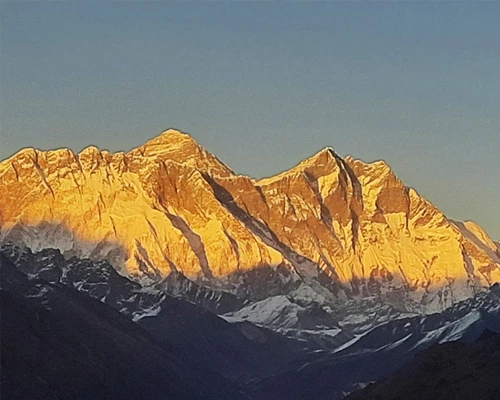
  • Enjoy spectacular views of Mount Everest, Lhotse, Makalu, Cho Oyu and Kangchenjunga.
  • Experience glacier trekking and high-altitude mountaineering.
  • Practice essential climbing skills with experienced mountain guides.
  • Witness breathtaking Himalayan sunrise and sunset views from Mera High Camp.

 Mera Peak Climbing – The Perfect Introduction to Himalayan Mountaineering

mera
Everest view from the top of Mera Peak

Mera Peak, standing at 6,476 meters, is located in the Mahalangur Himalayan range of eastern Nepal, within Solukhumbu District. It has three principal summits: Mera North (6,476m), Mera Central (6,461m) and Mera South (6,065m). Mera North is the highest and the principal climbing objective of this expedition.

Mera Peak is widely regarded as an excellent introduction to Himalayan mountaineering for physically fit trekkers aspiring to experience their first 6,000-meter summit. Although the standard climbing route is relatively straightforward compared with more technical Himalayan expeditions, climbers must cross glaciers, negotiate crevassed terrain and use essential mountaineering equipment, including crampons, an ice axe, a harness and fixed-rope safety equipment where required.

This adventure provides an excellent opportunity for aspiring mountaineers to test their physical endurance, develop basic climbing skills and gain valuable high-altitude experience before attempting more challenging Himalayan expeditions. Previous mountaineering experience is beneficial, but proper preparation, suitable equipment, acclimatization and professional climbing guidance are essential.

Experience the Natural and Cultural Beauty of the Everest Region

Mera Peak Climbing is not just about reaching the summit; it is also an extraordinary journey through some of the most beautiful and remote landscapes of the Nepalese Himalayas. The route through the Hinku Valley offers a different perspective of the Everest region, away from some of the busier trekking trails.

Along the way, trekkers experience traditional Sherpa villages, ancient Buddhist monasteries, colourful prayer flags, swinging suspension bridges, lush forests and spectacular mountain scenery. As the trail gradually ascends into the alpine wilderness, the landscapes transform into rugged valleys, rocky moraines and impressive glaciers.

Touren Nepal Treks organizes the 17-day Mera Peak Climbing expedition with experienced climbing guides, professional mountain support and carefully planned acclimatization. Our team prioritizes safety, responsible trekking practices and personalized assistance throughout the journey.

Whether you are an adventurous trekker preparing for your first Himalayan summit or an aspiring mountaineer looking to gain high-altitude climbing experience, Mera Peak Climbing offers an unforgettable opportunity to explore the Himalayas and achieve an incredible mountain adventure.

Itinerary

Driving to Kharikhola is fantastic along the rough, tough road via the lowland to the chilly passes by crossing several wonderful villages and landscapes. Overnight will be at Kharikhola. It will take approximately 12-14 hours of driving.

If you go by flight, the jeep drive starts around 2:00 AM from Kathmandu to Ramechhap airport and catches the flight to Lukla. After landing at Lukla, the trek goes down to Surke village and follows the legendary trail to Painya for the overnight.

The trail meanders through luscious forests and towering waterfalls before reaching the village of Pangkongma (2,946m). We’ll camp here for the night, experiencing a glimpse into traditional Sherpa family life.

panggom

Another early morning start takes us up to the Panggom La pass (3,180m). Marked only by Tibetan chortens, our trail leads us into the remote Hinku valley, where Mera Peak comes into view for the first time. It is an impressive first introduction to our end goal. From here, we’ll continue towards the left valley through the dense Himalayan forest to Nigso.

ngiso

The day will be tough walking through the forest. The trail often ascends and descends through the beautiful Himalayan forest, waterfalls, and at some point very narrow pass, but a very interesting and amazing trek with a packed lunch.

chhatrakhola

The trail extends gradually through bamboo, fir trees, and rhododendron forests and is easily flat until you catch the trail coming from Lukla. Make a lunch break at this little hamlet and descend to the Hinku river bank and follow the Riverside until you arrive at Kothe.

kothe

Emerging from the forest into a vast open valley, some of the region's most prestigious peaks will be revealed, making for some spectacular mid-morning views. We’ll continue to Tagnak (4,140m), where we’ll stay for the next two nights, and watch the sun dip behind the magnificent Mera Peak massif.‍

We spend the day acclimatizing to the altitude. Tagnak is surrounded by a wall of towering peaks, including Kussum Kangu (6,200m) and the never-climbed Peak 35 (6,100m). Today will be for relaxing, recuperating, and taking short walks up and around the village. 

excursion

Today is the time to move on, and the morning’s walk up alongside the big Glacier will be fairly simple and relaxed. The trail descends steeply out of the village up to some prayer flags that overlook the Kyeshar glacier and a myriad of breathtaking peaks, before winding down through the valley towards Khare, Mera Peak’s base camp (4,900m), where we’ll spend the next two nights.

khare

Today is all about practicing crampon use, jumaring, ice axe and rope techniques, and self-arrest. We head up to the base of the Mera Glacier by attempting a steep ridge that will later be part of our trail to the Mera La Pass. Then it’s time for a quick briefing and to get some rest, ready for the day ahead.

meraaclimatization

We put our newly learned crampon and ice axe techniques to the test as we climb the glacial ridge again and head up onto the back of the Mera Glacier. With the views of Kanchanjunga, Chamlang, Makalu, and Baruntse sweeping before us to the east, and Ama-Dablam, Cho Oyu, and Kangtega to the west, we climb the Mera glacier to the rocky outcrop of the high camp. From here, the faces of Everest, Lhotse, and Nuptse rise in the north. This has to be one of the most unique camp viewpoints in the entire Himalayas, and with any luck, a sunset to rival all previous sunsets will befall us.

Hot cups of tea are dished out in the early hours of the morning ahead of a cold and challenging climb. Temperatures are likely to be around -10 Celsius, but we’ll catch the first morning rays of the sun as they hit the mountain and progress with renewed enthusiasm as the summit is in sight. Though the route is not necessarily steep, the going is slow due to the altitude and the technicality of the climb; ice axes and crampons are necessary here.

merapeak

At the foot of the final steep summit cone, we may use a rope, depending on the conditions. With the summit only meters away, the moment we have been working towards for 2 weeks is right in front of us. It is an unforgettable feeling to reach the summit. We are rewarded with unrivaled 360 views across the Himalayas. We take in the views and revel in the sense of achievement before heading back to Khare for hot drinks and plenty of rest

A winding, beautiful walk retracing our steps back through the valley and alongside the Dig Glacier. We pass back through Tagnak for one last good view of Mera Peak, before reaching Khote, where we will spend the night.

With Mera behind us, we stay high up on the open hillsides west of the Hinku River as we make our way to Chhatral (4,100m) for the evening. It’s a steep and winding rocky trail that weaves up and down through rhododendron forests bursting with life.

A steep and long day today as we ascend the Zatrawa La pass (4,580m) that will bring us back to Lukla. We will cross the rocky outcrop of the Zatr Og before descending steeply into the Sherpa-populated Dudh Kosi valley, the last of Mera’s views in the distance. We reach Lukla (2,840m) by late afternoon and spend the night celebrating the achievements of the trek.

A scenic morning flight back to Kathmandu is in order and gives us one last chance to say goodbye to the mountains. There will be free time in Kathmandu.

A spare contingency day should our summit attempt be in any way delayed due to bad weather or the need to rest for another day. If not needed, it will be added on as an extra free day in Kathmandu

Route Map
Mera Peak Climbing map
Similar Packages