The Important Trip Features:
Duration: The Khopra Danda trekking on our plan is 10-days trip from beginning to the end. It starts with a drive or flight from Kathmandu to Pokhara, and ends the trek at Banthati, then we drive to Pokhara- KTM.
Permits: You need Annapurna Conservation Area Project permits and a TIM’s permit, including trekking insurance for your trekking crews.
Cash: Have enough Nepalese Rupees (NPR) as ATMs are scarce on the trail, and credit cards are rarely accepted
Transportation: Deluxe tourist bus from KTM to Pokhara- 4x4 Jeep to Ghandruk and Banthanti- Pokhara. And the deluxe tourist bus returns to KTM. If you want to fly from KTM-PKR-KTM, we can arrange domestic flight tickets on your demand at additional flight costs.
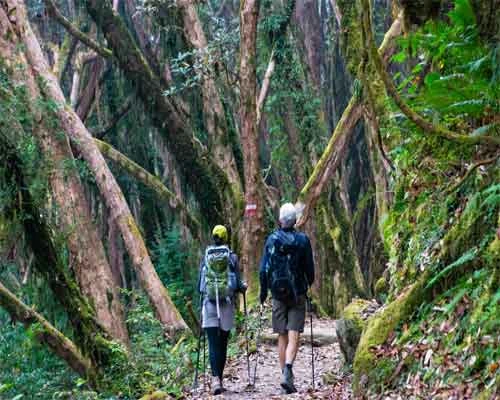
Walking Trails: The trail often goes through the beautiful forest, ancient typical cultures villages, waterfalls, staircases, wilder pastures, ridges, and several viewpoints till the bottom of the mountains, crosses several suspension bridges, wild bees, natural hot springs, zig-zags up and down, and passes several river streams.
Walking hours per day: The itinerary is always eligible; your trek starts every day after breakfast. Take your own speed, enjoy your walking, and the views. Normally, walking hours are 4-8 per day. Early starts from Chistibang to Khopra Danda if you visit Khayar (holy Lake).
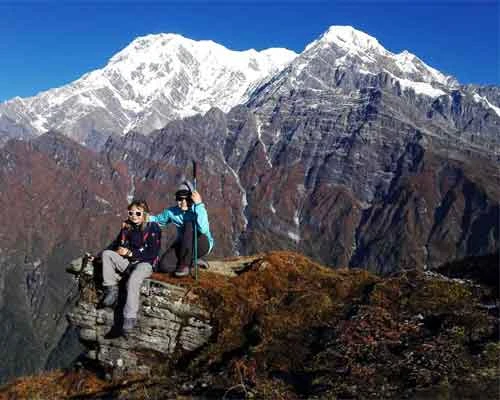
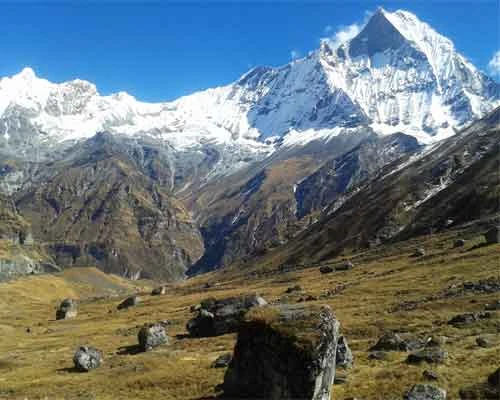
Landscape & temperature: There are amazing landscapes on this trek, it is a very comfortable temperature, and a green region. Very beautiful hills and hillocks, wide ranges of high mountains with beautiful views. Horizontal meadows and wide valleys with perfect temperatures. Alpine contour with the Rocky Mountains, face-to-face mountains. Minus 5 degrees at night at Khopra Danda in November, then everywhere is a comfortable temperature.
Accommodations and Food: Everywhere we can find very neat and clean local lodges and hotels with the best food items. Select the food according to your choices on the hotel's Menu. Almost the Menu is similar everywhere. They provide normal rooms with clean beds. They have a very wide, clean, and warm dining room. They provide a common hot shower, bathroom, and toilets. The attached bathroom at Khopra Danda is impossible, unlike everywhere it is possible.
Drinking water: Everywhere you can get fresh running water, but we recommend using some purifier tablets or a filtered water, or you can buy mineral water or filtered water.
Altitude Sickness and Prevention on the Khopra Danda Trek
The Khopra Danda Trek (Khopra Ridge Trek) takes you to high elevations in the Annapurna region, where altitude sickness, also known as Acute Mountain Sickness (AMS), can be a concern. As the trek reaches approximately 3,660 meters at Khopra Danda and an optional hike to Khayer Lake reaches around 4,660 meters, proper acclimatization and awareness of altitude-related symptoms are essential.
Although most trekkers complete this journey without serious problems, altitude sickness can affect anyone, regardless of age, fitness level, or trekking experience.
Prevention of Altitude Sickness
To reduce the risk of altitude sickness during the Khopra Danda Trek, we recommend the following precautions:
Ascend Gradually: Follow a well-planned itinerary that allows your body enough time to adjust to increasing elevations.
Stay Hydrated: Drink plenty of clean water throughout the trek.
Walk at a Comfortable Pace: Avoid rushing, overexertion, and unnecessary physical strain.
Take Adequate Rest: Allow sufficient time for rest and acclimatization, especially at higher elevations.
Eat Nutritious Meals: Maintain a balanced diet and eat regularly to keep your energy levels up.
Avoid Alcohol and Smoking: Avoid alcohol, particularly during the first 48 hours at high altitude.
Listen to Your Body: Inform your trekking guide immediately if you experience any symptoms of altitude sickness.
Consult Your Doctor: If necessary, discuss preventive medication such as Acetazolamide (Diamox) with your doctor before the trek.
Important Safety Measure
If you experience altitude sickness symptoms, do not continue ascending or sleep at a higher elevation.
Stop ascending and rest at your current altitude if symptoms are mild.
If symptoms worsen or do not improve, descend to a lower elevation.
Severe headache, repeated vomiting, confusion, loss of coordination, breathlessness at rest, or persistent coughing require immediate medical attention and emergency descent.
Never leave an affected trekker alone.