The Legendary Everest Base Camp Trek Nepal

The Everest Base Camp (EBC) trek is one of the most famous and sought-after treks in the world. It is not a technical climb but a challenging high-altitude hike that tests endurance and offers an unparalleled experience of the Himalayan landscape and Sherpa culture. Whether people have fewer adventurous experiences or have wide, thrilling experiences, everybody dreams of at least stepping once into the legendary Everest Base Camp in a lifetime. Most outfitters, adventure lovers, and travelers around the world aim to be at base camp for a lifetime of holiday rewards and memories of the highest peak in the world. Sleeping at Gorakshep (5170 meters) and a day hiking through a rocky trail takes you to the base camp (5320 meters). Hanging around a wide moraine glacier, seeing massive mountains, the Khumbu Icefall, visiting the Camping site, taking pictures, and feeling the taste of adventurous temperature, then back to Gorakshep for overnight.
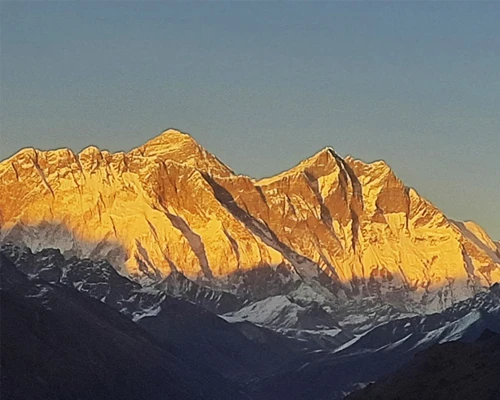
The next day's excursion up to Kalapatthar (5545 m) will be very early in the morning, before breakfast, and will be another heavenly, beautiful hike. You will have wide and bright views of Mt. Everest from Kalapatthar as well as Mt. Lhotse, Pumori, Khumbutse, Nuptse, Lola, Amadablam, Gyachungkhang, Mt. Bharunche, Thanserku, Khangtega, and the longest Khumbu glacier.
Besides the extreme mountains, you will see so many other things in this trek, such as highland Sherpa villages, crossing several suspension bridges, Gumbas, Stupas, Chortens, attractive Namche Bazaar, meeting & interacting with people, Yaks, Jopkeys, transporting mules, local people and their way of life, and the famous monuments above Thukla.
Everest Base Camp and Kalapathar trekking begins KTM to Ramechhap car drive and a short flight from Ramechhap to Lukla, or an overland jeep drive from KTM to Sallery- Bupsa, then walking. The trail passes through the heartland of the Sherpa: Lukla, Phakding, Monjo, Namche Bazaar, Tenboche, Pangboche, Dingboche, Chhukung, and Gorak Shep. Returning down the same way and taking a morning flight or jeep drive back to Kathmandu.
Why Choose the Everest Base Camp Trek?
Himalayan Adventure trek to the Everest Base Camp blends breathtaking scenery, Sherpa culture, and the thrill of amazing, mighty mountains. This 16-day trek is more than a journey; it’s a life-changing achievement with unforgettable memories.
Step into the heart of the Himalayas and follow the footsteps of legendary climbers. Stand at the foot of Mount Everest, the world’s highest peak, and experience the adventure of a lifetime. Feel proud of yourself because you will set your footprints at the world’s highest Everest Base Camp. Celebrate the glory of your effort to the top of the world.
Necessary permits for the trek:
Sagarmatha National Park Entry Permit: Required to enter the national park, which is a UNESCO World Heritage Site.
Khumbu Pasang Lhamu Rural Municipality Entrance Permit: This is a local permit that has replaced the old TIMS card for this region.
These permits can be obtained in Kathmandu or at checkpoints along the trail.
Best Time to Trek
The most popular times for the EBC trek are during the two main trekking seasons:
Spring (March to May): The weather is generally warm and stable, and the rhododendron forests are in bloom. This season also coincides with the Everest climbing season, so you can see the base camp bustling with expedition teams.
Autumn (Late September to November): This is widely considered the best time to trek. The monsoon has cleared the skies, offering pristine, clear views of the mountains. The weather is stable, and the temperatures are comfortable for trekking.
Trekking is possible in winter (December to February) and summer (June to August), but they come with more challenges. Winter is extremely cold, and the trails can be snow-covered, while the summer monsoon brings rain, cloudy skies, and slippery trails.
Key Fitness Preparation for Everest Base Camp Trek:
You’ll need some training focused on endurance, strength, and hiking practice to be physically prepared for the Everest Base Camp (EBC) trek. The main goal is to improve stamina for walking 5–9 hours daily on uneven terrain. This includes uphill and downhill while carrying a daypack; we recommend the following method for fitness preparation.
Aerobic endurance: Build a base with cardio (running, cycling, swimming, stair climbing) 3–5 times per week at conversational pace.
Hiking practice: Hikes with a 5–8 kg pack, ideally back-to-back days to mimic trek conditions. Train in your actual boots.
Strength training (whenever you get time): Squats, lunges, step-ups, calf raises, planks to protect knees and power climbs.
Downhill training: Practice descents to prepare joints; trekking poles recommended.
Mental preparation: Make a mindset that the most worthwhile thing is not easy to get. Expect fatigue, altitude challenges, and repetitive long days