The Most Reliable Trekking Company for the Everest Base Camp Trek
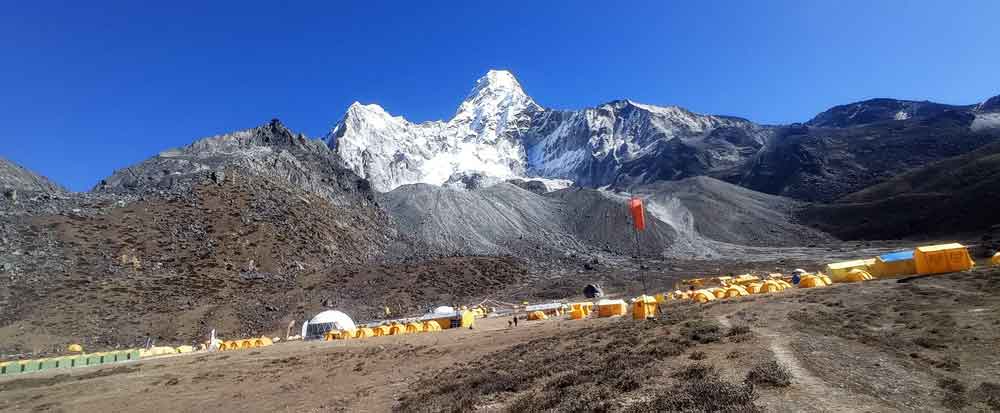
Choosing Touren Nepal Treks for your Everest Base Camp trek means trusted safety standards, an experienced company, professional management, veteran guides, authentic cultural immersion, and cost-effective packages, all backed by local expertise.
Why Book Everest Base Camp Trek with Touren Nepal Treks?
Touren Nepal Treks is a professional and responsible trekking company in Nepal. The Company has the following qualities to be selected as your ultimate travel partner in Nepal:
Government-licensed and registered under Nepal’s Department of Tourism, NTB, and TAAN, ensuring compliance with trekking regulations and legal protection.
Management: Responsible organizer and veteran expertise
Experienced Local Guides: Sherpa and Nepali guides trained in high-altitude safety, with deep knowledge of Everest trails, culture, and acclimatization strategies.
Affordable Pricing: Costs are 30–60% lower than international operators, while maintaining identical on-ground services.
Safety & Reliability: Insured porters, verified permits, and structured itineraries with acclimatization days to minimize altitude sickness risks.
Sustainable Tourism: Eco-friendly practices, community support, and responsible trekking to preserve fragile Himalayan ecosystems.
Quick Permit Processing: Faster turnaround (2–5 days) compared to international
All-Inclusive Package: Accommodation, meals, permits, and logistics covered.
The Everest Base Camp Trek

Himalayan Adventure trek to the Everest Base Camp blends breathtaking scenery, Sherpa culture, and the thrill of amazing, mighty mountains. This 16-day trek is designed more than a journey; it’s a unique challenge with life-changing achievement and unforgettable memories.
Step into the heart of the Himalayas and follow the footsteps of legendary climbers. Stand at the foot of Mount Everest, the world’s highest peak, and experience the adventure of a lifetime. Feel proud of yourself because you will set your footprints at the world’s highest Everest Base Camp. Celebrate the glory of your effort to the top of the world.
What to see in the Everest Base Camp Trek?
On the Everest Base Camp (EBC) trek, you’ll encounter a mix of breathtaking natural wonders and rich cultural highlights — from Sherpa villages and monasteries to glaciers, panoramic viewpoints, and the Base Camp itself. The journey is as rewarding as the destination.
Namche Bazaar
- Gateway to the Khumbu region at 3,440m.
- Vibrant Sherpa town with markets, cafés, and the Sherpa Culture Museum.
- Acclimatization hikes to Everest View Hotel and Khumjung village.
Tengboche Monastery
- Spiritual hub at 3,860m, framed by Ama Dablam.
- Evening puja (prayer ceremony) offers a serene cultural experience.
- Famous for panoramic views of Everest, Lhotse, and Nuptse.
Sagarmatha National Park
- UNESCO World Heritage Site with diverse ecosystems.
- Rhododendron forests, alpine meadows, and rare wildlife like Himalayan tahr and snow leopards.
Khumbu Glacier & Icefall
- Trek alongside the glacier near Lobuche and Gorak Shep.
- The Khumbu Icefall is a dramatic sight, especially during climbing season.
Everest Base Camp
- At 5,364m, standing at the foot of the world’s highest peak.
- A celebratory moment for trekkers, with views of the Khumbu Icefall.
Kala Patthar
- 5,545m viewpoint offering the best sunrise panorama of Everest, Lhotse, and Nuptse.
- Often considered the most rewarding view of the trek
Everest Base Camp Trek — At a Glance
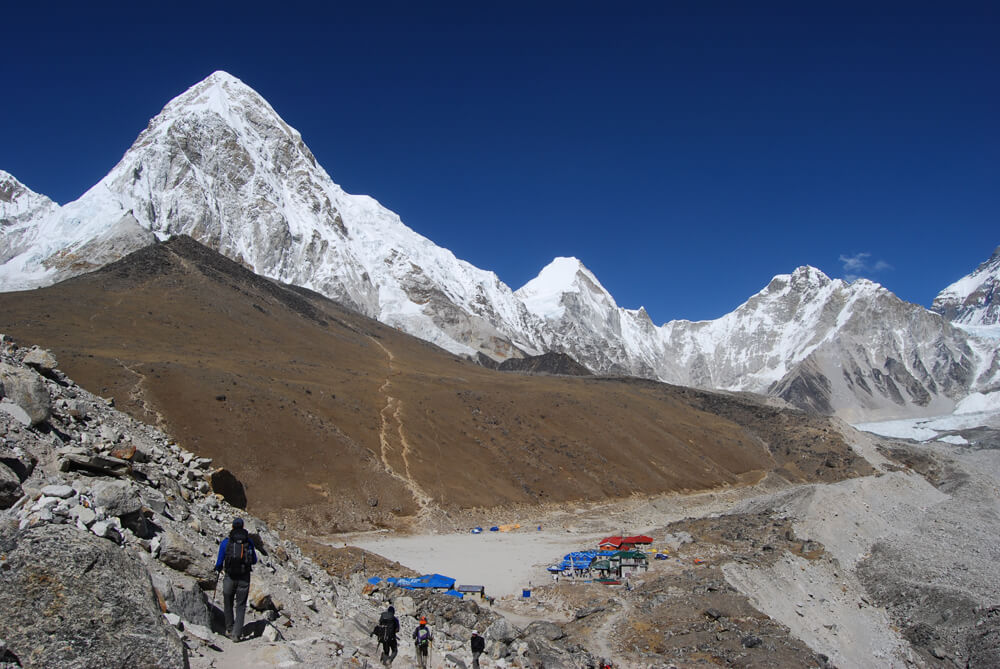
Duration: 16 days
Difficulty: Moderate to challenging
Highest point: Kala Patthar — 5,545 m
Everest Base Camp: approximately 5,360–5,370 m
Highest overnight stay: Gorakshep — 5,170 m
Starting point: Lukla
Group size: 1–20 people
Accommodation: Hotels in Kathmandu and mountain lodges/teahouses during the trek
Meals: 3 meals daily during the trek, including hot drinks
Transport: Private vehicle + domestic flights
Main acclimatization days: Namche Bazaar and Dingboche
The Everest Base Camp Trek Itinerary for 16 Days:
Day | Itinerary | Approx. altitude/walking |
1 | Arrive in Kathmandu, airport pickup and hotel | Kathmandu |
2 | Kathmandu → Manthali by private vehicle | ~4 hrs drive |
3 | Fly Manthali → Lukla; trek to Phakding | 2,600 m / 3–4 hrs |
4 | Phakding → Namche Bazaar | 3,440 m / 5–6 hrs |
5 | Acclimatization day in Namche; Everest View/Khumjung excursion | 3,440 m |
6 | Namche → Tengboche (Tyangboche) | 3,810 m / 6–7 hrs |
7 | Tengboche → Dingboche | 4,410 m / 4–5 hrs |
8 | Acclimatization day in Dingboche; optional higher hike | Up to ~5,000 m+ |
9 | Dingboche → Lobuche | 4,900 m / 5–6 hrs |
10 | Lobuche → Gorakshep; afternoon Everest Base Camp excursion | 5,170 m / ~4 hrs + EBC |
11 | Early Kala Patthar sunrise; descend to Pheriche | Kala Patthar 5,545 m / ~6 hrs |
12 | Pheriche → Kyanjuma | 3,560 m / 5–6 hrs |
13 | Kyanjuma → Monjo | 5–6 hrs |
14 | Monjo → Lukla | 6–7 hrs |
15 | Fly Lukla → Ramechhap; drive to Kathmandu | Morning flight + drive |
16 | Final departure from Nepal | Back home |
How crowded is the EBC Trek?

The Everest Base Camp trek is one of the busiest trails in Nepal, with crowd levels peaking in spring and autumn, when thousands of trekkers fill the route, teahouses, and viewpoints.
Teahouse pressure: During peak months, rooms sell out by early afternoon; booking ahead or hiring a guide helps secure accommodation.
Climbing season overlap: In April–May, Base Camp is crowded not only with trekkers but also creating a festival-like atmosphere by High mountain expeditionary groups
Some Tips to Avoid Crowds in Everest Base Camp
- Trek in late November or early December for clear skies and quiet trails.
- Choose early March to mid-April before the rush expedition begins.
- Explore alternative routes like Gokyo Lakes or the Three High Passes trek, and Gokyo Lake Renjo- La Pass Trek (the most beautiful trek of the Khumbu region) to avoid crowds and stunning views.
Key Fitness Preparation for Everest Base Camp Trek:

You’ll need some training focused on endurance, strength, and hiking practice to be physically prepared for the Everest Base Camp (EBC) trek. The main goal is to improve stamina for walking 5–9 hours daily on uneven terrain. This includes uphill and downhill, while carrying a daypack.
- Aerobic endurance: Build a base with cardio (running, cycling, swimming, stair climbing) 3–5 times per week at conversational pace.
- Hiking practice: Hikes with a 5–8 kg pack, ideally back-to-back days to mimic trek conditions. Train in your actual boots.
- Strength training (whenever you get time): Squats, lunges, step-ups, calf raises, planks to protect knees and power climbs.
- Downhill training: Practice descents to prepare joints; trekking poles recommended.
- Mental preparation: Make a mindset that the most worthy thing is not easy to get. Expect fatigue, altitude challenges, and repetitive long days.
Practical recommendation for clothing
Touren Nepal Treks recommends three layers for EBC. For the Everest Base Camp (EBC) trek, the golden rule is a three-layer clothing system: base, mid, and outer shell. You’ll face temperatures from +18°C at Lukla to -20°C at Gorak Shep, so proper layering is essential to stay warm, dry, and comfortable.
Base layer: moisture-wicking thermal top + bottom
Mid layer: fleece/down insulation
Outer layer: waterproof/windproof shell
Note: At Gorakshep and Kala Patthar, temperatures can be extremely cold, especially before sunrise, so don't rely on ordinary trekking clothes alone.
Quick Clothing Checklist
Layer/Item | Quantity | Notes |
Base layers | 2 tops, 2 leggings | Merino wool preferred |
Mid layers | 1 fleece, 2 down jackets | Heavy down jacket essential above Namche |
Outer shell | 1 jacket, 1 trousers | Gore-Tex recommended |
Socks | 4–6 pairs | Wool best for warmth |
Gloves | 2 pairs | Liner + insulated |
Boots | 1 pair | Waterproof, ankle-high |
Sleeping bag | 1 | Rated -15°C to -20°C |
Insurance is particularly important for EBC Trekking
The operator recommends insurance that specifically covers trekking up to 6,000 m and emergency helicopter evacuation/search-and-rescue. Their page notes that ordinary travel insurance may have altitude limits that are too low for EBC.