Upper Mustang and Lo-Manthang Exploration
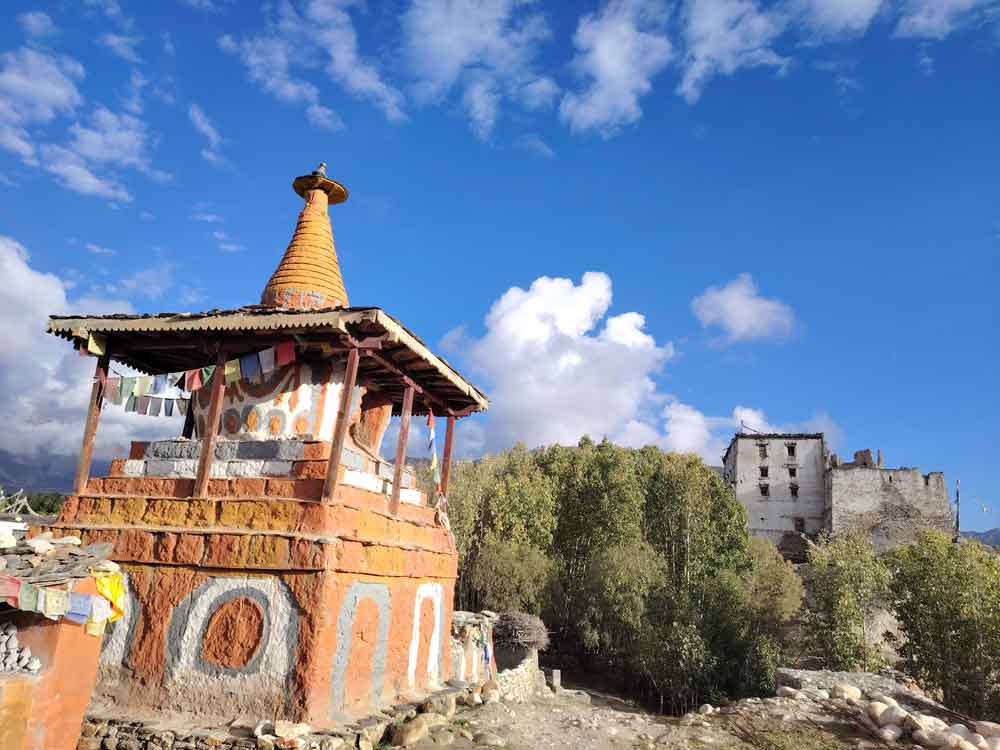
Upper Mustang region is typically the "Last Forbidden Kingdom" of Lo, offering an arid, wind-carved landscape that exactly resembles Tibet rather than the lush valleys of Nepal. Upper Mustang is located in the rain shadow of the Annapurna and Dhaulagiri ranges in Nepal, where you can experience ancient Tibetan Buddhist culture thriving behind towering red cliffs and dramatic canyons. Upper Mustang was a former independent Kingdom of Lo, with its capital at Lo Manthang. The arid desert terrain consists of whitewashed monasteries adorned with prayer flags and mud-brick clinging to barren hillsides. The region’s geography, climate, and architecture offer authentic Tibetan Buddhist experiences which are increasingly rare in Tibet itself due to modernization and political changes.
How to explore Upper Mustang?
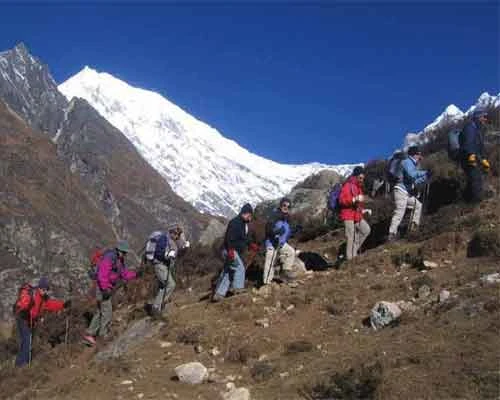
We can explore Upper Mustang by trekking and a Jeep tour. If travelers are kids, of normal physical condition, or non-adventurous, then they can explore Upper Mustang by arranging a 4x4 Jeep tour, and if travelers are physically fit, then they can explore by trekking. Click.
What are the highlights of Upper Mustang?
The core highlights of Upper Mustang include the History, walled city of Lo Manthang, Shangri-La landscape, ancient sky caves, and centuries-old Buddhist monasteries. This remote region of Nepal offers a unique Tibetan Buddhist culture, dramatic red cliff landscapes, and deep historical significance.
1. The Ancient History of Upper Mustang

Lo-Manthang is the historic capital and medieval walled settlement of the former Kingdom of Lo, surrounded by a massive earthen wall built in the 15th century at an altitude of approximately 3,840 meters above sea level. It serves as the cultural heart of a high-altitude desert region heavily inspired by Tibetan Buddhism.
The Walled Complex: The core city is completely enclosed by an 856-meter-long, 6-meter-high earthen mud-brick wall built to shield residents from fierce Himalayan winds
- The legendary history of Upper Mustang began after 1380 AD, when Ame Pal, a Tibetan warrior and devout Buddhist from Western Tibet, made Mustang an independent Kingdom by defeating local warlords and constructing a walled city capital, Lo-Manthang. Then he extended Lo’s rule until the Purang village of Western Tibet.
- Once upon a time, Mustang was under the rule of the Yarlung Dynasty of central Tibet, and later on, Mustang was under the rule of Western Tibet's Ngari.
- At the end of the sixteenth century, Lo-Kingdom came under the power of Ladakh, and around 1760, the kingdom of Jumla in western Nepal finally succeeded in making Lo its vassal. Then, Mustang was forced to pay levies (taxes) to the Kingdom of Jumla and came under its extended Kingdom.
- In 1795, Jumla was defeated by the Gorkhas, and the Kingdom of Lo (Mustang) transferred its allegiance to Gorkha.
- In 1855, Lo supported Nepal against the Tibetans (Khamba) war. The King of Nepal thus allowed the King of Lo, Lo-Manthang, and honored him as the military’s colonel post.
- In 1862, the Thakalis from the lower Mustang gained control over the salt trade along the Kaligandaki valley; then the economy of Lo-Manthang, Bahragaon, and Panchgaon suffered badly
- In 1951, there was a big revolution against the Kingdom in Nepal that introduced a constitutional monarchy in Nepal and took away the power of the King. However, the King of Lo-Manthang was distinctively respected around the area because of socioeconomic attributes.
- Following the Chinese exaction of full control over Tibet in 1959, the Khampa guerrillas based their resistance movement on Lo, and the Nepalese government declared the Mustang District a restricted area.
- After establishing a parliamentary democracy in 1990, the new government of Nepal decided to partially reopen Upper Mustang for foreigners.
- In 1992, Nepal allowed foreigners to visit the Upper Mustang with a restricted permit issued by the Department of Immigration of Nepal. However, visitors were not allowed to go beyond the small River stream flows near Lo-Manthang. Visitors had to hire a government liaison officer for a trip, who kept a watchful eye on foreign visitors.
- In the same year, the Annapurna conservation area was extended into Upper Mustang.
- Hiring a government liaison officer for Upper Mustang was ended during the Maoist insurgency in Nepal. Also, the restriction on visiting beyond Lo-Manthang was lifted for foreigners.
2, Geography in Upper Mustang
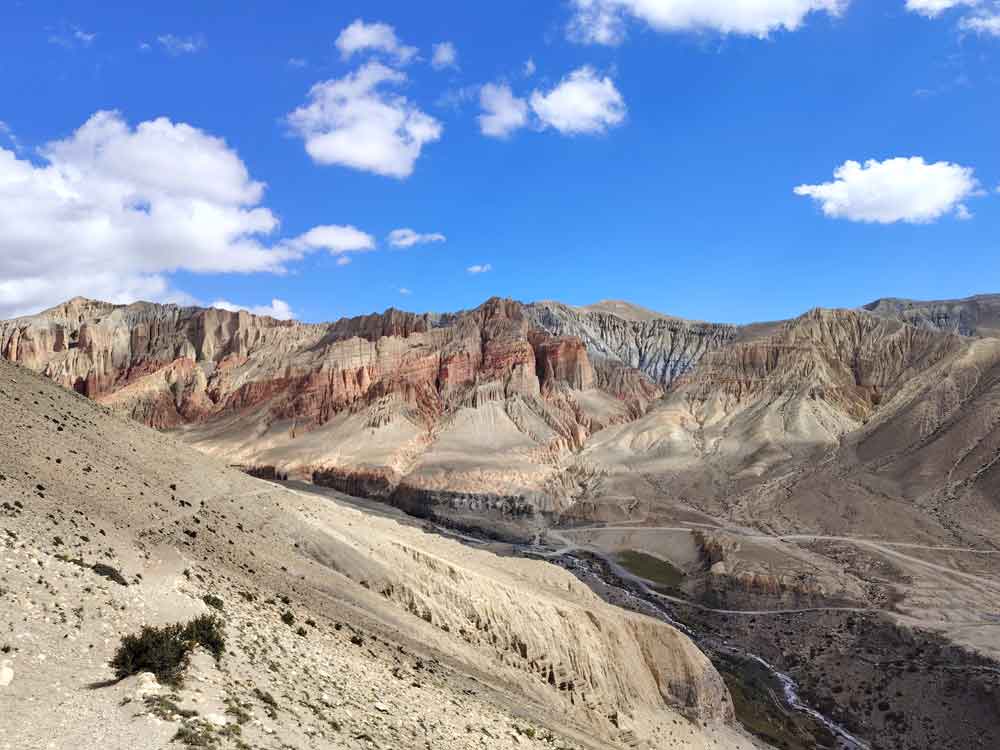 The Sangri- La landscape
Upper Mustang is situated on Nepal’s northern border with China, which was previously Tibet. Upper Mustang, a rain shadow, falls under the region of the Tibetan Plateau, and the elevation ranges from 2,800 meters to 6,500 meters. Upper Mustang is semi-arid and has extremely low rainfall with a desert-like climate. The temperature of Upper Mustang has been rising at a higher rate than that of other regions as well as that of the global average over the last 100 years (Gentle & Maraseni, 2012). The constant wind (because of low pressure up in the plateau), low rainfall, and intense sunshine make this part of the Trans-Himalayan zone very arid, harsh, and rugged.
- Arid Badlands: Rolling hills and vast plains covered in parched, wind-eroded soil with minimal vegetation, featuring deep shades of red, ochre, and iron-grey, which shift colors vividly depending on the angle of the sun.
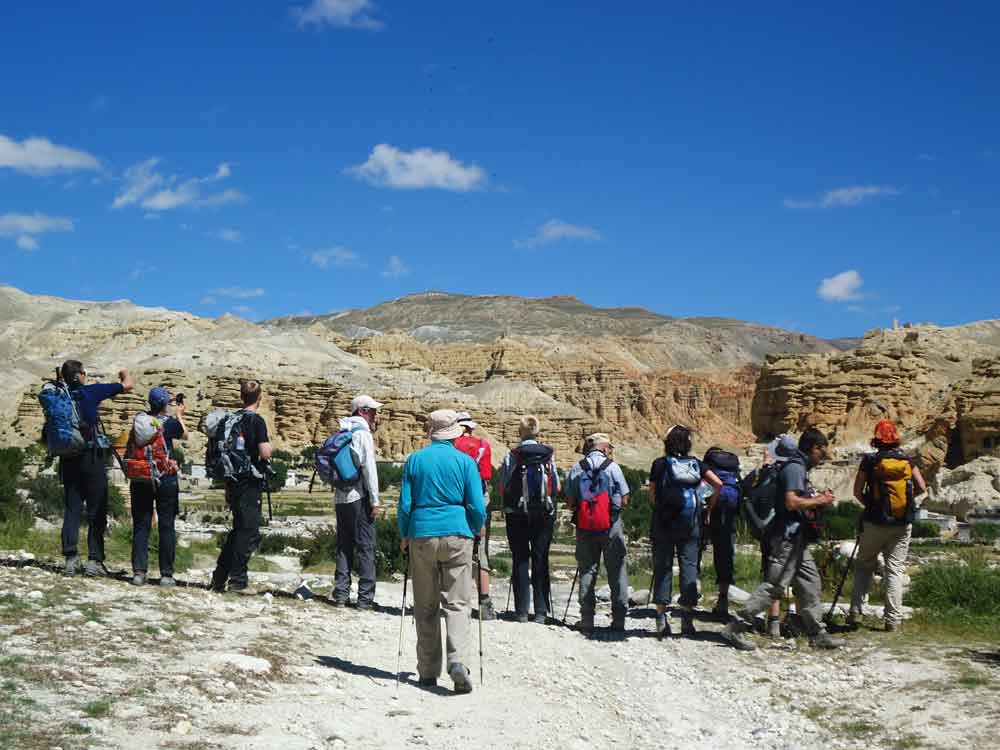
- Fluted Earth Cliffs: Towering, vertical rock formations carved over millennia by intense winds, displaying striking hues of red, ochre, grey, and brown.
- Deep River Gorges: The powerful surrounding Rivers including Kali Gandaki River, cut directly through the terrain, forming deep canyons that form the spine of the regional transit corridor.
- Spiritual Geography: The entire terrain is treated as a sacred map. Giant stone entry gates (Kani), long Mani walls built from hand-carved prayer stones, and chortens painted in organic red, white, and blue pigments line every trail to ward off negative spirits.
- Man-Made Sky Caves: Thousands of ancient, multi-tiered cliff dwellings are carved directly into the sheer vertical rock faces, some hanging hundreds of feet above valley floors
- Hidden Oasis Villages: Villages like Marpha, Kagbeni, Chhuksang, Chele, Samar, Gilling, Ghami, Dakmar Tsarang, Yaraa, Tange, nd Lomanthang emerge like mirages, offering patches of bright green fields irrigated entirely by glacial streams.
3. People and Religion in Upper Mustang

The people of Upper Mustang speak Tibetan dialects, practice Tibetan Buddhism, and oftentimes identify themselves as “Historically from Tibet, but politically from Nepal”. Before the invasion of Tibet by China in 1949-1950, Upper Mustang maintained a close relationship with Tibet politically, economically, and culturally. Upper Mustang falls along the salt trade that established a strong economic relationship. There are two different ethnicities settling in Mustang. Tibetan language speakers are known as Mustangees, and they inhabit the Upper Mustang region: Lo-Manthang, Bahragaun (12 villages), Panchgau (5 villages).
The People in Upper Mustang: The local inhabitants are known as Lobas, who share distinct language, ethnic, and cultural practices deeply tied to Western Tibet
The people in Lower Mustang: Is known as Thak Khola, where the Thakali ethnic group inhabits. The Thak Khola region is more populated than Upper Mustang. Thakalis have their own language that is not similar to Mustangees. Thakali practices both religions Tibetan Buddhism and Hinduism.
4. The lifestyle in Upper Mustang

The people of Upper Mustang subsist on only three occupations: there is a long tradition of trading salt, animals, and other commodities from Tibet, which is known as the Trans-Himalayan trade; agriculture; and animal husbandry. Because of low annual rainfall, low temperature, and a single growing season, agricultural productivity is extremely low in Upper Mustang. In addition to the harsh environment and unfavorable geographic conditions, there is the problem of infrastructure, like irrigation canals. Furthermore, there is a limitation to the agricultural products that can be grown. Buckwheat, barley, and wheat are the major crops, with some vegetable farming, like potatoes and radish.
Mustang is one of the most remote, extremely isolated, and economically impoverished regions in Nepal. The literacy rate of Upper Mustang is listed at 33%, which is well below the national average of 54.1%. Limited livelihood options, lack of infrastructure, unfavorable geographical location, and isolation from the central government resulted in Upper Mustang being an impoverished region.
5. The Festivals in Upper Mustang

There are several Buddhist festivals and Ceremonies in Upper Mustang. However, the most popular annual festival is called the Tiji festival. According to the Tibetan Lunar calendar, the Tiji festival normally falls in May and is celebrated annually over three consecutive days inside the historic, walled capital of Lo Manthang.
Tiji festival: The most famous festival in Upper Mustang is the Tiji Festival, also known as Tenchi or Tenpa Chirim. It translates to "Prayer for World Peace," highlighting its deep spiritual significance to the local Loba people. It is a grand Tibetan Buddhist ritual that symbolizes the "mythological victory of good over evil spirits.
There is another popular festival celebrated mainly in the Lo-Manthang and Muktinath area called the Yartung Festival. They celebrate this festival during the full Moon of August every year. It is a multi-day festivity marked with horse races, drinking, and cultural dances from the Thakali and Tibetan people.
6. The ancient Monasteries in Upper Mustang
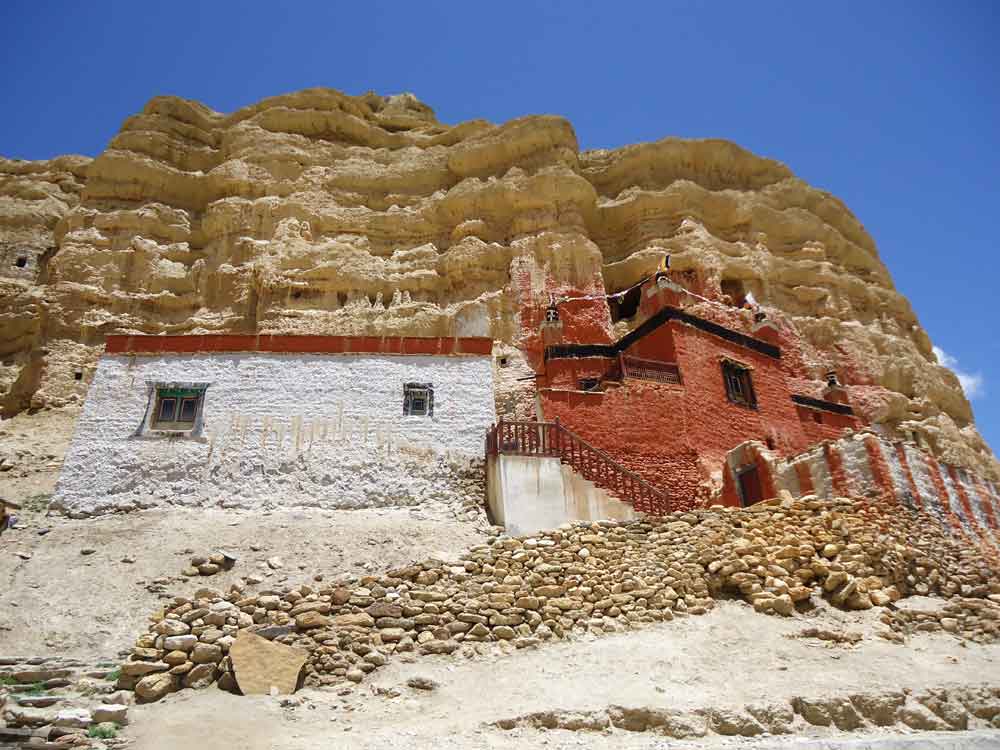
There are several very important monasteries in Upper Mustang. However, there are more than 18 ancient monasteries that are the most special and important. Among them, the following are the most popular Monasteries in Upper Mustang:
- Tsarang Gompa: A massive 14th-century fortress-style monastery located in Tsarang Village 3560 meters. It serves as one of the largest and most historically dominant spiritual centers of the ancient Kingdom of Lo, second only to the complex in the capital of Lo, Manthang, and it belongs to the Sakya school of Tibetan Buddhism.
- Ghar Gompa (Lo Gekar): Built in the 8th century by Guru Rinpoche, making it one of the oldest active Tibetan Buddhist monasteries in the world.
- Luri Gompa (also spelled Luri Gumba) is an extraordinary, 800-year-old Tibetan Buddhist cave monastery located at Ghara village, 4,005 meters above sea level. Associated primarily with the Nyingma (and Kagyu) sects of Tantric Tibetan Buddhism.
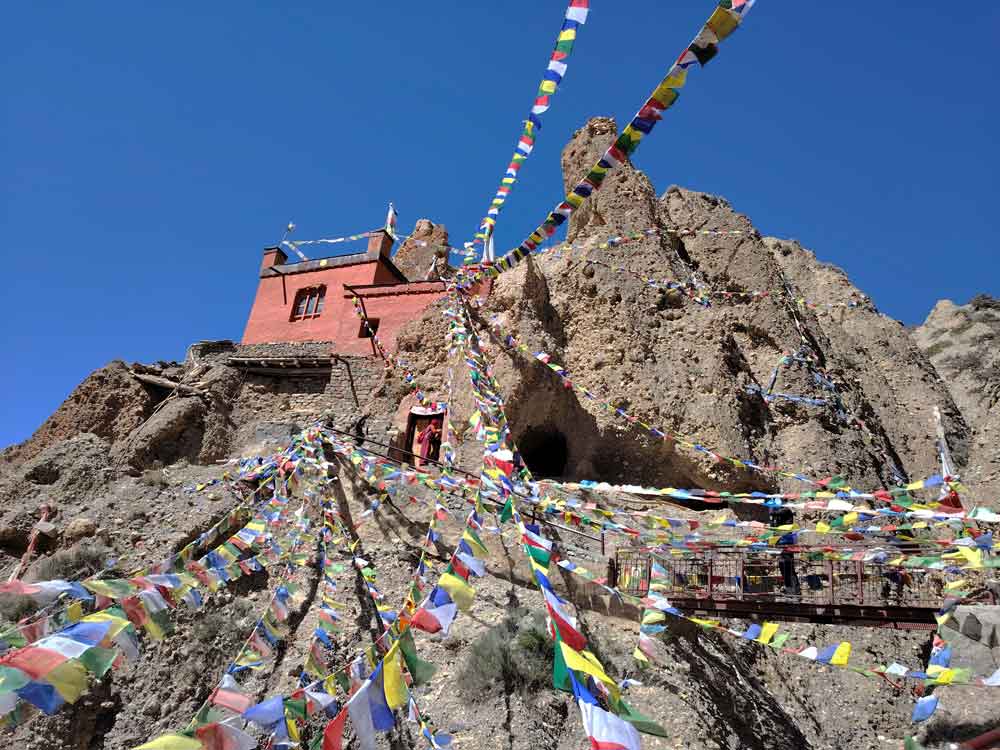
- Thubchen Gompa: A massive 15th-century monastery in Lo Manthang featuring grand red pillars and beautifully restored murals.
- Jampa Gompa: Known as the "House of Maitreya," this 15th-century structure houses a massive three-story statue of the Future Buddha.
- Nyphu Gompa: Built in the 14th century, this Tibetan Buddhist cave monastery is another very famous Gompa in Upper Mustang, located in Chhosser. It belongs to the Nyingma school of Tibetan Buddhism and serves as one of the most culturally significant active spiritual sites north of the walled capital of Lo Manthang.
7. Mysterious Sky Caves in Upper Mustang
The Caves in Mustang are a fascinating experience, as they allow visitors to witness the ancient architecture and artistic heritage of the area. These caves are notable for their historical, cultural, and religious significance. Though it is still not clear as to who built these caves, it is speculated that the Mustang Caves were more burial caves or caves of religious importance, or residential ones.
The Mustang Sky Caves, or the Cave Temples of Mustang, are man-made caves found on steep valley walls. More than two decades ago, a group of archaeologists unearthed more than 20 human remains from the Sky Caves in the Samdzong area in Upper Mustang. Interestingly, these remains (bones) had several cut marks, which were similar to the unique Buddhist burial tradition known as Sky Burial. Along with the remains, archaeologists also found some relics and statues related to Buddhism. The fascinating part—these remains and relics (older than 7 centuries BC) predate the arrival of Buddhism in the area. In simpler terms, there is archaeological evidence that states that Buddhism was present in the Himalayan region. There are countless Caves all around Upper Mustang; among these are the most renowned Caves:
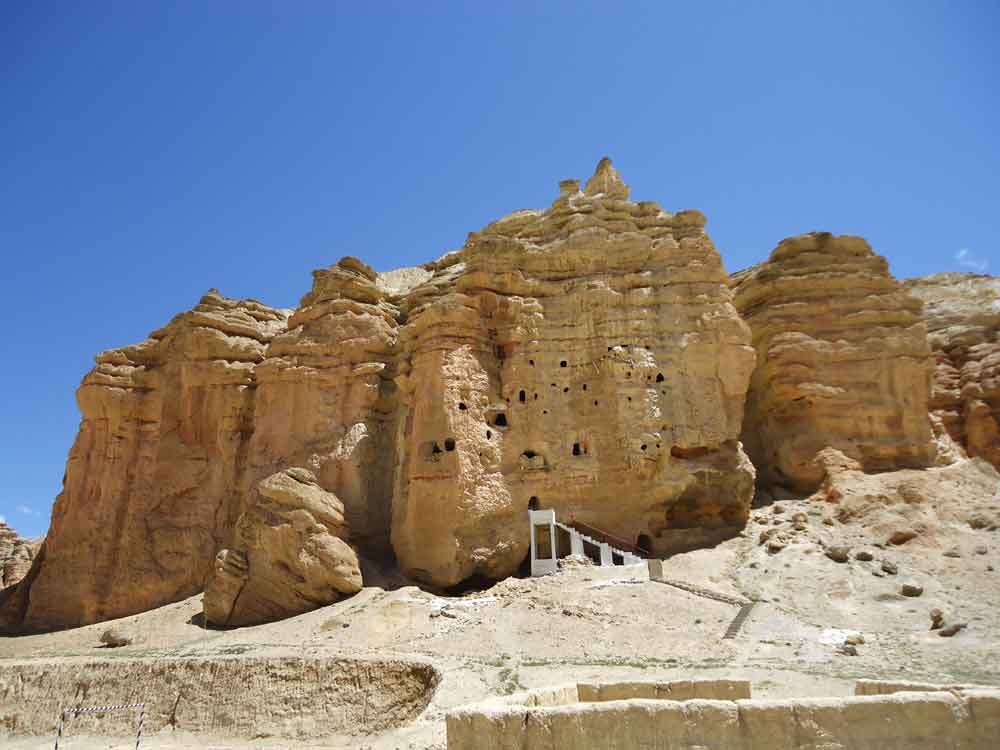
Chhoser Cave: The famous Chhoser Cave, officially known as Shija Jhong Cave or Zhong Cave, is an extraordinary, ancient five-story man-made sky cave located in the Chhoser Valley at 3970 meters. It serves as the region’s best-preserved example of prehistoric cave civilization carved vertically into a sheer, pale-ochre sandstone Cliffside dating back over 2,500 years. These ancient caves are nearly 50 meters (164 feet) tall and a massive underground complex etched out entirely by human hands.
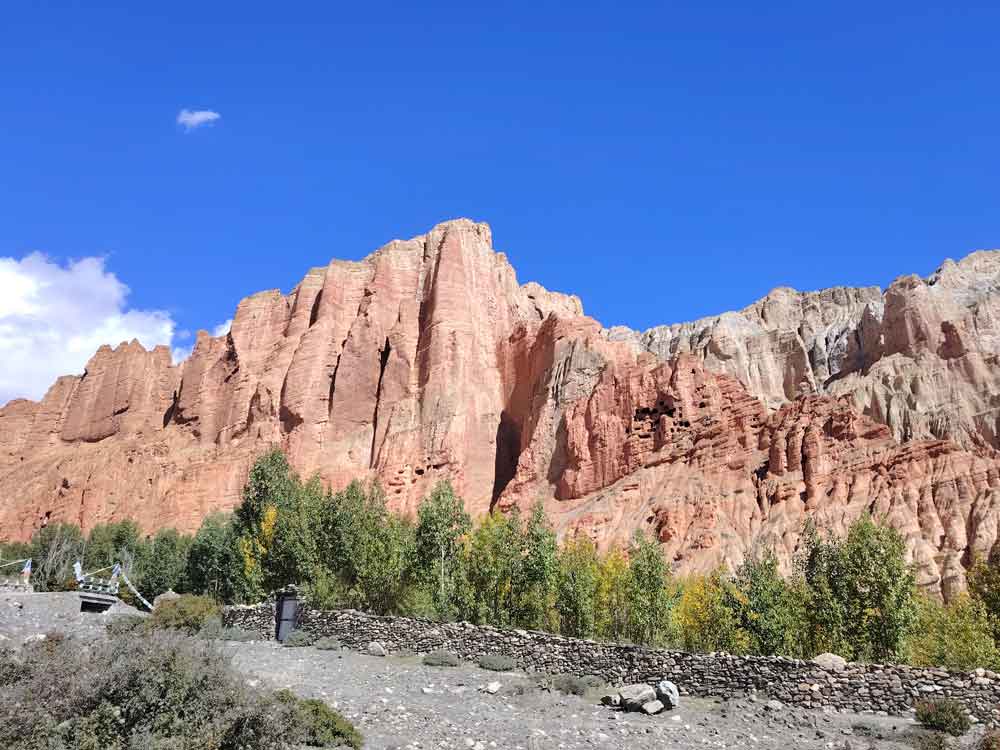
Dakmar Cave (commonly spelled Dhakmar Caves) is an ancient, multi-tiered sky cave carved in the red cliff. These cliff dwellings stand out because of the brilliant crimson rock walls that surround them. Unlike the larger, highly structured apartments of Chhoser Cave, the caves at Dhakmar are famous for their deep connection to Tibetan Buddhist mythology and early Himalayan survival.
Mebrak Caves: These Caves are situated near Chhuksang and just north of Kagbeni along the edge of the deep Kali Gandaki River gorge. A major archaeological site containing multi-tiered burial chambers. Excavations here uncovered mummified human remains dating back over 2,000 years, alongside wooden beds, copper vessels, and woven textiles, providing a glimpse into the region's earliest settlers.
Chokhopani Caves: Located along the Kali Gandaki River Bank in the Lower Mustang region, situated directly across from Tukuche Village. These burial caves date back to approximately 1000 BCE. They have yielded ancient pottery, iron beads, and skeletal remains that trace the prehistoric migration routes between Tibet and the lowlands of Nepal.
8. Tells about Upper Mustang
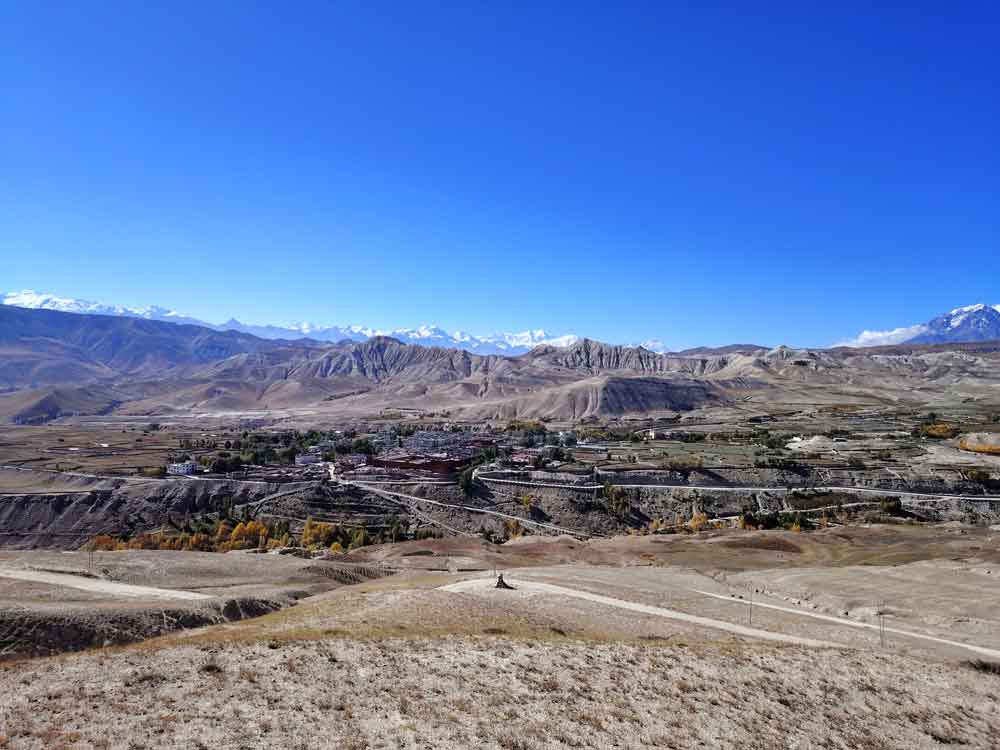
Lo-Manthang, which means remote, hidden, the land of happiness and beauty, and the last forbidden Himalayan Kingdom. Mustang is rich in Buddhist culture, similar to the area of Tibet. It is an alternate way to experience the Tibetan culture and landscape. There are so many different sayings about different landmarks in Upper Mustang. Such as the longest Mani wall of Ghami, the Red Cliff of Dhakmar village, Niphu Caves, Chhosser Caves, etc.
As a local telling: the longest Mani wall of Ghami was created by the intestines of a Demon, and the Red Cliff of Dhakmar was gouged out by his blood while he was defeated by the magical power of a Buddhist Monk. Niphu Caves were formed for Buddhist meditations, and Chhosser has a different telling.
9, Passes with rocks and prayer Flags in Upper Mustang

Passes in the Upper Mustang region are decorated with Prayer flags and piled rocks. Prayer flags are hanging on poles or tied to rocks. They believe in non-stop flapping prayer flags as homage and the myths of chanting. While the pedestrian passes through, collects rocks and sit on piles, which means offering divine blessings from God. Except for prayer flags and rocks, Khatak is also placed on the passes. Buddhists believe that the Khatak they receive by greetings or for well-wishing should be disposed of at the suspension bridge or on the hilltop passes for continuous flapping.
10, Korola pass in Upper Mustang

Korala is one of the oldest routes between the two regions. It was historically used for the salt trade between Tibet and the Nepalese kingdoms. Up until 2008, when the Nepali monarchy was abolished, Upper Mustang was the Kingdom of Lo, an ethnic Tibetan kingdom that was a suzerainty of Nepal. Now it is a big customs gate between Nepal and China.
11, Isolated trek to Yara & Ghara in Upper Mustang
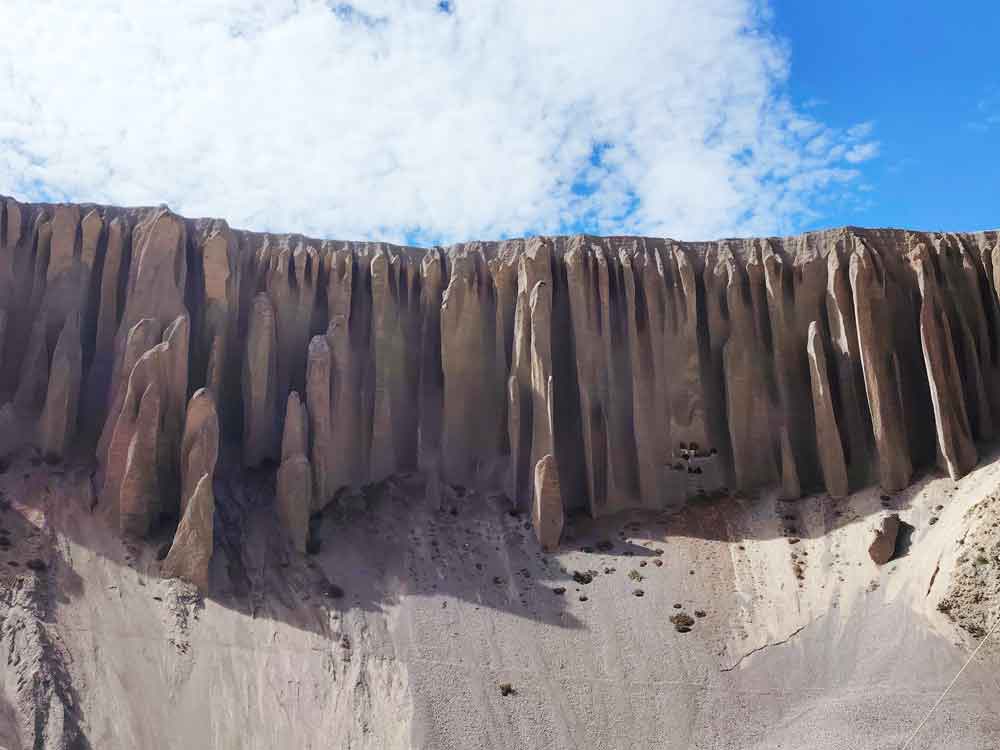
Upper Mustang is widely connected with rough road facilities. The road facility is extended only up to Yara village, where the famous Luri Gumba is situated. The Kaligandaki River separates Yara-Ghara, Tangbe, and Tetang villages. Villages beyond the river are still isolated from basic amenities. The landscape on these sites is similar to the Lunar and demands a lot of uphill and downhill, but the culture, tradition, and way of life are still primitive.
12. Special Permit and conservation permit for Mustang
To visit Upper Mustang, you must navigate a strict Restricted Area Permit (RAP) system managed by the Nepal Department of Immigration. The permit system safeguards the region's ancient Tibetan Buddhist culture and fragile high-altitude desert environment. Major regulatory updates implemented in 2026 have replaced the historical flat-fee system with a more flexible, pay-as-you-go dynamic structure. The previous flat fee of USD $500 for the first 10 days and a minimum of a two-person team has been officially scrapped.
Now single people also get a restricted permit, which costs USD 50 per day and requires payment for the exact number of days you spend inside the restricted zone. The Annapurna Conservation Area Permit (ACAP) is NPR 3,000 (approx. USD $30) per person, remaining as usual.
The restricted permit is granted only through the responsibility of register Trekking Company. And the trek should be done with licensed guides.